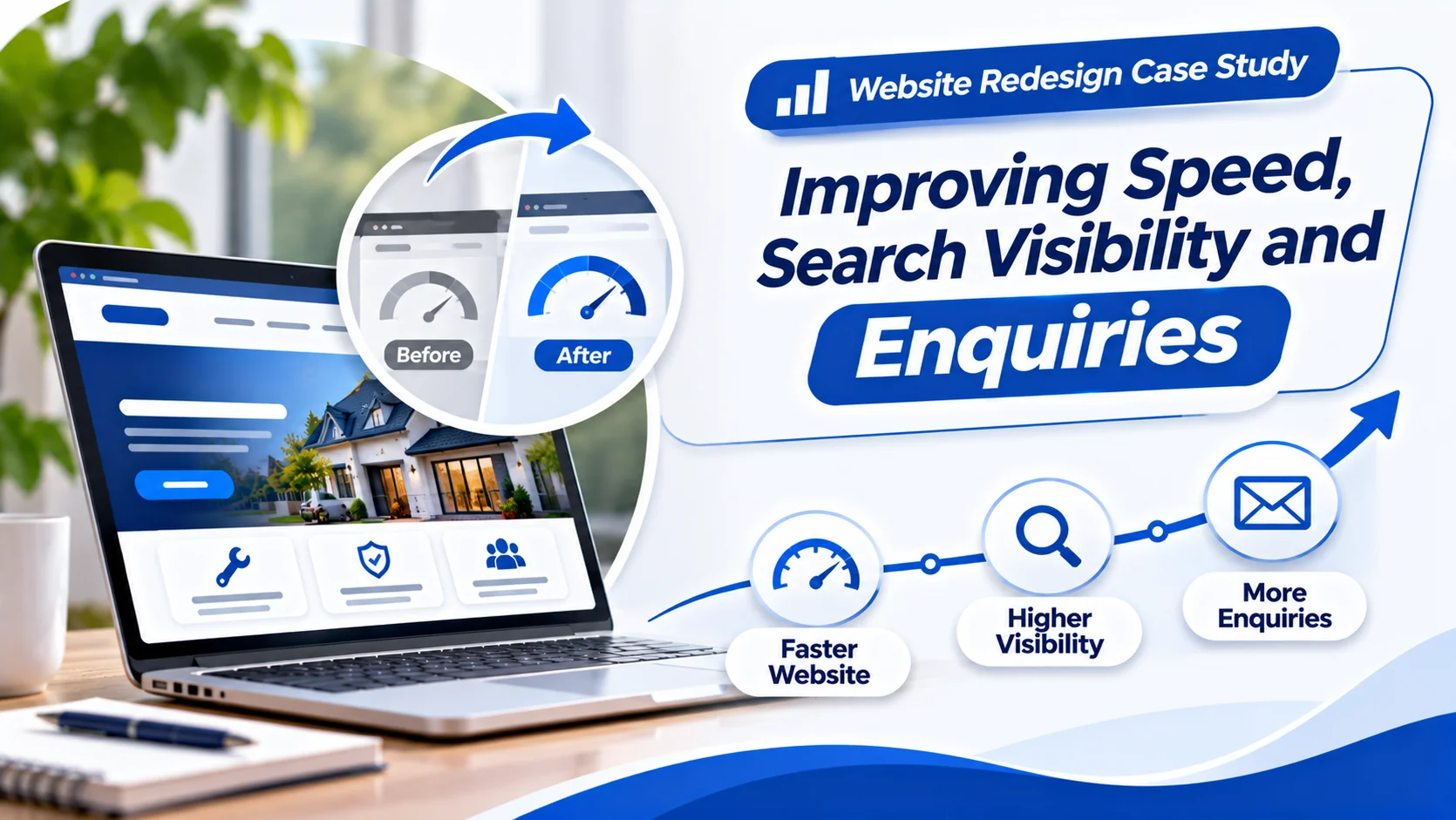
A Website Redesign Case Study should show whether website changes improved usability, search performance and customer enquiries, rather than assuming a new design produced better results. Wixdek’s published London electrician campaign provides a practical example of how service-page improvements, mobile usability and SEO can support more enquiries. The project involved improvements to an existing website rather than a documented full redesign. Its lead-generation results are published, but separate before-and-after website speed and Google Search Console data are unavailable.
The Project: A London Electrical Service Business
The business provided emergency, residential and commercial electrical services across London. Its website attracted organic visitors, but too few became customer enquiries. According to Wixdek’s published case study:
- around 76% of enquiries depended on Google Ads;
- organic search generated about 18 to 22 enquiries monthly;
- mobile conversion rate was 1.3%;
- priority service pages had a 64% bounce rate.
The problem was not simply website traffic. Visitors also needed to find the right electrical service and make contact easily.
Website Redesign Case Study Results: Before and After
Wixdek reported the following results after four months of SEO and website improvements.
| Performance metric | Before | After four months | Reported change |
| Monthly organic enquiries | 21 | 44 | +110% |
| Monthly organic phone calls | 13 | 31 | +138% |
| Mobile conversion rate | 1.3% | 2.7% | +108% |
| Service-page bounce rate | 64% | 39% | −39% |
| Ad-dependent enquiries | 76% | 49% | Reduced |
Source: Wixdek’s London Electrician SEO Case Study
These are Wixdek’s published campaign figures. The underlying analytics reports are not publicly available for independent verification. The results also cover a wider SEO and website-improvement campaign, so they should not be attributed solely to design changes.
What Was Holding the Website Back?
The main challenge was converting relevant visitors into enquiries. People searching for urgent electrical repairs usually need:
- clear service information;
- relevant local coverage;
- an easy way to contact the business.
Wixdek’s published account identifies weaknesses in service-page relevance, local targeting and mobile usability. The campaign also required clearer lead tracking to separate organic enquiries from paid advertising. Without that distinction, it would be difficult to judge whether better website traffic was generating useful business opportunities.
What Did Wixdek Improve?
Clearer Service Pages and Navigation
Wixdek reviewed eight priority service pages and improved how they matched customer search intent. The work focused on:
- emergency electrical services;
- residential electrical services;
- commercial electrical services.
Service-page content and internal links were improved so customers could reach relevant information more easily. The goal was to connect visitors with the service they needed instead of sending everyone through broad or unclear pages.
Easier Contact Options on Mobile
Mobile usability was another campaign focus. Wixdek improved the journey from service pages to enquiries. This mattered for urgent electrical searches, where customers may prefer calling instead of completing a lengthy form. The published campaign reported an increase in mobile conversion rate from 1.3% to 2.7%. That supports an improvement in the recorded mobile enquiry journey. However, the public report does not include before-and-after usability recordings.
Stronger Local SEO and Lead Tracking
The campaign strengthened local search relevance and internal linking between important pages. Wixdek also separated call and enquiry tracking to make organic and paid performance easier to compare. This distinction mattered because the business relied heavily on advertising before the campaign. After four months, reported ad-dependent enquiries fell from 76% to 49%.
What Does This Website Redesign Case Study Show About Design Trade-Offs?
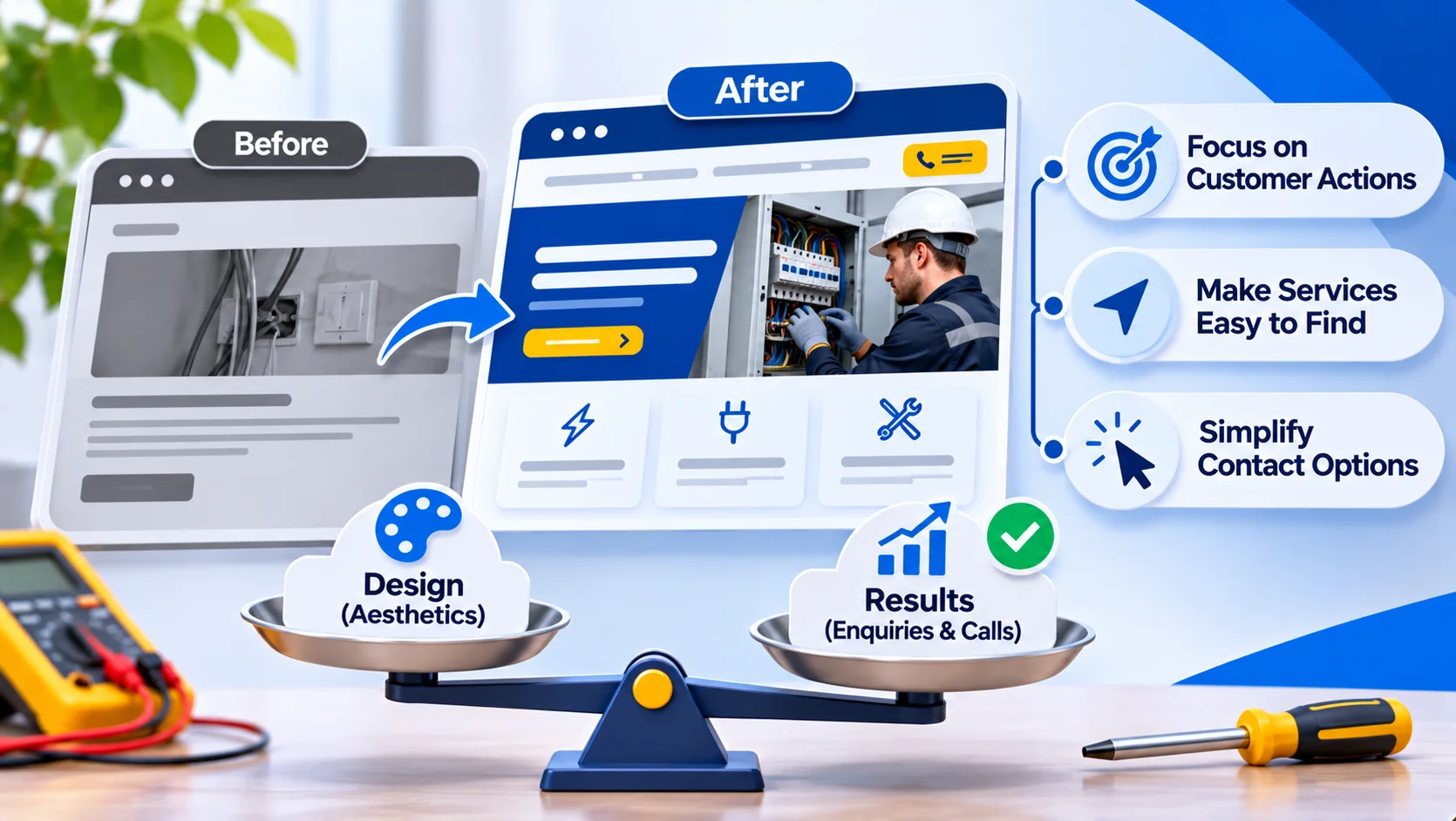
The project focused on practical customer actions rather than traffic numbers alone. An attractive service page has limited commercial value when visitors cannot identify the right service or contact the business easily. For this electrical company, the reported work prioritised:
- clearer service information;
- mobile usability;
- enquiry tracking.
However, the published project does not document specific design alternatives or provide a formal record of design trade-offs. That evidence would be needed to assess exactly how visual decisions were balanced against performance and SEO requirements.
How Was the Website Launch Controlled?
A complete Website Redesign Case Study should explain which checks were completed before the new website went live. Wixdek’s Website Development services describe an approach covering structure, performance, functionality and SEO readiness. However, the electrician campaign does not confirm a full redesign launch or publish a completed launch checklist. For a redesign project, useful launch evidence would include:
| Launch control | What the evidence should confirm |
| URL and redirect review | Important existing pages remained accessible |
| Crawl and indexing tests | Priority pages were available to search engines |
| Mobile usability | Navigation and contact actions worked correctly |
| Form and call testing | Genuine enquiries reached the business |
| Analytics validation | Leads were recorded through intended channels |
These are the checks needed to document a redesign launch. They are not claims about tests completed during the electrician campaign.
Did Website Speed and Search Visibility Improve?
The published campaign shows improvements in enquiries and mobile conversion. However, it does not provide comparable before-and-after PageSpeed results. There are no published:
- LCP comparisons;
- Lighthouse test records;
- complete Google Search Console comparisons.
The case also describes local SEO improvements without publishing full clicks, impressions or ranking changes. It would therefore be inaccurate to claim a measured website-speed increase or specific organic-visibility gain from this evidence alone. A full Website Redesign Case Study would need measurements from the same URLs and comparable reporting periods.
What Did Wixdek’s Website Improvements Achieve?
The strongest reported result was the increase in monthly organic enquiries from 21 to 44. Organic phone calls also increased from 13 to 31, while mobile conversion rate rose from 1.3% to 2.7%. The campaign shows an important lesson for businesses considering a redesign. Website improvements should be judged by useful customer actions, not appearance alone. However, the results do not prove what would happen during a complete redesign or isolate the effect of individual changes.
They show that the reported combination of SEO, usability and tracking improvements was associated with stronger enquiry performance for one London business.
What Can Businesses Learn From This Website Redesign Case Study?
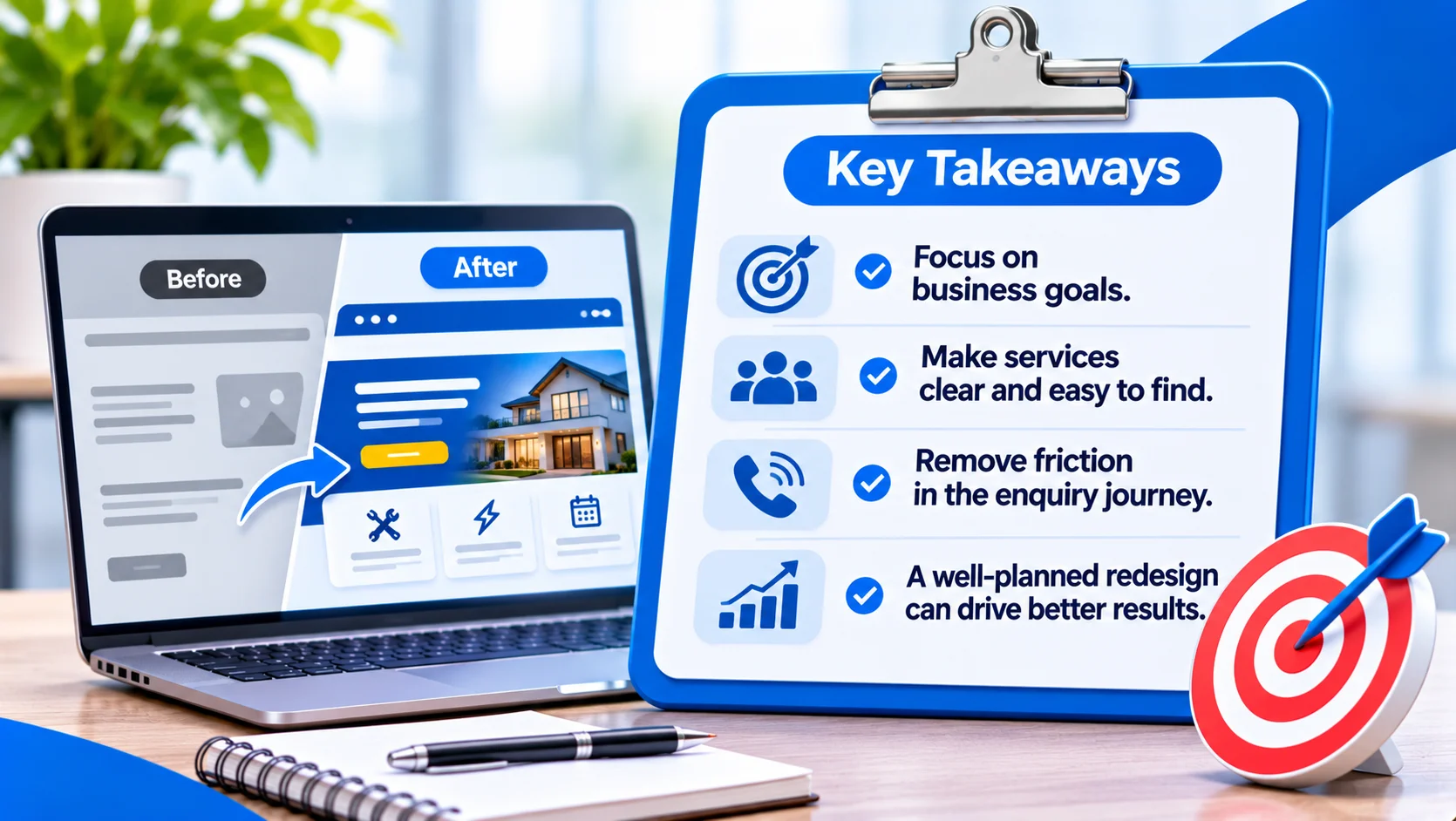
This Website Redesign Case Study highlights several practical lessons:
- Measure enquiries, not just website traffic.
- Keep important service information easy to find.
- Test mobile contact journeys carefully.
- Separate organic and paid lead tracking.
- Protect useful pages during major website changes.
- Do not claim speed improvements without comparable testing.
- Avoid attributing campaign results to design alone.
A redesign should improve how customers use the website while protecting the search value already built into important pages.
Explore More Wixdek Results
Wixdek also publishes a PPC case study about reducing wasted spend and improving qualified leads. That case study covers a different part of lead generation. For local search performance, Wixdek’s planned local SEO case study provides another research direction. Its prescribed article destination should be confirmed before linking. The planned AI search case study covers a separate visibility channel and should only be linked once published.
Frequently Asked Questions
What Is a Website Redesign Case Study?
A Website Redesign Case Study examines the problems, website changes and measurable outcomes connected with improving or rebuilding a website.
Can a Website Redesign Increase Enquiries?
It can support more enquiries when changes make services easier to understand and contact journeys easier to complete. However, results should be measured rather than assumed.
Does a Website Redesign Automatically Improve SEO?
No. Changing content, URLs, navigation or technical settings can also create SEO problems if the redesign is not managed carefully.
Should Website Speed Be Included in a Redesign Case Study?
Yes, when comparable before-and-after measurements are available. Without those measurements, a case study should not claim a confirmed speed improvement.
Discuss Your Website Redesign With Wixdek
A Website Redesign Case Study is most useful when it connects website changes with measurable business outcomes. A redesign should solve specific problems without losing pages and customer journeys that already work. Wixdek provides web design and development services for UK businesses looking to improve usability, functionality and SEO readiness. You can also explore our Technical SEO services to review indexing, website structure and performance concerns before a rebuild.
Discuss Your Website Redesign
By Wixdek