Getting found on Google is only half the job. For a local business, the real goal is getting found by people who need the service. That means appearing in the right searches, showing accurate business information, building trust and making it easy for someone to call.
This local SEO case study looks at a plumbing business that had struggled with inconsistent local visibility. The business was getting only around two calls a month from its local search presence. After a focused local SEO campaign, that changed to an average of 18 direct calls every week. The work focused on four areas: Google Business Profile optimisation, local citation cleanup, reviews and local website content. The results were measured across Maps visibility, website traffic and phone enquiries.
Local SEO Case study note: The results and figures in this article are based on the supplied campaign data. Add the client’s approved business name, campaign dates and supporting screenshots before publishing.
The Business Before Local SEO
The business provided plumbing services in its local area, but its online visibility wasn’t matching the demand for those services. Someone searching locally could find other plumbing companies before finding this business. That created a simple but costly problem.
The business was available to take enquiries, but it wasn’t consistently visible when potential customers were searching. Its Google Business Profile also needed work, while business information across local directories was inconsistent. The review profile was another weak point.
The company had only four reviews, and all four were more than a year old. For a customer choosing a local plumber, that doesn’t provide much reassurance. It also meant the business had very little recent customer feedback supporting its local presence.
This local SEO case study began with a business that had genuine demand but weak visibility across important local searches.
The Challenge
The campaign started with several clear problems. The first was poor visibility in Google Maps. The business wasn’t consistently appearing in the top local results for its core searches.
The second problem was inconsistent business information. Its name, address and phone number were not consistent across the local directories we checked. The third issue was its review profile.
Four older reviews gave potential customers very little recent evidence of the company’s work. There was also a website relevance issue. The site needed stronger local signals around the services offered and the areas covered.
None of these problems could be solved with one quick change. The campaign needed to improve the local presence as a whole. The local SEO case study showed that the business had several connected problems rather than one isolated ranking issue.
What We Found in the Initial Review
Before making changes, the important thing was to understand what was actually wrong. This avoided making random SEO changes simply because they appeared in a standard checklist. We reviewed the business’s Google Business Profile, local listings, reviews and website content.
The starting picture was clear. The business had a genuine local service, but its online signals were not working together strongly enough. Google says local results are mainly based on relevance, distance and prominence. Complete and accurate Business Profile information can help Google understand and match a business to relevant local searches.
That gave us a clear direction. We needed to improve relevance and accuracy while building stronger local trust.
This local SEO case study therefore started with the problems that were most likely to affect local visibility and customer trust.
The Local SEO Strategy
The strategy was deliberately focused. We didn’t try to create dozens of pages or chase every possible keyword. Instead, we worked on the areas most closely connected to local discovery and enquiries. The campaign had four main parts:
- Google Business Profile optimisation
- Local citation cleanup
- A consistent review process
- Local service and area content
We also tracked the business outcomes rather than looking only at rankings. That distinction matters. A ranking improvement is useful, but a steady flow of genuine enquiries is much more valuable to a local business.
In this local SEO case study, every change was connected to visibility, trust or the chance of generating a genuine customer enquiry.
Google Business Profile Optimisation
The Google Business Profile was one of the first areas we addressed. The profile needed to clearly represent the real business and the services it provided. We reviewed and improved the key information, including services, opening hours, business details and photos.
We also made sure the information matched the business website. This matters because Google uses Business Profile information alongside information from other sources to understand local businesses. We didn’t try to force keywords into the business name or add information that wasn’t true.
That can create a poor customer experience and may also conflict with Google’s Business Profile rules. Instead, the aim was simple. Make the profile accurate, useful and easy for potential customers to trust.
For this local SEO case study, Google Business Profile improvements formed an important part of the wider campaign rather than being treated as a standalone fix.
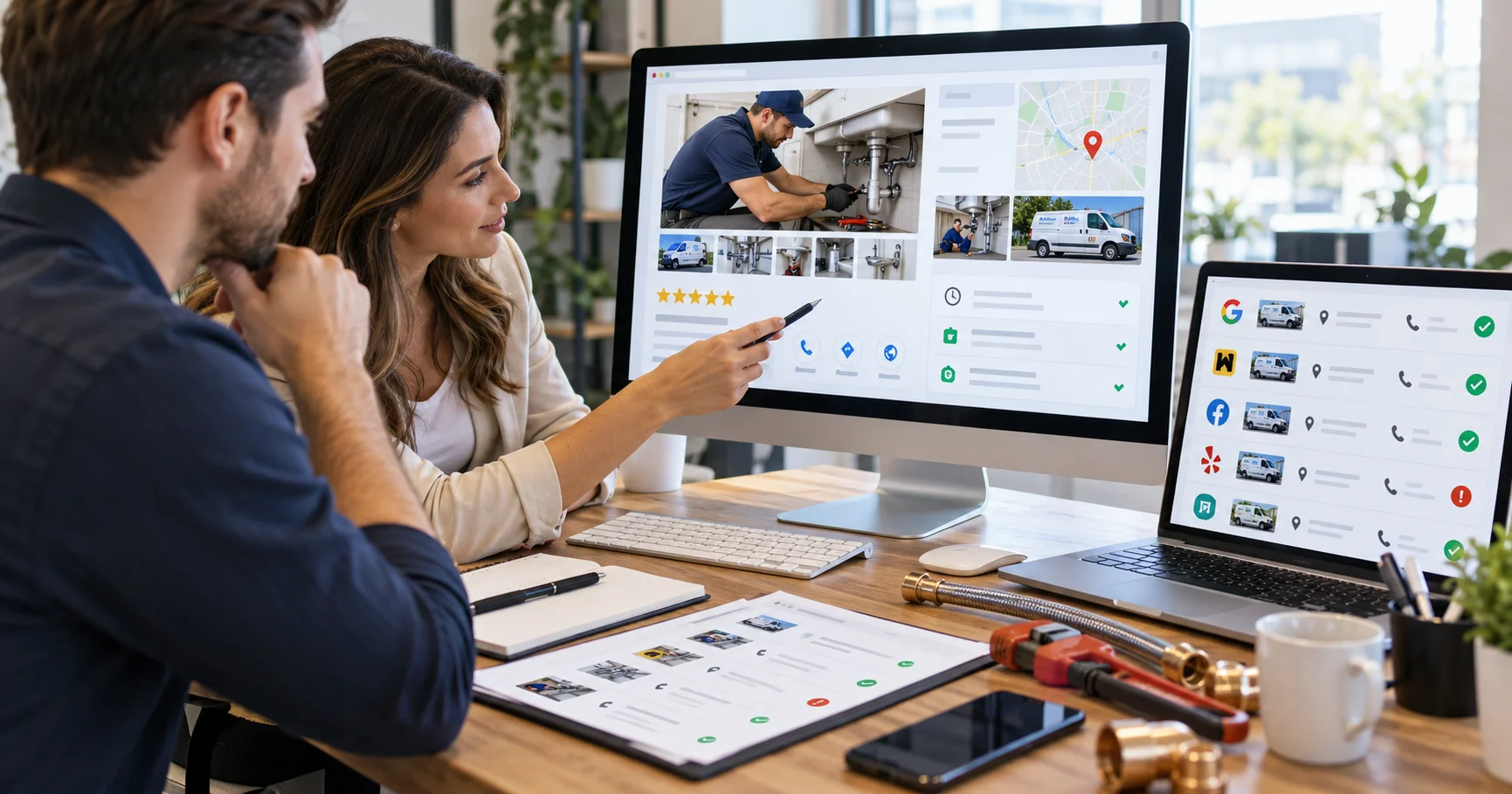
Why the profile mattered
Imagine someone searches for a plumber nearby. They may see several businesses at once. Before calling, they can quickly compare names, ratings, photos, services, opening information and other details.
If your profile looks incomplete or outdated, people may simply move on. That is why local SEO isn’t just about rankings. The search result itself needs to help the customer make a decision.
Local Citation Cleanup
The next issue was inconsistent local business information. A citation is an online mention of a business, usually including its name, address and phone number. We found differences between the business information shown across local directories.
Some records contained outdated or incorrect details. These inconsistencies can make local business information harder to understand. Google explains that it gathers business information from many sources, including websites, third parties and user contributions.
So we worked through the important listings and corrected the information. The goal wasn’t to submit the business to every directory we could find. That would add noise rather than value. Instead, we focused on relevant and useful local sources. In this local SEO case study, citation cleanup helped create a more consistent local presence across important directories.
What we corrected
The citation cleanup focused on:
- Incorrect addresses
- Incorrect phone numbers
- Inconsistent business names
- Outdated listing information
- Important local directory records
The result was a cleaner and more consistent local footprint.
Building a Better Review Process
The business also needed more recent customer feedback. At the beginning of the campaign, there were only four reviews. All four were more than a year old.
That created a trust problem. A potential customer wants to know that a business is still active and serving customers today. So the business introduced a simple review request process.
Happy customers were asked to leave a review after their job had been completed. The request was kept simple and direct. There was no attempt to manufacture reviews or pressure customers into leaving a particular rating.
That matters because genuine feedback is far more useful than a collection of forced comments. Google also confirms that review count and positive ratings can contribute to local prominence. Reviews also help customers. Someone comparing three plumbers may feel more comfortable calling the business with recent, genuine customer feedback.
The local SEO case study also shows why recent, genuine reviews were treated as part of the trust-building process rather than simply a ranking tactic.
Improving Local Website Relevance
The Google Business Profile wasn’t the only part of the local search presence. The website also needed to make the service and location connection clearer. We added stronger references to the specific services offered and the local areas served.
This helped create a clearer path between the customer’s search and the relevant website content. For example, a person looking for a local plumbing service should be able to quickly understand: What services are available?
Which areas are covered? How can they contact the business? Why should they trust the company? The website should answer those questions without making the visitor hunt around. Sometimes improving search performance also requires wider changes to the website itself. Our website redesign local seo case study shows how website improvements can support a clearer user journey and stronger digital performance. The local SEO case study also showed why the website needed stronger connections between services, locations and customer search intent.
Local content without keyword stuffing
We didn’t fill the pages with repeated town names. That approach often makes content awkward to read. Instead, location references were used where they made sense.
The aim was to provide useful local information while keeping the content natural. That’s important because Google recommends creating helpful, reliable, people-first content rather than content created mainly to manipulate search rankings.
The 90-Day Implementation Timeline
The campaign was carried out over a 90-day period.
This local SEO case study used that 90-day period to improve the foundations, strengthen local relevance and then measure the commercial impact.
Month 1: Fix the foundations
The first stage focused on the Business Profile and local business information. We corrected key profile information and began cleaning up inconsistent citations. The review process was also put in place. This stage was about fixing the foundation before trying to push visibility further.
Month 2: Strengthen local relevance
The next stage focused more heavily on the website. Service and location signals were improved so the website better reflected what the business actually offered. Review activity also started building a more current trust profile. At this point, we continued monitoring local visibility rather than assuming that every change would produce an instant result. At this stage of the local SEO case study, the focus moved from fixing basic issues to strengthening local relevance across the website.
Month 3: Measure the commercial impact
The final stage focused on performance. We compared the business’s visibility and website traffic with the starting position. Most importantly, we looked at phone enquiries. That gave us a much clearer view of whether the work was producing a meaningful business result.
The Results
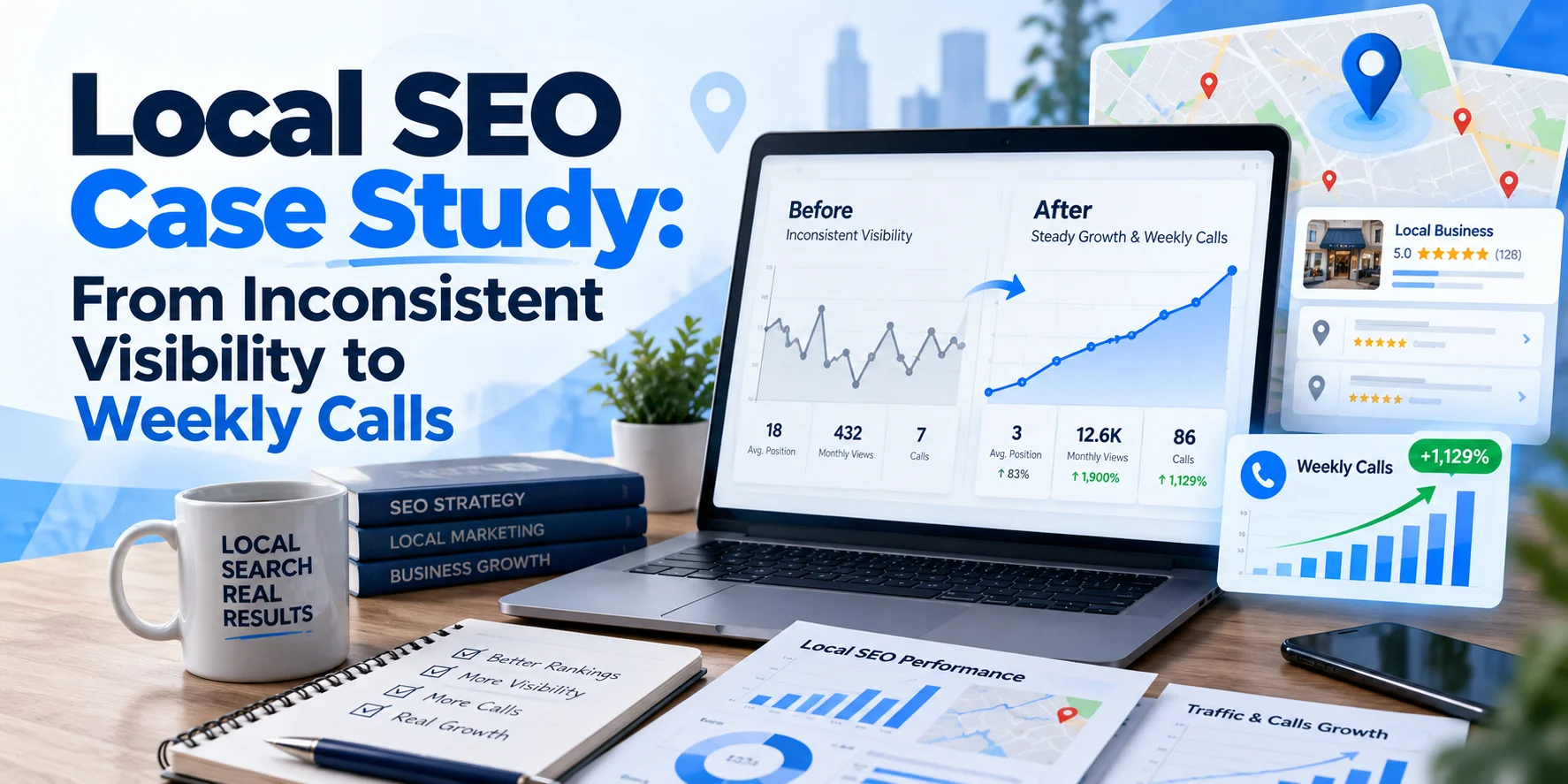
The change was significant. Before the campaign, the business was receiving around two inbound calls per month from its local search presence. After the campaign, it reached a steady average of 18 direct calls every week.
That represents a major change in enquiry volume. Website traffic from local search also increased by 140%. The business also moved from page-three visibility into the top local map results for its core keywords within 90 days.
These local SEO case study results show the change across calls, local search traffic and Maps visibility rather than relying on one ranking metric alone.
Before and after
| Metric | Before | After |
|---|---|---|
| Direct calls | Around 2 per month | Around 18 per week |
| Local map visibility | Not in top local result | Top local results for core keywords |
| Local search website traffic | Baseline | +140% |
| Google reviews | 4 | Increased through ongoing review activity |
This is one example of how search improvements can translate into measurable business outcomes. For another results-led example, explore our Local SEO case study. The call figure is particularly important. The campaign wasn’t judged only by a ranking report. The business was getting more opportunities to speak with potential customers.
From Two Calls a Month to 18 Calls a Week
The biggest change was not a single ranking. It was the change in customer activity. Before the campaign, local visibility was inconsistent and enquiries were rare.
After the campaign, the business was receiving a regular flow of direct calls. That’s the difference between measuring SEO as a traffic exercise and measuring it as a lead-generation channel. The business didn’t simply need more website visitors. It needed more people looking for plumbing services to find and contact it. This was the strongest commercial result from the local SEO case study because improved visibility translated into more direct customer enquiries.
What Actually Drove the Improvement?
It would be misleading to say one change caused every result. Local search performance depends on several signals working together. Google itself says local ranking is based mainly on relevance, distance and prominence.
The campaign therefore improved several connected areas. The Google Business Profile made the business information clearer. Citation cleanup improved consistency across important local sources.
The review process created more recent customer feedback. The website provided stronger service and local relevance. Together, these changes created a stronger local search presence.
That’s the important lesson. Local SEO works best when the different parts support each other. The local SEO case study suggests that the improvement came from several connected changes working together rather than one single SEO tactic.
What This Local SEO Case Study Does Not Prove
A good local seo case study should also be honest about its limits. These results don’t mean every plumbing company will move from two calls a month to 18 calls a week. They don’t mean every business will reach the top three Maps results within 90 days.
Local search results depend on factors such as competition, location, relevance and prominence. Google also states that there is no way to request or pay for a better local ranking. The results shown here belong to this specific campaign. That is why we use case studies as evidence of what happened, not as promises of what will happen for every future client.
Why the Local SEO Approach Worked
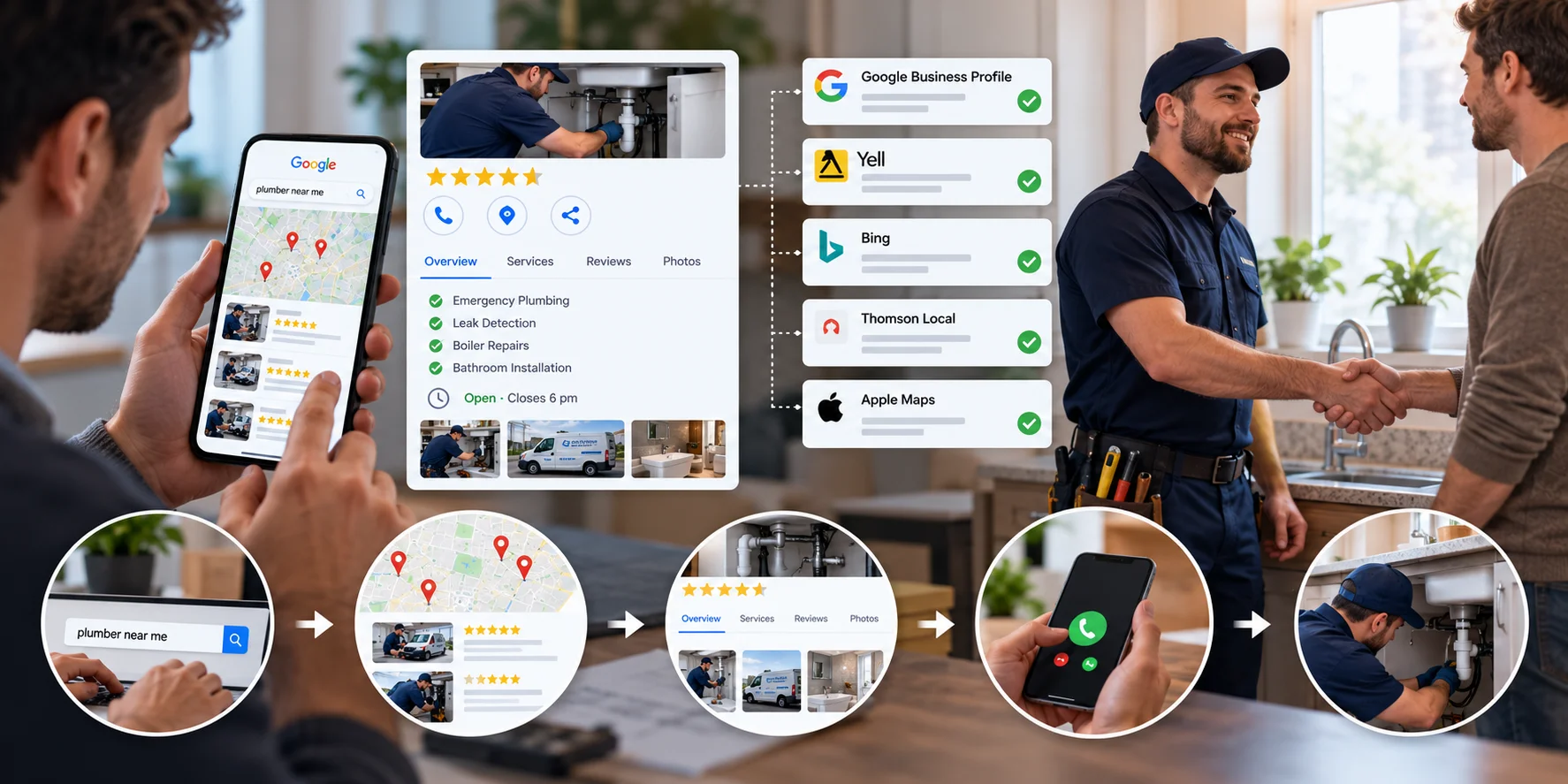
The campaign worked because it focused on the actual customer journey. Someone needs a plumber. They search Google.
They see local businesses. They compare the available options. They check reviews and business information.
They visit a website or call. Every part of that journey needs to make sense. If the business doesn’t appear, it can’t win the enquiry.
If the profile looks unreliable, the customer may choose another company. If the website doesn’t explain the service or area, the visitor may leave. And if the phone number is difficult to find, the opportunity can disappear. Good local SEO case study removes those points of friction. This local SEO case study worked because the campaign followed the complete customer journey from search visibility to trust and contact
Lessons Other Local Businesses Can Take From This
The first lesson is to check the foundations before chasing more keywords. A poorly maintained Business Profile can hold back local visibility. The second lesson is to keep business information accurate.
Your website and important local listings should clearly represent the same real business. The third lesson is to build reviews as part of normal customer follow-up. Don’t wait until the profile looks empty.
The fourth lesson is to create useful service and location content. Don’t make pages simply to add town names. Create pages because customers actually need that information.
The final lesson is to measure outcomes. Rankings matter, but calls, forms and qualified enquiries matter more. The exact priorities will vary by sector, so explore the industries we work with to see how SEO requirements can differ between different types of businesses.
This local SEO case study gives other local businesses a practical example of why visibility, trust and enquiry tracking should be considered together.
How Wixdek Measures Local SEO Results
At Wixdek, we don’t believe a local SEO report should stop at “position three”. A better report connects visibility with business activity. Depending on the campaign, we can track:
- Google Maps visibility
- Local Pack presence
- Organic search traffic
- Google Business Profile activity
- Phone calls
- Website enquiries
- Service-level performance
- Location-level performance
This helps answer a more useful question. Is local search bringing the business more of the customers it wants? That’s the number worth watching. Organic search isn’t the only channel that can be measured this way. Our PPC case study shows how paid search performance can also be assessed through enquiries, conversions and commercial results.
Frequently Asked Questions
How long does local SEO take to produce results?
There isn’t one fixed timeline. Competition, location, website quality, Business Profile strength and the starting position can all affect progress. In this case, the business saw major changes within 90 days. That should be treated as a case result, not a guaranteed timeframe.
Can local SEO increase phone calls?
Yes, stronger local visibility can create more opportunities for people to contact a business. However, call volume also depends on search demand, competition, service quality and how easy it is to contact the business.
Does Google Business Profile optimisation help local SEO?
A complete and accurate Business Profile can help Google understand a business and match it with relevant local searches. Google says complete and accurate information can improve a business’s chances of appearing in local results.
Do local citations still matter?
Accurate business information across relevant sources can support a consistent local presence. However, citation building shouldn’t become a numbers game. The focus should be on accurate information and useful, relevant sources.
How important are reviews for local SEO?
Reviews can support both trust and local prominence. Google states that review count and positive ratings can help a business’s local ranking. They also influence the customer’s decision, which makes them useful beyond SEO.
Can local SEO guarantee top-three Google Maps rankings?
No. Google says there is no way to request or pay for a better local ranking. Local results are mainly influenced by relevance, distance and prominence. Any agency promising guaranteed Maps rankings should be treated carefully.
The Bigger Picture
This local seo case study shows why local SEO should be treated as a business growth channel rather than a ranking exercise. The plumbing business started with inconsistent visibility, weak local data and very few recent reviews. The campaign fixed those foundations and strengthened its local presence.
Within 90 days, the business reached the top local results for its core keywords, local search traffic increased by 140%, and direct calls reached an average of 18 per week. The most useful result wasn’t a ranking position. It was the steady increase in opportunities to speak with potential customers. That’s what local SEO should ultimately be working towards.
Want to Improve Your Local Search Visibility?
If your business is appearing inconsistently in Google Maps, getting very few local enquiries or struggling to compete with nearby businesses, start with the foundations. A proper local SEO review can show where visibility is being lost and which changes deserve attention first. Wixdek can review your Google Business Profile, local visibility, website structure, service targeting and local search performance. Explore Wixdek’s Local SEO services.