Getting into Google search results is only the first step. The bigger challenge is gaining visibility for searches that matter.
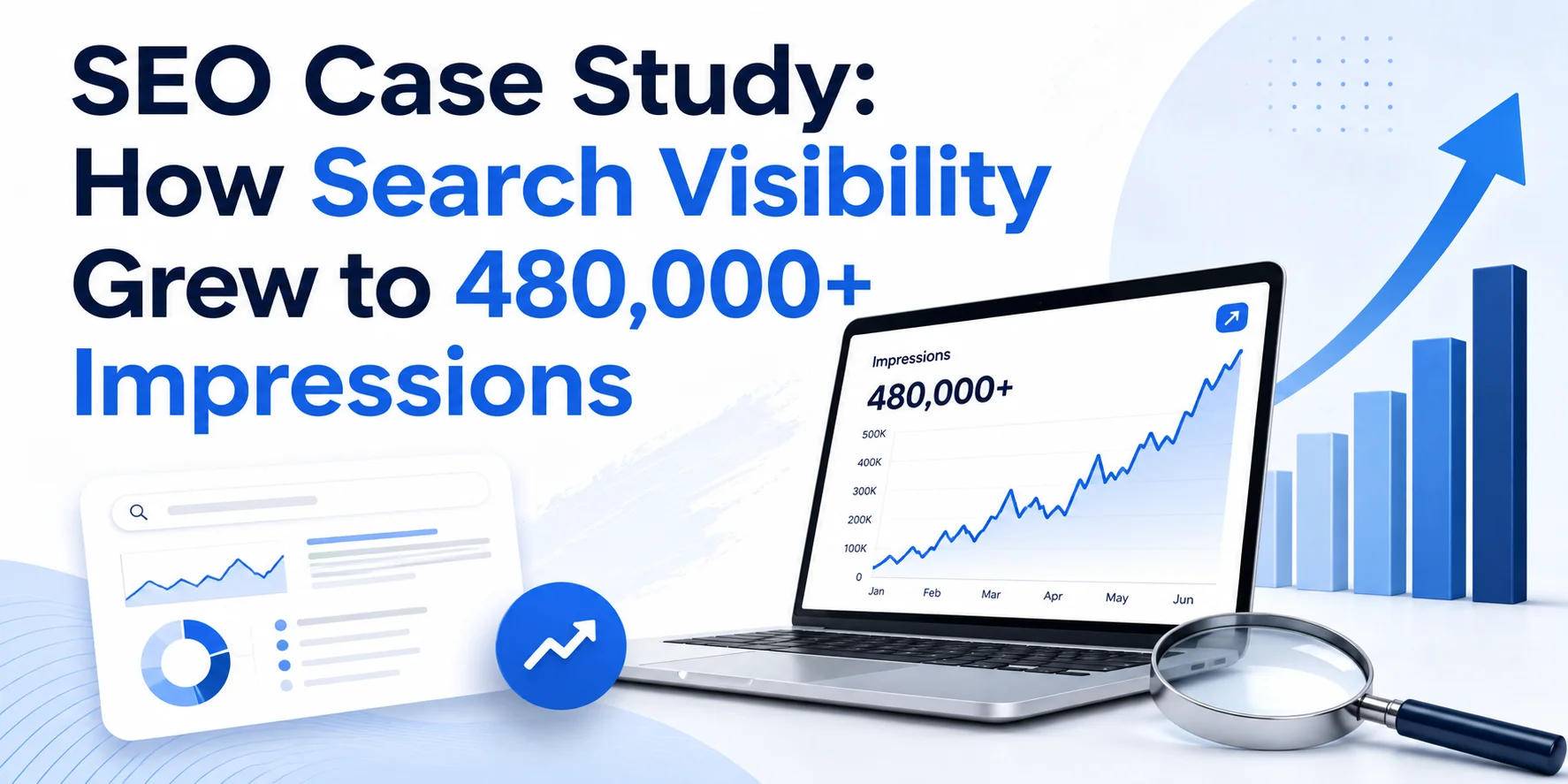
This SEO Case Study examines a Wixdek-reported campaign in which Google Search impressions increased from approximately 70,000 to more than 480,000.
Reported Search Console clicks also rose from around 400 to nearly 5,000. Wixdek’s source material describes stronger average search visibility, although exact numerical position values are not available in the supplied evidence.
The results point to substantial growth in search exposure and clicks.
However, the client’s identity, exact reporting dates and original Search Console export have not been independently confirmed.
This SEO Case Study focuses on what the available evidence supports, what remains uncertain and what businesses can learn from the reported performance.
SEO Case Study Results at a Glance
| Search Metric | Starting Point | Later Result |
| Google Search impressions | Approx. 70,000 | 480,000+ |
| Google Search clicks | Approx. 400 | Nearly 5,000 |
| Average search position | Described as Page 3 | Described as Page 1–2 |
| Search visibility | More limited | Substantially broader |
The reported impression total increased by more than six times. Clicks also rose considerably. These figures come from the supplied campaign summary rather than an independently verified Search Console export. Exact reporting dates, search type and numerical average-position values still need confirmation.

The Client and Starting Position
The available campaign material does not identify:
- the client;
- website;
- industry;
- target location.
It also does not establish whether the site primarily served London, another UK market or an international audience.
Those details should not be added without evidence.
At the earlier reporting point, the site reportedly recorded:
- approximately 70,000 search impressions;
- around 400 clicks;
- visibility described as roughly Page 3.
This shows an existing Google Search presence with room for growth.
The available data does not show which queries or landing pages contributed most to those numbers.
SEO Case Study: The Main Challenge
The central challenge was increasing relevant search exposure and clicks.
A website may already appear in Google while important pages remain below stronger competitors.
Possible causes can include:
- weak search-intent alignment;
- limited content coverage;
- technical accessibility problems;
- weak internal linking;
- strong competition.
Those are common SEO issues, not confirmed findings from this specific campaign.
The supplied data does not include the original audit, so the exact causes of the site’s starting performance cannot be established.
That distinction matters in a credible SEO Case Study.
What Wixdek Actually Worked On
Wixdek’s public SEO services in London page describes its broader SEO approach.
Its services include:
- technical SEO;
- search-intent research;
- content optimisation;
- internal linking;
- authority building;
- performance tracking.
However, the supplied evidence does not identify which exact activities were completed for the website associated with the 480,000-impression result.
There is no client-specific:
- task list;
- technical audit;
- dated implementation history.
The next section therefore explains a typical SEO process rather than presenting it as a verified record of this campaign.
A Typical SEO Implementation Process
A structured SEO campaign usually begins by understanding the website’s condition, search visibility and commercial goals.
Stage 1: Review Technical SEO and Existing Performance
The first stage may examine:
- crawling;
- indexing;
- redirects;
- page structure;
- technical issues affecting important URLs.
Search Console can also show which pages and queries already generate impressions and clicks.
The aim is to identify the issues that deserve attention first.
Stage 2: Improve Keyword Targeting and Search Intent
Keyword research helps match searches with suitable pages.
For example:
- commercial searches may need service pages;
- informational searches may need guides;
- cost searches may need pricing content;
- comparison searches may need decision-focused resources.
This prevents unrelated search intents from being forced into one page.
It can also reveal content gaps and overlapping pages.
Stage 3: Improve Content and Internal Linking
Existing pages may need:
- clearer information;
- stronger structure;
- better answers;
- more relevant internal links.
New content is useful when it fills a real search or customer-information gap. Google’s link best practices explain the importance of crawlable links and descriptive anchor text. Content should respond to genuine search needs rather than simply increase page count.

Stage 4: Review Performance
After changes are implemented, Search Console can help measure:
- impressions;
- clicks;
- queries;
- landing pages;
- average position.
Some pages may gain impressions but few clicks.
Others may perform well for valuable searches and deserve further investment.
These stages describe a typical process. The available evidence does not prove that every stage was completed in this particular campaign.
SEO Case Study: Search Console Results
The strongest reported evidence in this SEO Case Study is the change in impressions and clicks.
Both increased substantially between the supplied comparison points.
Search Impressions Grew to 480,000+
The earlier figure was approximately 70,000 impressions.
The later result exceeded 480,000.
Search impressions measure how often a result appears under Google’s Search Console reporting rules.
They measure visibility, not website visits.
The increase suggests that the site appeared much more frequently in Google Search.
However, the supplied data does not show which:
- pages;
- queries;
- countries;
- devices
generated the growth.
Google Search Clicks Reached Nearly 5,000
Clicks reportedly increased from approximately 400 to nearly 5,000.
That matters because the rise in visibility was accompanied by more interactions with the search results.
Search Console clicks should not automatically be treated as identical to Analytics sessions because the platforms use different measurement methods.
Google’s Search Console Performance report explains how clicks, impressions, CTR and average position are measured.
What Happened to Average Position?
The campaign description says average visibility improved from around Page 3 to Page 1–2.
That wording should be treated cautiously.
Search Console reports numerical average position across recorded impressions. It does not assign an entire website permanently to one results page.
A site may rank strongly for some searches and poorly for others.
The exact before-and-after numerical values are not available in the supplied data.
They should replace the Page 3 and Page 1–2 labels once verified.
What Caused the Visibility Growth?
The figures show higher impressions and clicks.
They do not prove which individual change caused the increase.
Search performance can be influenced by:
- better content relevance;
- technical accessibility;
- improved internal linking;
- broader content coverage;
- competition;
- changes in search demand.
For example, improving a useful landing page may help it appear for more relevant searches.
Adding content that fills genuine gaps may also expand query coverage.
These are reasonable explanations, but they are not verified causes of this campaign’s growth.
A reliable SEO Case Study should not assign results to a tactic without supporting evidence.
What This SEO Case Study Proves — and What It Does Not
What the Available Data Supports
The campaign summary reports:
- impressions increasing from about 70,000 to 480,000+;
- clicks increasing from about 400 to nearly 5,000;
- stronger reported average search visibility.
These are meaningful search-performance indicators when measured consistently.
What Remains Unverified
The supplied records do not establish:
- client identity;
- website or industry;
- target market;
- exact reporting dates;
- Search Console property;
- search type;
- numerical average-position values;
- exact campaign tasks;
- enquiries;
- bookings;
- revenue.
Those gaps limit the conclusions that can be drawn.
They also prevent reliable attribution of the results to individual SEO activities.
Impressions Do Not Equal Enquiries
Search impressions, clicks and conversions measure different stages.
| Metric | What It Measures | What It Does Not Prove |
| Impressions | Search visibility | Visits or leads |
| Clicks | Search-result interactions | Qualified enquiries |
| Average position | Relative search placement | Conversions |
| Enquiries | Customer contact | Completed sales |
| Sales/bookings | Commercial outcome | Profit without cost data |
The increase to 480,000+ impressions is therefore a visibility result.
Nearly 5,000 clicks provides stronger evidence that more people interacted with the site’s search listings.
The available evidence does not establish how many of those clicks became enquiries or customers.
Search Intent Still Matters
Not every impression has equal commercial value.
Someone searching for general information may be much further from buying than someone looking for a specific service.
A smaller number of commercial searches can therefore be more valuable than a large volume of low-intent visibility.
A useful SEO Case Study should examine both search exposure and business outcomes whenever those records are available.
Lessons for Business Owners
Look Beyond Rankings
Higher positions can improve visibility.
But rankings are not the final business goal.
Where data is available, review:
- impressions;
- clicks;
- enquiries;
- bookings;
- sales.
Find Which Pages Produced the Growth
Site-wide totals can hide major differences.
One or two informational pages may drive a large proportion of impressions.
Another service page may receive fewer visits but generate stronger commercial intent.
Page-level analysis provides more useful insight.
Keep Search Intent Central
Your website needs pages that match different customer needs.
Service pages should explain what the business offers.
Informational content should answer useful questions.
Pricing and comparison pages can support people closer to making a decision.
Measure Before Making Claims
Before-and-after figures become stronger when readers can see:
- source;
- measurement period;
- metrics;
- campaign changes;
- business outcomes.
This is particularly important for an SEO Case Study built around a large headline result.
What Wixdek Should Review Next
The next useful step would be finding where the reported visibility growth came from.
Review Search Queries
Separate queries by intent, such as:
- commercial;
- informational;
- branded;
- local.
This helps determine whether increased visibility reached relevant audiences.
Review Landing Pages
Identify which URLs gained the most:
- impressions;
- clicks;
- visibility.
Check whether important commercial pages improved or whether most growth came from informational content.
Review CTR in Context
CTR is calculated from clicks and impressions.
It can fall when a site begins appearing for a much wider range of searches.
That does not automatically mean performance has worsened.
Review CTR alongside:
- query relevance;
- average position;
- total clicks.
Connect SEO Data With Conversions
The final step is linking search performance with business outcomes.
For a service business, that could include:
- connected calls;
- completed quote forms;
- bookings;
- sales.
This shows whether stronger visibility created commercial value.
SEO Case Study: Build Around the Right Outcome
The reported campaign shows substantial growth in Google Search exposure.
Impressions reportedly increased from around 70,000 to more than 480,000.
Clicks reportedly increased from about 400 to nearly 5,000.
Those are strong visibility indicators, subject to verification.
But another business does not need 480,000 impressions simply because this site reportedly reached that figure.
A local company may gain more value from a smaller number of highly relevant commercial searches.
The right SEO goal is not the largest possible impression count.
It is stronger visibility for the searches that matter, followed by reliable measurement of what those visitors do.
Request an SEO Opportunity Review
If your website already appears in Google but important pages receive limited visibility, Wixdek can help identify possible opportunities.
Our SEO services in London cover technical SEO, search-intent research, content optimisation, internal linking and performance tracking.
An SEO review can examine:
- current search visibility;
- important landing pages;
- search intent;
- technical issues;
- content gaps.
Request an SEO Opportunity Review to identify where your website may have room to improve.
Frequently Asked Questions
What Is an SEO Case Study?
An SEO Case Study documents an SEO campaign’s starting point, work completed, measurement period and reported results.
How Many Impressions Did This SEO Case Study Reach?
The supplied campaign summary reports growth from approximately 70,000 to more than 480,000 impressions.
The original Search Console export has not been independently verified.
How Many Google Search Clicks Were Reported?
The supplied figures report an increase from around 400 to nearly 5,000 clicks.
Did Average Search Position Improve?
The campaign description reports movement from roughly Page 3 to Page 1–2.
Exact numerical Search Console position values are not available in the supplied evidence.
Do 480,000 Impressions Mean 480,000 Visitors?
No.
Impressions measure appearances in Google Search.
Clicks measure interactions with search results.
Did This SEO Case Study Generate More Leads?
The supplied data does not include verified enquiry, booking or revenue figures.
Lead growth therefore cannot be confirmed.
Which SEO Improvements Can Increase Visibility?
Technical improvements, useful content, search-intent targeting and internal linking can all support stronger visibility.
Their effect depends on the website and competitive environment.
How Long Did This SEO Case Study Take?
The exact comparison dates are not available in the supplied material.
A reliable timeline requires the original Search Console reporting period.
Can Every Website Reach 480,000 Impressions?
No.
Search potential varies by:
- industry;
- market size;
- competition;
- content coverage;
- search demand.
No impression or ranking result is guaranteed.
What Should I Review After Impressions Increase?
Check which queries and pages generated the increase. Then compare clicks, commercial landing pages and reliable conversion data to understand whether the growth has business value.