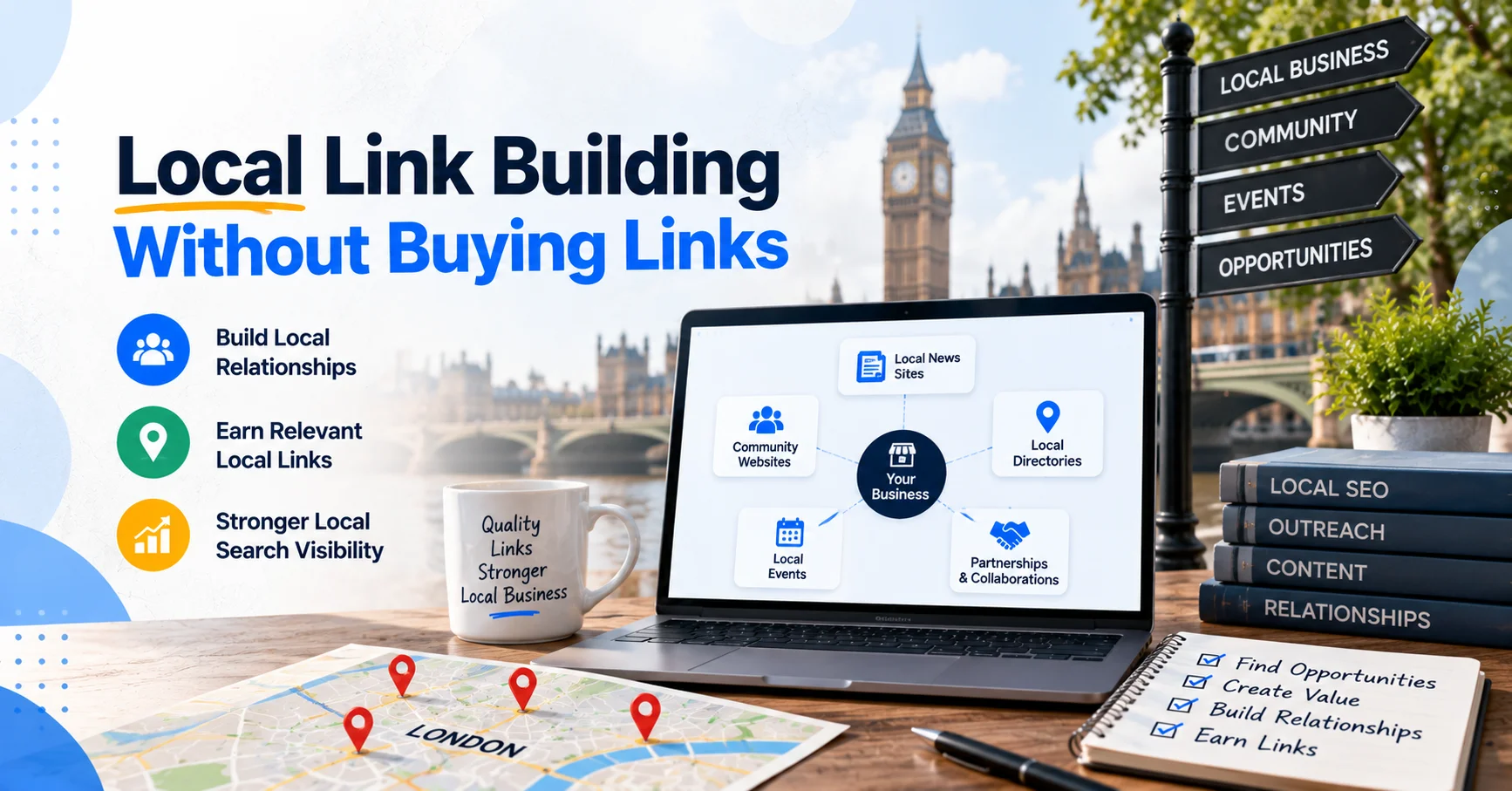
Local link building is about earning relevant links from websites that genuinely connect with your business and community. That might mean a link from a local organisation, trade association, supplier, community group or business partner. It isn’t about collecting hundreds of links from random websites. For a London service business, relevance matters. A useful link from a local organisation can make far more sense than dozens of unrelated directory links. The good news is that you don’t need to buy links to build a stronger local presence. You can earn them through relationships, useful resources, community activity and good outreach.
What Is Local Link Building?
Local link building is the process of earning links from relevant websites connected to your location, industry or community. For example, a London electrician might earn links from a local business association, property company, supplier, community project or relevant trade organisation. These links can help people discover the business and understand its local connections. The goal isn’t simply to get a link. The goal is to earn a link because your business has something useful, relevant or trustworthy to offer.
Why Buying Links Is the Wrong Approach
Buying links can look like an easy shortcut. You pay someone, receive a list of websites and watch your backlink count increase. The problem is that a bigger backlink number doesn’t automatically mean better SEO. Google’s current spam policies specifically warn against buying or selling links for ranking purposes, excessive link exchanges and low-quality directory links. Google’s link spam policies explain which practices can create problems. That doesn’t mean every paid placement on the web is forbidden. Advertising and sponsorship can be legitimate, but links intended to pass ranking credit should be properly qualified with attributes such as nofollow or sponsored. For local SEO, the safer approach is simple: earn links because the relationship or content is genuinely useful.

What Makes a Good Local Backlink?
Not every local backlink is worth chasing. A useful link usually has a clear reason to exist. For example, imagine a London roofing company that supplies emergency roof repairs. A link from a local property management company could make sense because both businesses serve similar customers. A random website about gaming probably wouldn’t. When assessing a potential link, ask:
- Is the website relevant to our industry or location?
- Does it have real readers or members?
- Is the organisation genuine?
- Would the link help someone discover our business?
- Does the page provide useful context around the link?
- Is the website asking for payment purely to manipulate rankings?
If the answer to several of these questions is no, move on. You don’t need every possible link. You need the right ones.
1. Build Local Partnerships
Local partnerships are one of the most natural ways to earn links. Think about businesses that serve the same customers without directly competing with you. A plumber could work with:
- Property management companies
- Builders
- Estate agents
- Letting agents
- Home improvement companies
A chauffeur business might connect with:
- Hotels
- Event venues
- Corporate event organisers
- Travel companies
- Conference organisers
The relationship should come first. Don’t approach another business by saying, “Can you give me a backlink?” Start with something useful. You could create a joint customer guide, recommend each other’s services where appropriate or contribute useful information to a local resource. If a link naturally follows, that’s a much stronger outcome.
2. Work With Local Suppliers
Suppliers can sometimes provide valuable local connections. For example, a commercial kitchen installer may work with equipment suppliers, manufacturers and trade partners. A landscaping company may work with nurseries, garden centres and local property firms. Check whether suppliers have:
- Partner pages
- Approved installer pages
- Customer stories
- Case studies
- Dealer pages
- Local partner directories
Don’t ask for a link simply because you bought something. Instead, look for genuine relationships where your business is already relevant.
3. Join Relevant Business Associations
Professional associations and local business networks can provide useful exposure. For UK businesses, the British Chambers of Commerce network provides a way to find local Chambers and connect with businesses in your area. The network includes accredited Chambers across the UK. If your business joins a relevant organisation, make sure your profile is complete and accurate. Don’t join dozens of organisations just to collect directory links. Choose groups that your business would genuinely benefit from being part of.
4. Use Community Sponsorship Carefully
Community activity can create genuine local link building. A business might sponsor a local sports team, community event, charity activity or neighbourhood project. The important point is that the activity should be genuine. You’re supporting something in your community, not simply buying a backlink. There can also be legitimate business and tax considerations around sponsorship. GOV.UK’s guidance on charity sponsorship explains how sponsorship differs from a simple donation and notes that a charity may provide business-related benefits, including a website link. The link should be a by-product of the genuine relationship, not the reason for the sponsorship.
5. Reclaim Unlinked Brand Mentions
Sometimes you’ve already earned the mention. You just haven’t earned the link. Search Google for your:
- Business name
- Founder name
- Brand name
- Product name
- Event name
You may find articles, supplier pages, interviews or local stories that mention your business without linking to your website. If the mention is relevant, contact the website owner politely. Don’t demand a link. Simply explain that they have mentioned your business and ask whether they would consider linking the mention to the relevant page. This works best when the link would genuinely help their readers.
6. Create Useful Local Resources
Good content can give other websites a reason to link to you. The resource doesn’t need to be enormous. A London service business could create something genuinely useful, such as: Emergency Boiler Repair Checklist London Moving Day Planning Guide Local Business Event Planning Checklist Homeowner Maintenance Calendar Guide to Preparing Your Property for Winter The key is originality. Don’t copy information from ten other websites and put it into one article. Use your own experience, customer questions and practical knowledge. That’s what gives another website a reason to reference your resource.
7. Turn Local Stories Into Outreach
Local businesses often have stories worth sharing. Maybe you’ve completed an unusual project in Chelsea. Perhaps your team helped a business prepare for an urgent opening in Camden. Maybe you supported a local event in Hackney. These stories can become useful outreach material. Instead of sending:
“Hi, please add our website to your page.”
Try:
“We recently completed an emergency project for a local business and put together a short guide explaining what other businesses can do in the same situation.”
That’s a much more useful reason to start a conversation.
8. Use Testimonials Where They Make Sense
Testimonials can sometimes create natural links. Suppose you already use software, equipment or professional services from another business. If they publish genuine customer testimonials, you may be able to provide one based on your real experience. The link should only exist because you’re a genuine customer. Don’t manufacture testimonials just to obtain backlinks. The same principle applies to case studies and partner stories. Keep everything truthful and relevant.
9. Earn Links Through Local Data and Research
Original information can attract attention. For example, a London trades business could publish a small annual report based on its own customer enquiries. A property service could analyse common maintenance issues found during its work. A chauffeur company could publish useful insights about common corporate travel requirements. The data doesn’t need to be complicated. It needs to be real. Explain how you collected it and avoid making claims that your evidence cannot support. A useful piece of research gives journalists, bloggers and local organisations something worth referencing.
10. Don’t Build Borough Pages Just for Links
London gives businesses plenty of location opportunities. But that doesn’t mean you should create pages for every borough simply to generate more internal or external links. A page for Camden should have a genuine reason to exist. It should explain the service, the area served and something useful for customers in that location. Our guide to the local landing page template that avoids thin content can help you build useful location pages without creating repetitive content. If you operate across London, also read our guide on how to build London borough pages without creating doorway pages. The aim is useful local content, not a pile of near-identical pages.
11. Use Outreach That Gives People a Reason to Reply
Good outreach is usually short. You don’t need a huge sales pitch. Start by explaining why you’re contacting them. Then explain what you’re offering. For example:
Hi Sarah,
I noticed your local property guide covers emergency home repairs but doesn’t mention boiler safety checks.
We work with homeowners across London and have put together a short checklist covering the main warning signs.
If it’s useful for your readers, you’re welcome to reference it here: [URL].
Thanks,
[Name]
There is no pressure. The recipient can decide whether the resource is useful. That’s the point.
12. Check a Website Before Asking for a Link
Before sending outreach, spend a few minutes checking the website. Look at its:
- Relevance
- Content quality
- Real-world business information
- Audience
- Local connection
- Existing outbound links
Be cautious if the website exists mainly to publish paid articles or has hundreds of unrelated commercial links. You don’t want your local link building that look artificial. Google’s spam guidance specifically identifies low-quality directories and other manipulative link practices as problems. Read Google’s guidance on link spam before running a large outreach campaign.
A Simple Local Link Building Workflow
You don’t need a complicated system. Start by listing businesses, organisations and websites that are genuinely connected to your market. Then group them into categories such as:
- Local organisations
- Industry associations
- Suppliers
- Business partners
- Community groups
- Local publications
- Relevant resource websites
Next, identify a reason for contacting each one. That reason might be a useful resource, local story, partnership, testimonial or piece of original research. Then personalise the outreach. Finally, record the results so you know which approaches are working.
Local Link Building Audit Sheet
A simple spreadsheet can keep your outreach organised.
| Website | Relationship | Link Opportunity | Relevance | Outreach Status |
| Local association | Industry | Member profile | High | Not contacted |
| Supplier | Existing partner | Partner page | High | Contacted |
| Local publication | Local story | News article | High | Pitched |
| Community group | Sponsorship | Sponsor page | Medium | Active |
| Random directory | None | Directory listing | Low | Skip |
This keeps the focus on quality rather than link volume.
Common Local Link Building Mistakes
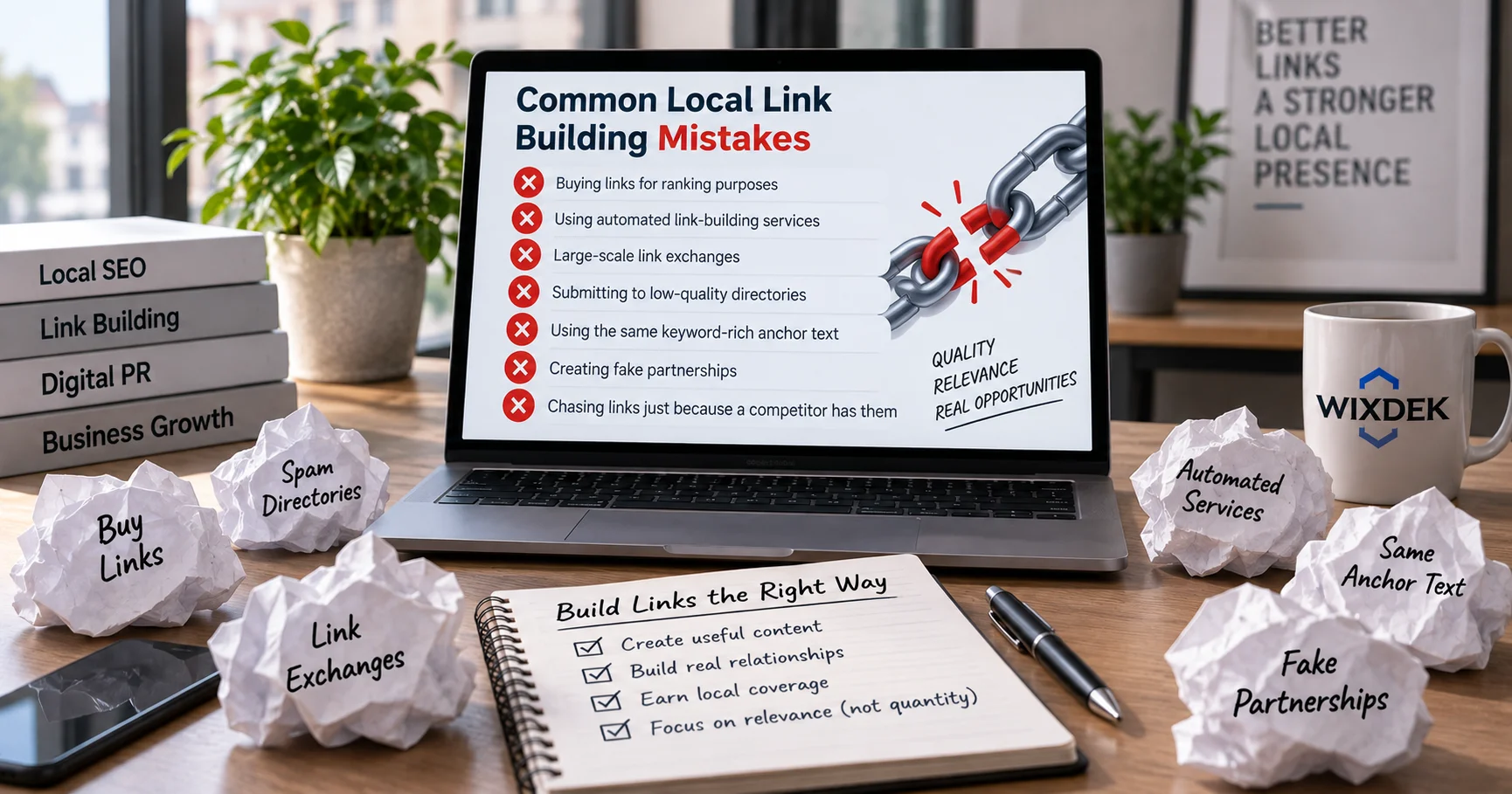
The biggest mistake is treating backlinks like a numbers game. Avoid buying links purely for ranking purposes. Avoid automated link-building services. Avoid large-scale link exchanges. Avoid submitting your business to hundreds of poor-quality directories. Avoid using the same keyword-rich anchor text everywhere. Avoid creating fake partnerships just to obtain links. And don’t chase a link simply because another business has it. Your competitor’s backlink isn’t automatically a good opportunity for you.
What About Business Directories?
Relevant business directories can still have a purpose. The problem is submitting to every directory you can find. Prioritise directories that customers actually use or that are strongly connected to your industry or location. Check the business information before submitting it. Your business name, address, phone number and website should be accurate. If you’ve already created many listings, it can be worth checking for incorrect or duplicate information. You can also read our guide on how to respond to Google reviews without sounding automated, because reputation and local visibility work alongside your wider local presence.
How Long Does Local Link Building Take?
There is no fixed timeline. Some opportunities can happen quickly. A local supplier may add a partner link within days. A community project may take weeks. A useful article may take months to attract natural references. That is normal. Don’t judge the strategy by the number of links earned in the first week. Look at the quality of the relationships and the relevance of the websites involved. Over time, track changes in organic visibility, referral traffic and relevant enquiries. Google Search Console can also help you compare search performance before and after major content or SEO changes.
How Wixdek Approaches Local Link Building
At Wixdek, we don’t treat local link building as a race to collect backlinks. We start by understanding the business, its customers, locations and industry. Then we look for realistic opportunities that fit the business. That might mean local partnerships, industry organisations, useful resources, community stories or relevant outreach. The approach should always support the wider SEO strategy rather than sit separately from it. For broader support, explore our Local SEO services or SEO services in London.
Final Thoughts
Local link building works best when you stop thinking about links first. Think about relationships, useful information and genuine local relevance instead. A supplier may mention your business because you work together. A local organisation may link to you because you supported its project. A publication may reference your research because it gives readers something useful. Those are much stronger reasons for a link to exist. So don’t buy a pile of backlinks and hope for the best. Build something worth mentioning, find the right people and start a useful conversation. Want to know where your local authority could improve? Request a Local SEO review from Wixdek.
Frequently Asked Questions
What is local link building?
Local link building is the process of earning relevant links from websites connected to your business, industry, community or location.
Can I buy local backlinks?
Buying links specifically to manipulate search rankings is against Google’s spam policies. Advertising and sponsorship can be legitimate when links are properly qualified and not used to manipulate ranking signals.
Are business directories useful for local SEO?
Some relevant and trusted directories can be useful, especially when customers use them or they are closely related to your industry. Avoid submitting your business to large numbers of low-quality directories.
How can a small business earn local backlinks?
Start with genuine relationships. Consider local partnerships, suppliers, industry associations, community projects, useful resources, local stories and relevant business networks.
Should I ask every local business for a backlink?
No. Only contact businesses where there is a genuine reason for the relationship or link. Personalised, relevant outreach is much better than mass email campaigns.
Are sponsorship links allowed?
Sponsorship can be legitimate, but the link should accurately reflect the relationship and follow Google’s link qualification requirements where appropriate. GOV.UK also distinguishes sponsorship from donations when a business receives something in return.
Do I need hundreds of backlinks?
No. Link quality and relevance matter more than chasing a large number of links. A smaller set of relevant Local Link Building can be more useful than a large collection of unrelated links.