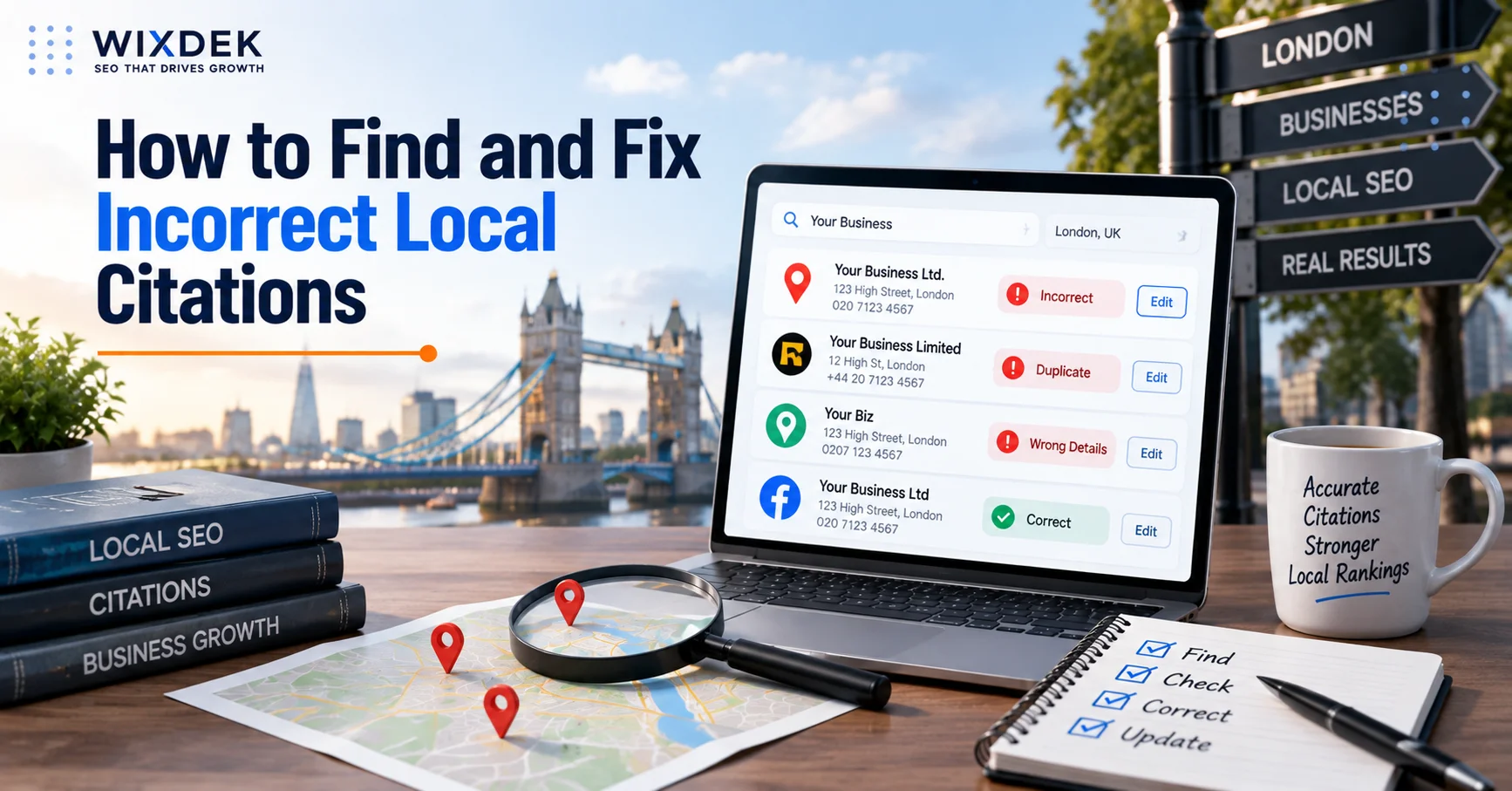
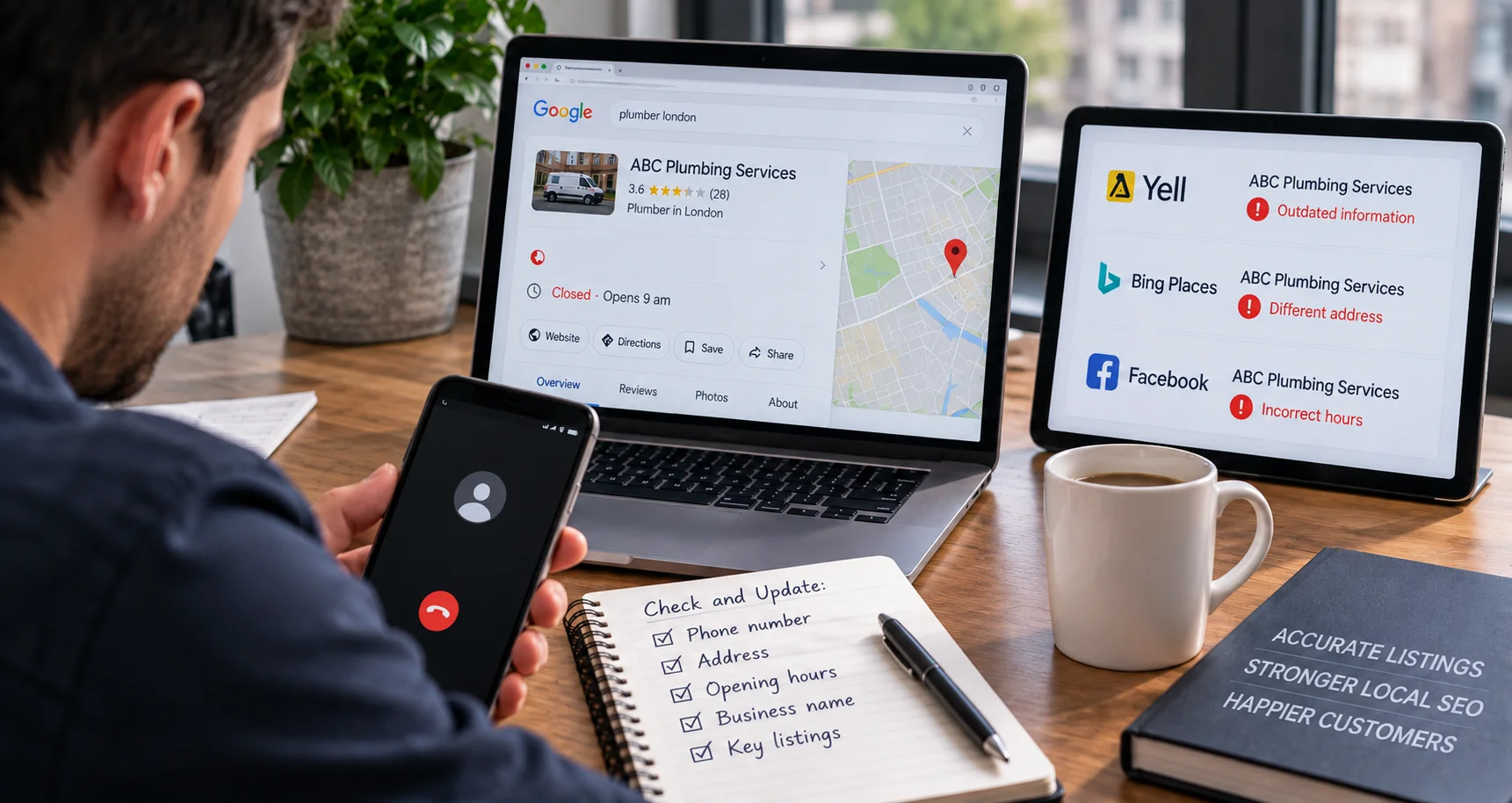
Incorrect business listings can cause more problems than many local businesses realise. Your business name may be different on one directory. An old address might still appear elsewhere. Your phone number could also be wrong on a listing you haven’t checked for years. These errors can confuse customers and make your local business information less consistent. Local citation cleanup is the process of finding these problems, correcting them and dealing with duplicate or misleading listings. The goal is simple: make sure customers and search engines can understand your business information clearly. At Wixdek, we recommend cleaning up important existing citations before chasing new ones. More listings aren’t always better when the information inside them is wrong.
What Is a Local Citation?
A local citation is a mention of your business on another website or platform. It can include your business name, address, phone number, website, category or opening hours. Citations can appear on business directories, map platforms, review websites and industry websites. For a local business, accurate information matters because customers need to know who you are, where you operate and how to contact you.
What Is NAP Consistency?
NAP stands for Name, Address and Phone number. NAP consistency means keeping your main business details accurate across important websites and platforms. For example, imagine your correct details are:
Business name: London Heating Services Ltd
Address: 25 High Street, London
Phone: 020 1234 5678
One directory may show the old business name. Another might have your previous address, while a third uses an old phone number. These are local listing errors worth checking. NAP consistency doesn’t mean every website must use identical formatting. Small formatting differences aren’t always a problem. What matters most is that the information clearly identifies the same real business.
Why Incorrect Local Citations Matter
An incorrect listing can create a poor customer experience. Someone might call an old number and fail to reach you. Another customer could travel to an old address or see opening hours that are no longer correct. There is also a wider local SEO issue. When important platforms contain conflicting information, your online business presence becomes harder to manage. That’s why citation management should focus on accuracy, relevance and customer value rather than collecting hundreds of listings.
Step 1: Define Your Correct Business Information
Before changing anything, create one master record of your business details. Use your current Google Business Profile as an important reference, but also check your actual business records. Record your correct:
- Business name
- Physical address, where applicable
- Phone number
- Website
- Main business category
- Opening hours
- Main services
Keep these details in a spreadsheet. This becomes your source of truth during the citation audit. It also makes future updates much easier. For service-area businesses, make sure the information reflects how the business really operates. Don’t present an address as a customer-facing location if customers don’t visit there. For more information, see our guide on service-area businesses and physical locations.
Step 2: Audit Your Existing Local Citations
Now find out what information is already online. Start with simple searches for your business name. Try searches such as:
- “Business name”
- “Business name” + address
- “Business name” + phone number
- “Old business name”
- “Old phone number”
- “Business name” + London
- “Business name” + borough
These searches can uncover listings that you may have forgotten about. For larger websites, citation management tools can speed up the process. BrightLocal and Semrush can help identify listings and possible data problems. Don’t treat every directory as equally important. Start with platforms customers actually use, major map services, trusted directories and websites that are relevant to your industry.
Step 3: Check for Incorrect Business Listings
Once you’ve collected your listings, compare each one with your master business record. Look for obvious errors first. An old business name is one example. An outdated address is another, especially after a business move. Also check for:
- Incorrect phone numbers
- Old website addresses
- Wrong opening hours
- Incorrect categories
- Duplicate listings
- Closed locations still shown as open
- Old branding
- Incorrect service information
Not every difference needs the same response. Prioritise errors that could mislead customers, send them to the wrong place or make it difficult to identify the correct business.
Step 4: Find Duplicate Business Listings
Duplicate business listings are another common problem. You may find two profiles for the same business on one platform. One could be current while the other still contains old information. This can create confusion about which listing customers should use. Check important platforms such as Yelp, Bing Places and Apple Maps, along with relevant UK directories and industry websites. If you find a duplicate, don’t simply create another profile. First check whether the existing listings can be claimed, corrected, merged or removed.
A Simple Citation Decision Flow
Use this process when reviewing each listing: Citation found
Is the business information accurate?
- Yes: Keep the listing and record it as checked.
- No: Check whether the listing has customer or business value.
- Important listing: Correct the information or request a platform update.
- Duplicate listing: Request a merge or removal where appropriate.
- Low-value listing: Record it and review whether action is worthwhile.
This keeps your citation cleanup focused instead of turning it into a numbers game.
Step 5: Fix the Errors
Once you’ve found the problems, work through them in priority order. Claim listings that belong to your business but are currently unmanaged. Where an edit option is available, update the incorrect information using your verified business details. For duplicate profiles, follow the platform’s support or management process. Depending on the platform, this may involve requesting a merge, removal or correction. Keep a record of every action. A useful citation audit sheet should include:
| Directory | URL | Issue | Priority | Action | Date Checked | Status | Follow-up |
| Directory A | Listing URL | Old phone | High | Updated | 14 Sep | Complete | Check again |
| Directory B | Listing URL | Old address | High | Correction requested | 14 Sep | Pending | 28 Sep |
| Directory C | Listing URL | Duplicate | Medium | Merge requested | 14 Sep | Pending | 28 Sep |
This gives you a clear correction workflow and makes follow-up much easier.
Step 6: Prioritise Citations by Customer Value
You don’t need to spend weeks fixing every tiny directory. A better approach is to prioritise listings based on customer value, business relevance and platform importance. Start with major map and search platforms. Then review well-known directories, trusted review websites and relevant industry directories. For a London service business, a respected directory related to your trade may be more useful than a random website with no real audience. The same principle applies to local SEO generally. A large citation count isn’t automatically a sign of a strong local presence. Quality and relevance should come first.
What If Your Business Has Moved?
Business moves are a common reason citation problems appear. An old address can remain online long after the business has relocated. Start with your most important profiles, then work through older directories and listings. Don’t forget your own website. Check your contact page, footer, location pages, structured data and downloadable documents for the previous address. You should also review your Google Business Profile and other major platforms. If an old website address, broken page or technical problem is stopping important business information from being updated or crawled properly, a Technical SEO review can help identify the wider issue.
What About Service-Area Businesses?
Service-area businesses need to be especially careful with address information. A mobile locksmith, plumber or electrician may travel to customers rather than operate from a public shop. Their listings should therefore reflect the genuine way the business operates. For example, a mobile locksmith shouldn’t make a private residential address look like a customer-facing shop simply to appear in another area. This is where citation cleanup and your Google Business Profile setup need to work together. Your local listings should support the real business model, not create a misleading one.
How Customer Reviews Fit Into Local Visibility
Reviews are separate from citation cleanup, but they are still part of the wider local search picture. Customers use reviews to judge whether a business looks trustworthy and relevant to their needs. A review that naturally mentions the service a customer received can also give future customers useful context. For example, a genuine review for a London locksmith might explain that the business helped with a replacement car key in Croydon. Don’t try to control the wording of customer reviews or add keywords artificially.
The best approach is to provide a good service and encourage genuine feedback from real customers. For a deeper look at this topic, link this section to How Customer Reviews Affect Local Visibility. Citation cleanup and review management should be treated as related but separate parts of your local SEO work. Once reviews start coming in, it also helps to know how to respond to Google reviews without sounding automated while keeping replies useful and genuine.
Should You Build More Citations?
Not automatically. One common mistake is treating citation building as a numbers game. A business may create dozens of new listings while its existing profiles still contain an old phone number or address. That’s putting the cart before the horse. First, clean up the important listings you already have. Then consider whether additional directories offer real value. A relevant UK industry directory can make sense. A low-quality directory that exists mainly to publish business names may offer very little.

What Should You Do After a Citation Cleanup?
Don’t assume the job is finished as soon as you submit an edit. Some platforms update information quickly. Others may take longer or require verification. Return to your audit sheet and check the listings marked as pending. Confirm that:
- The correction was accepted
- The old information is gone
- The correct information is visible
- Duplicate profiles have been dealt with
- Important website details also match
For larger changes, keep evidence of what was corrected and when. This gives you a useful record if an old listing appears again later.
How Wixdek Approaches Local Citation Cleanup
At Wixdek, we don’t recommend chasing citation numbers for the sake of it. We start by understanding the real business and confirming its correct information. Then we review important listings, identify inconsistencies and prioritise the issues that could affect customers or local visibility. The process can be useful for London plumbers, locksmiths, electricians, cleaners, clinics and other service businesses. The aim is straightforward. Your website, Google Business Profile and important local listings should tell the same clear story about your business.
Final Thoughts
Incorrect local citations are easy to overlook because many sit on websites you haven’t checked for years. An old phone number, previous address or duplicate profile can still create confusion for customers. A proper local citation cleanup starts with accurate business information and works outwards from there. Don’t focus on having the biggest possible directory footprint. Focus on accurate, useful and relevant listings. If you’re unsure where your business information is inconsistent, start with a citation audit. It will show you which problems exist and which fixes should come first.
Frequently Asked Questions
What is local citation cleanup?
Local citation cleanup is the process of finding and correcting inaccurate business listings across directories, map platforms, review websites and other relevant websites.
What does NAP mean in local SEO?
NAP means Name, Address and Phone number. NAP consistency means keeping these core business details accurate across important online listings.
How do I find incorrect business listings?
Search for your business name, old business name, address and phone number. You can also use local SEO tools to find listings and possible inconsistencies.
Should every local citation have exactly the same information?
Your core business information should be accurate and consistent. Minor formatting differences don’t always mean a listing is incorrect. Focus first on errors that could confuse customers or identify the wrong business.
How do I remove a duplicate business listing?
The process depends on the platform. You may be able to claim the listing, request a correction or ask the platform to merge duplicate profiles.
Do service-area businesses need local citations?
Yes. Service-area businesses can still benefit from accurate listings across relevant platforms. However, those listings should accurately reflect where the business operates and whether customers can visit the address.
How often should I check my local citations?
A full review every six months is a sensible starting point. You should also check important listings after a business move, phone number change, rebrand or major change to your business details.
Need Help Finding Incorrect Local Citations?
If you’re unsure which listings are wrong, which duplicates need attention or where your business information is inconsistent, Wixdek can review your local citation footprint. Request a Local Citation Audit