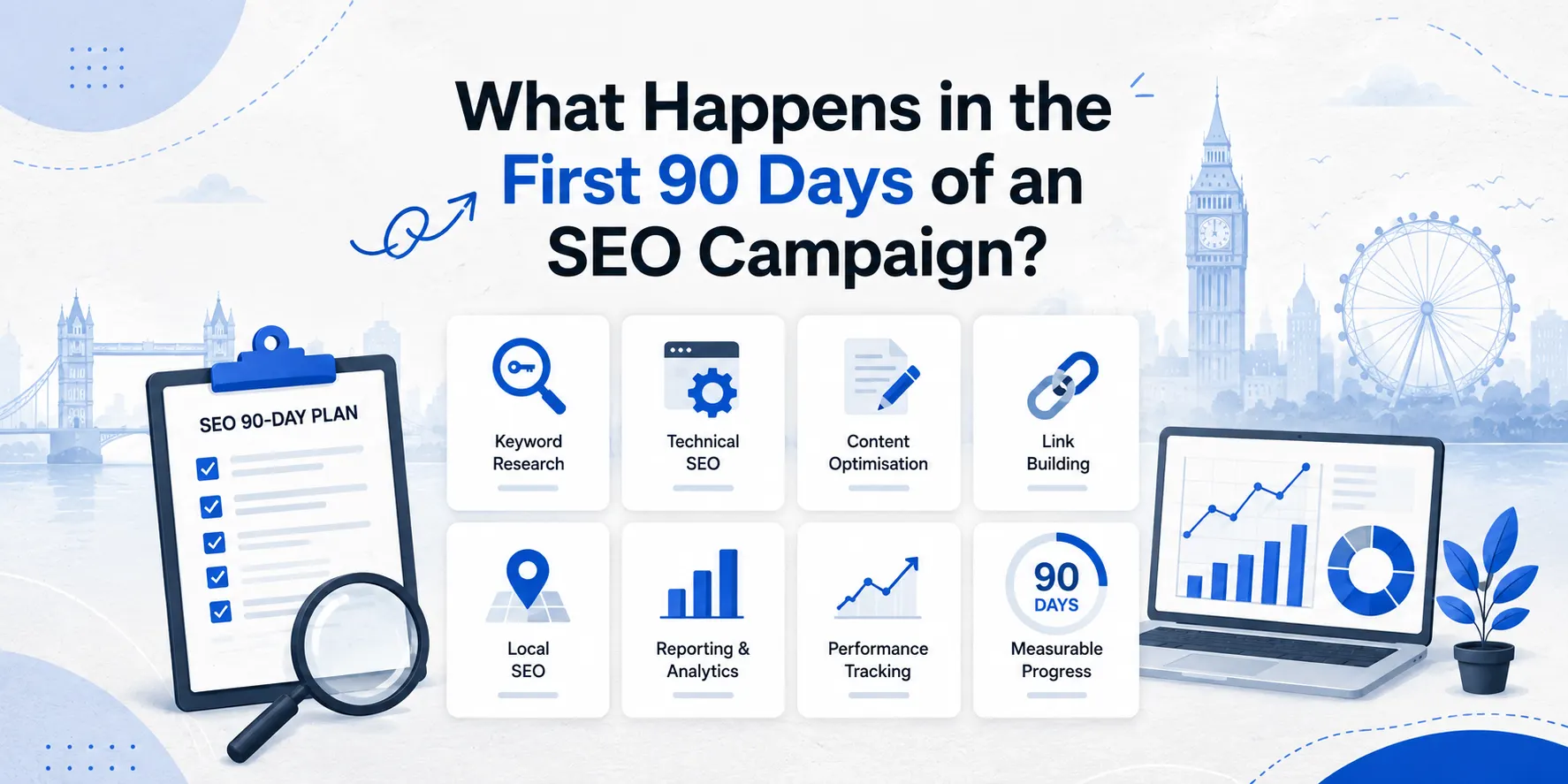
The first 90 days of SEO should build the right foundation for long-term growth. This period normally covers onboarding, tracking, audits, keyword research, technical fixes, content, internal links, and early performance reviews. You shouldn’t expect guaranteed first-page rankings within three months. You should expect clear work, useful deliverables, correct tracking, and a plan based on real data.
By day 90, you should know:
- What problems were found
- What work was completed
- Which pages were improved
- What content was published
- How performance is measured
- What needs to happen next
If your agency can’t explain these points, something may be missing.
The First 90 Days of SEO: Week-by-Week Roadmap
Every campaign is different, but an organised SEO campaign may follow this roadmap.
| Week | Main task | Owner | Expected deliverable | Client input | Completion check |
| Week 1 | Onboarding and business discovery | Account manager and SEO strategist | Confirmed goals, services, locations, competitors, and lead types | Business details and account contacts | Discovery information approved |
| Week 2 | Tracking and performance baseline | Reporting specialist | Working call, form, booking, and sales tracking where available | Analytics and tracking access | Test actions recorded correctly |
| Week 3 | Technical SEO audit | Technical SEO specialist | Prioritised technical issue list | Website, CMS, or developer access | Important issues checked and ranked |
| Week 4 | Keyword and competitor research | SEO strategist | Keyword groups, search intent, and competitor gaps | Priority services and locations | Keywords linked with business goals |
| Week 5 | Content and page review | SEO strategist and content writer | List of pages to improve, combine, redirect, or create | Service facts and brand information | Each priority page has a clear purpose |
| Week 6 | Early technical fixes | Technical specialist and developer | Urgent crawl, redirect, indexing, and tracking fixes | Approval and developer support | Fixes retested |
| Week 7 | Priority-page optimisation | SEO strategist and content writer | Improved service or commercial pages | Fact checking and approval | Pages match the keyword map and intent |
| Week 8 | New content production | SEO content writer | New service, location, category, or supporting content | Business details, proof, and images | Content approved for business and SEO accuracy |
| Week 9 | Local, ecommerce, or location work | Relevant SEO specialist | Profile, citation, category, product, or location updates | Correct business and location details | Changes checked on the website and platforms |
| Week 10 | Outreach and authority planning | Outreach or digital PR specialist | Prospect list and outreach plan | Industry knowledge and expert input | Opportunities checked for quality |
| Week 11 | Search Console and query review | SEO strategist and reporting specialist | Early query, page, impression, and click findings | Access where needed | Findings linked with actions |
| Week 12 | Conversion and lead-quality review | SEO and reporting team | Landing-page findings and lead-quality notes | Feedback on calls, forms, bookings, and sales | Conversion issues recorded |
| Week 13 | Review and next-quarter planning | SEO strategist and account manager | Completed-work summary and next-quarter roadmap | Review meeting and priority approval | Owners, actions, and deadlines agreed |
These are campaign outputs, not guaranteed SEO results. The order may change if the website has urgent technical problems, missing tracking, a planned migration, or delayed access.
Onboarding → Audit → Strategy → Implementation → Measurement → Next-Quarter Plan
Example 90-day SEO roadmap, not a ranking promise.

Before the SEO Campaign Starts
A good onboarding process saves time later. Before work begins, the SEO team should understand your business and have access to the right platforms.
Website and Account Access
The agency may need access to:
- Your website or content management system
- Google Search Console
- Google Analytics
- Google Tag Manager
- Google Business Profile
- Existing keyword reports
- Previous SEO audits
- Call-tracking software
- Website hosting or developer support
Your business should keep ownership of its website, analytics, content, and main accounts.
Business Information
The agency should also ask about:
- Your main services
- Priority products
- Target customers
- Target locations
- Main competitors
- Important lead types
- Average customer value
- Seasonal demand
- Current marketing activity
- Previous SEO work
- Business growth targets
SEO can’t be planned from keywords alone. A search that brings ten useful enquiries may be worth more than one that brings thousands of visitors who never buy.
Days 1 to 14: Discovery and Measurement
The first two weeks should show what is happening now. The agency needs a reliable starting point before it can claim that performance has improved.
How Wixdek Carries Out an SEO Audit
Wixdek’s audit process combines:
- Business discovery
- Tracking review
- Technical SEO checks
- Keyword research
- Competitor analysis
- Content review
- Backlink review
- Baseline reporting
- A prioritised issue list
We don’t send a long list of errors without explaining what matters. Each issue is ranked by its effect on:
- Crawling
- Indexing
- Search visibility
- User experience
- Conversions
- Business goals
The audit should leave the client with a clear starting position, urgent actions, longer-term recommendations, and named responsibilities.

Business Discovery
The SEO strategist should learn:
- How the business makes money
- Which services matter most
- Which areas produce valuable customers
- What makes a good lead
- What has worked before
- What has failed before
- What the sales team needs from SEO
This keeps the campaign connected with business goals.
Tracking Review
The agency should confirm that important actions are recorded correctly.
This may include:
- Phone calls
- Contact forms
- Bookings
- Purchases
- Quote requests
- Email clicks
- WhatsApp clicks
- Important landing-page actions
Google Search Console can show clicks, impressions, click-through rate, average position, queries, pages, countries, devices, and search appearance. This data should be reviewed with analytics and lead tracking rather than used on its own.
Technical SEO Audit
The technical audit should check:
- Crawling problems
- Indexing problems
- Broken links
- Redirects
- Duplicate URLs
- Canonical tags
- XML sitemaps
- Website speed
- Mobile usability
- Structured data
- Website architecture
- JavaScript issues
- Internal links
- Tracking errors
The audit should rank problems by importance. A report with 200 warnings isn’t useful when nobody explains which ones should be fixed first.
Keyword and Competitor Research
The agency should review:
- Commercial keywords
- Informational searches
- Local searches
- Competitor service pages
- Content gaps
- Search intent
- Current visibility
- Search-result formats
- Related customer questions
Keywords should be selected around customer needs, not search volume alone.
Existing Content Review
The team should identify pages that need:
- Rewriting
- Updating
- Combining
- Better internal links
- Clearer service information
- Stronger calls to action
- A different search intent
- Redirecting
- Removal from Google where justified
Pages shouldn’t be deleted simply because they are old or not ranking. Useful content can often be improved.
Expected Deliverables by Day 14
You may receive:
- Business discovery notes
- Tracking findings
- Technical audit findings
- Competitor overview
- Initial keyword research
- Content assessment
- Performance baseline
- Prioritised issue list
These are campaign outputs, not guaranteed SEO results.
Days 15 to 30: Strategy and Priority Fixes
The second half of month one should turn the research into a clear plan.
How Wixdek Builds the SEO Strategy
Wixdek’s strategy process may include:
- Keyword-to-page mapping
- Search-intent checks
- Cannibalisation prevention
- Technical priorities
- Content roadmap
- Internal-link plan
- Local SEO priorities
- Conversion goals
- Task ownership
- Approval steps
Each planned page should have a clear keyword, search intent, page type, owner, purpose, and next action.
Keyword and Page Mapping
Each important keyword group should be assigned to a suitable page.
This helps prevent:
- Two pages targeting the same intent
- Blog posts competing with service pages
- Several pages targeting the same location
- Important services having no suitable page
- Content being published without a purpose
A keyword map may include:
- Existing URL
- Target keyword
- Search intent
- Page type
- Required changes
- Internal links
- Priority
- Conversion goal
Technical Priorities
The agency should separate urgent fixes from larger projects.
Early work may include:
- Removing indexing blocks
- Correcting redirects
- Fixing broken links
- Updating canonical tags
- Repairing tracking
- Improving internal links
- Updating metadata
- Correcting sitemap problems
Large ecommerce or migration problems may need more time and developer support.
Content Roadmap
The first content plan should explain:
- Which pages need improvement
- Which new pages are needed
- What each page should achieve
- Which keyword and intent it supports
- What evidence is needed
- Who will write it
- Who will approve it
- When it should be published
Google recommends creating helpful, reliable content for people rather than content made mainly to manipulate rankings. Read Google’s people-first content guidance.
Internal-Link Plan
The team should identify:
- Priority pages needing more links
- Related pages that should connect
- Orphan pages
- Weak navigation paths
- Links pointing to redirected URLs
- Suitable anchor text
Internal links should help readers move between useful pages. They shouldn’t be added only to repeat keywords.
Local SEO Priorities
For a local business, month one may also include:
- Google Business Profile review
- Category checks
- Service-area review
- Business information checks
- Citation review
- Local page assessment
- Review process planning
- Local competitor research
Expected Deliverables by Day 30
By the end of month one, you should usually have:
- Technical SEO audit
- Prioritised fix list
- Keyword and page map
- Competitor findings
- Content roadmap
- Internal-link plan
- Local SEO priorities where relevant
- Corrected tracking
- Initial website changes
- Baseline report
- Plan for months two and three
Read what monthly SEO services should include for a complete service checklist.
Days 31 to 60: Implementation and Content
Month two should move from planning into practical delivery.
How Wixdek Implements the Plan
Depending on the campaign, Wixdek may complete:
- Technical fixes
- Retesting of completed fixes
- Service-page optimisation
- New content creation
- Existing-content updates
- Internal-link changes
- Local SEO work
- Citation corrections
- Conversion tracking
- Outreach preparation
- Performance reporting
A recommendation isn’t counted as completed work until it has been implemented or passed to the agreed owner with a clear deadline.
Technical Implementation
Work may include:
- Fixing crawl problems
- Correcting redirects
- Improving indexation
- Updating schema
- Cleaning internal links
- Improving page templates
- Fixing mobile issues
- Supporting page-speed work
- Removing harmful duplicate URLs
Completed changes should be tested again. A technical recommendation isn’t complete simply because it appears in a report.
On-Page Optimisation
Existing pages may be improved through:
- Clearer titles
- Better headings
- Stronger service information
- Improved page structure
- Natural keyword use
- Better image alt text
- Helpful FAQs
- Stronger trust signals
- Clear calls to action
The aim is to improve the whole page, not squeeze a keyword into every paragraph.
Content Production
New or rewritten content may include:
- Service pages
- Location pages
- Product or category pages
- Comparison guides
- Pricing guides
- Case studies
- Useful articles
- Frequently asked questions
Every page should match a clear search intent.
A service page should help a customer choose a provider. An article should answer a separate question without competing with that service page.
How Does Wixdek Approve Content?
Wixdek prepares content using the approved keyword map, search intent, content brief, services, and brand information. Before writing, we confirm what the searcher wants. The page may need to answer a question, compare options, explain pricing, or support a service enquiry.
We also check that the content:
- Matches the target search intent
- Supports the correct service page
- Doesn’t compete with another Wixdek page
- Uses the main keyword naturally
- Answers the reader’s main questions
- Includes a clear next step
The customer reviews the draft before publication. They can request changes to:
- Facts
- Services
- Locations
- Tone
- Brand wording
- Business information
Wixdek reviews requested edits against the approved SEO brief. We apply changes that improve accuracy without changing the page’s purpose or creating keyword overlap. The content is published once the business details and SEO purpose are both approved.
Local SEO Implementation
Local campaigns may include:
- Google Business Profile optimisation
- Citation corrections
- Local service-page improvements
- Location content
- Review guidance
- Local internal links
- Map visibility tracking
- Call tracking
Authority Planning
Authority work may begin with:
- Backlink review
- Competitor link research
- Guest-post opportunities
- Resource-page research
- Broken-link outreach
- Digital PR ideas
- Local partnerships
- Industry publication research
Link work should focus on quality, relevance, and genuine value rather than bulk placements.
Expected Deliverables by Day 60
You may receive:
- Completed technical fixes
- Improved service pages
- New or rewritten content
- Updated internal links
- Local SEO changes
- Conversion tracking checks
- Outreach plan
- Month-two report
- Updated priority list
Days 61 to 90: Expansion and Refinement
Month three should use early data to improve the plan. The team shouldn’t repeat the same tasks simply because they appeared on a checklist.
Publish and Expand Content
The agency may:
- Publish approved pages
- Expand useful topic areas
- Improve content gaining impressions
- Add supporting internal links
- Update weak service pages
- Fill important keyword gaps
Begin Authority Work
Month three may include:
- Relevant outreach
- Guest content
- Expert comments
- Local partnerships
- Digital PR
- Resource links
- Brand mention opportunities
The exact activity depends on the campaign.
Review Search Queries
Search Console may show:
- New queries
- Pages gaining impressions
- Searches with weak click-through rates
- Queries reaching the wrong page
- Unexpected customer wording
- Content gaps
- Local opportunities
These findings should shape the next month’s work.
Improve Landing Pages
A page may gain traffic without producing leads.
The team may need to improve:
- Calls to action
- Page layout
- Contact forms
- Phone visibility
- Trust signals
- Service explanations
- Mobile usability
- Booking journeys
Review Lead Quality
The customer should tell the agency whether SEO enquiries are:
- Relevant
- Within the service area
- Looking for the right service
- Ready to buy
- Affordable to serve
- Turning into sales
Traffic data can’t explain lead quality on its own.
Build the Next-Quarter Plan
The 90-day review should identify:
- Work completed
- Problems still open
- Pages showing early progress
- Weak pages needing attention
- New technical issues
- New content opportunities
- Authority priorities
- Conversion improvements
- Customer actions required
- Priorities for the next quarter
For longer result expectations, read how long SEO takes for a London business.
A Real Wixdek Campaign Example
This anonymised example is based on a real Wixdek campaign for a London electrician.
The published case study covers four months rather than an exact 13-week log, so we haven’t invented a weekly order.
Business Type
A London electrician offering emergency, residential, and commercial electrical work.
Starting SEO Problem
The business relied heavily on Google Ads. Organic traffic existed, but it didn’t produce steady calls.
The main problems included:
- Inconsistent organic enquiries
- Weak mobile conversion
- High bounce rates on service pages
- Poor capture of emergency and local search intent
- Strong Local SEO competition
Work Completed
Wixdek completed work across:
- Eight priority service pages
- Emergency and service-specific search intent
- Mobile navigation and contact paths
- Local relevance signals
- Internal links between related services
- Organic and paid call tracking
- Performance reviews by service type
Wixdek Roles Involved
The work required support across:
- SEO strategy
- Technical SEO
- SEO content
- Local SEO
- Conversion tracking
- Reporting
Deliverables Produced
The campaign produced:
- Improved service pages
- Clearer contact journeys
- Better internal links
- Stronger local service signals
- Cleaner call tracking
- Performance reports based on enquiry type
How Performance Was Measured
Wixdek measured:
- Organic enquiries
- Organic calls
- Mobile conversion
- Service-page engagement
- Reliance on paid advertising
- Local search visibility
Wixdek’s published case study reports that organic enquiries and phone calls increased during the four-month campaign, while reliance on paid advertising and service-page bounce rate fell. View the London electrician SEO case study.
This example doesn’t mean every electrician or local business will achieve the same result in four months. Timelines depend on the website, competition, resources, and implementation speed.
What Should You Expect After 90 Days?
Completed work and business results are not the same thing.
Reasonable Campaign Outputs
By day 90, an organised campaign may have produced:
- A completed technical audit
- Correct tracking
- Keyword and page mapping
- Competitor research
- Fixed priority issues
- Improved service pages
- Published content
- Better internal links
- Local SEO improvements
- Initial outreach
- Three monthly reports
- A next-quarter roadmap
Possible Early Outcomes
You may begin to see:
- More important pages indexed
- Fewer technical errors
- Wider keyword coverage
- More search impressions
- Better click-through rates
- Early visibility movement
- More Google Business Profile actions
- Better tracking accuracy
- More relevant calls or forms
These outcomes aren’t guaranteed within 90 days.
Google says some improvements may affect Search within days, while others may take several months. It also states that website changes don’t guarantee a visible effect in search results. Read Google’s guidance on the time needed to assess improvements.
The first 90 days should show that useful work is being completed and measured. They shouldn’t be used as a promise that every target has already been reached.
What Should the First SEO Report Show?
A useful report should explain the work and what the numbers mean.
| Report section | What it should show |
| Starting point | Initial traffic, leads, visibility, tracking, and technical condition |
| Work completed | Pages improved, content published, and fixes completed |
| Problems found | Technical, content, tracking, or authority gaps |
| Performance | Clicks, impressions, non-brand visibility, and important landing pages |
| Leads | Calls, forms, bookings, sales where available, and lead quality |
| Main finding | What helped or limited progress |
| Next actions | Named tasks, owners, deadlines, and priorities |
| Client actions | Access, approvals, information, or development help needed |
A report shouldn’t be a pile of ranking screenshots.
It should answer:
- What did you do?
- Why did you do it?
- What changed?
- What happens next?
For example:
Impressions increased on two service pages, but clicks remained low. Next month, the SEO strategist will test clearer titles and improve the page introductions.
Or:
Organic traffic increased, but form enquiries stayed flat. The next priority is to review the mobile form and contact journey. Report findings should change the following month’s work. Read how to understand an SEO report without getting distracted for a fuller reporting guide.
What Does the Client Need to Do?
An SEO campaign needs input from both sides.
The client should:
- Provide account access
- Confirm services and locations
- Share accurate business information
- Approve content on time
- Support agreed development changes
- Share images and case studies
- Explain lead quality
- Attend review meetings
- Flag changes to services or the website
Slow approvals and missing access can delay implementation. If a page waits six weeks for approval, work can’t progress as planned.
Choosing the Right Type of SEO Support
Some businesses need ongoing implementation. Others only need one defined task. Compare an SEO retainer vs a one-off SEO project before choosing your support model. An ongoing retainer may suit businesses needing regular technical work, content, Local SEO, authority building, and reporting.
A one-off project may suit a business needing:
- An SEO audit
- Migration support
- Tracking repairs
- A technical review
- A defined content project
How Does the Plan Change by Business Type?
Local Service Business
A plumber, electrician, clinic, or cleaning company may need:
- Google Business Profile work
- Service-page improvements
- Local landing pages
- Citation checks
- Review guidance
- Call tracking
- Local links
Ecommerce Website
An ecommerce campaign may focus on:
- Product and category structure
- Filters and duplicate URLs
- Structured data
- Internal linking
- Product content
- Page speed
- Conversion tracking
Multi-Location Business
A multi-location campaign may require:
- Several Google Business Profiles
- Location-page planning
- Citation consistency
- Local reporting
- Review monitoring
- Location-based lead tracking
New Website
A new website may need:
- Keyword mapping
- Website structure
- Core service content
- Technical setup
- Tracking
- Early authority building
Website With Poor Previous SEO
The first 90 days may focus more heavily on cleanup.
This may include:
- Removing keyword overlap
- Fixing poor redirects
- Reviewing spam links
- Improving copied content
- Combining weak pages
- Repairing tracking
- Correcting migration errors
When Should You Question the First 90 Days?
Question the campaign when:
- No baseline was recorded
- Tracking still doesn’t work
- No audit was completed
- Priorities were never explained
- No agreed work was implemented
- Content has no clear search intent
- Reports show only rankings
- Link sources are hidden
- The same tasks appear every month
- Leads aren’t measured
- Next steps remain unclear
SEO takes time, but that shouldn’t become an excuse for doing nothing.
See What Your First 90 Days Could Include
Wixdek can review your website, competition, services, target locations, and current visibility before explaining what should happen first. Our SEO services in London can include strategy, technical implementation, content, authority work, conversion tracking, and clear reporting. Businesses with an internal team may instead need an SEO consultant in London for audits, planning, and expert guidance. Request an SEO opportunity review and receive a clear explanation of the work your website should prioritise first.
Request a 90-Day SEO Opportunity Review
Frequently Asked Questions
What happens in the first 90 days of SEO?
The first 90 days normally cover onboarding, tracking, audits, keyword mapping, technical fixes, content, internal links, authority planning, reporting, and next-quarter priorities.
Can SEO produce results within 90 days?
Early visibility and technical improvements may appear. Strong rankings, traffic, and lead growth aren’t guaranteed within three months.
What happens during the first month?
The first month should focus on discovery, tracking, audits, keyword research, competitor checks, strategy, and urgent fixes.
What happens during month two?
Month two usually focuses on implementation, on-page optimisation, content, internal links, Local SEO, and technical work.
What happens during month three?
Month three should review early data, expand useful content, begin authority work, improve landing pages, and build the next-quarter plan.
Should an SEO agency guarantee rankings within 90 days?
No. An agency can commit to clear work and reporting, but it can’t guarantee a ranking position or fixed result date.
What should the first SEO report include?
It should show the starting point, completed work, problems found, early performance, leads, next priorities, owners, and client actions.
Does every business need the same 90-day plan?
No. Local businesses, ecommerce websites, new sites, and multi-location companies need different priorities.
What if the client delays content approval?
Delayed approvals can slow implementation. Content can’t support the campaign until it has been checked, approved, and published.
What happens after the first 90 days?
The agency should review completed work, performance, open problems, lead quality, and new opportunities before creating the next-quarter plan.