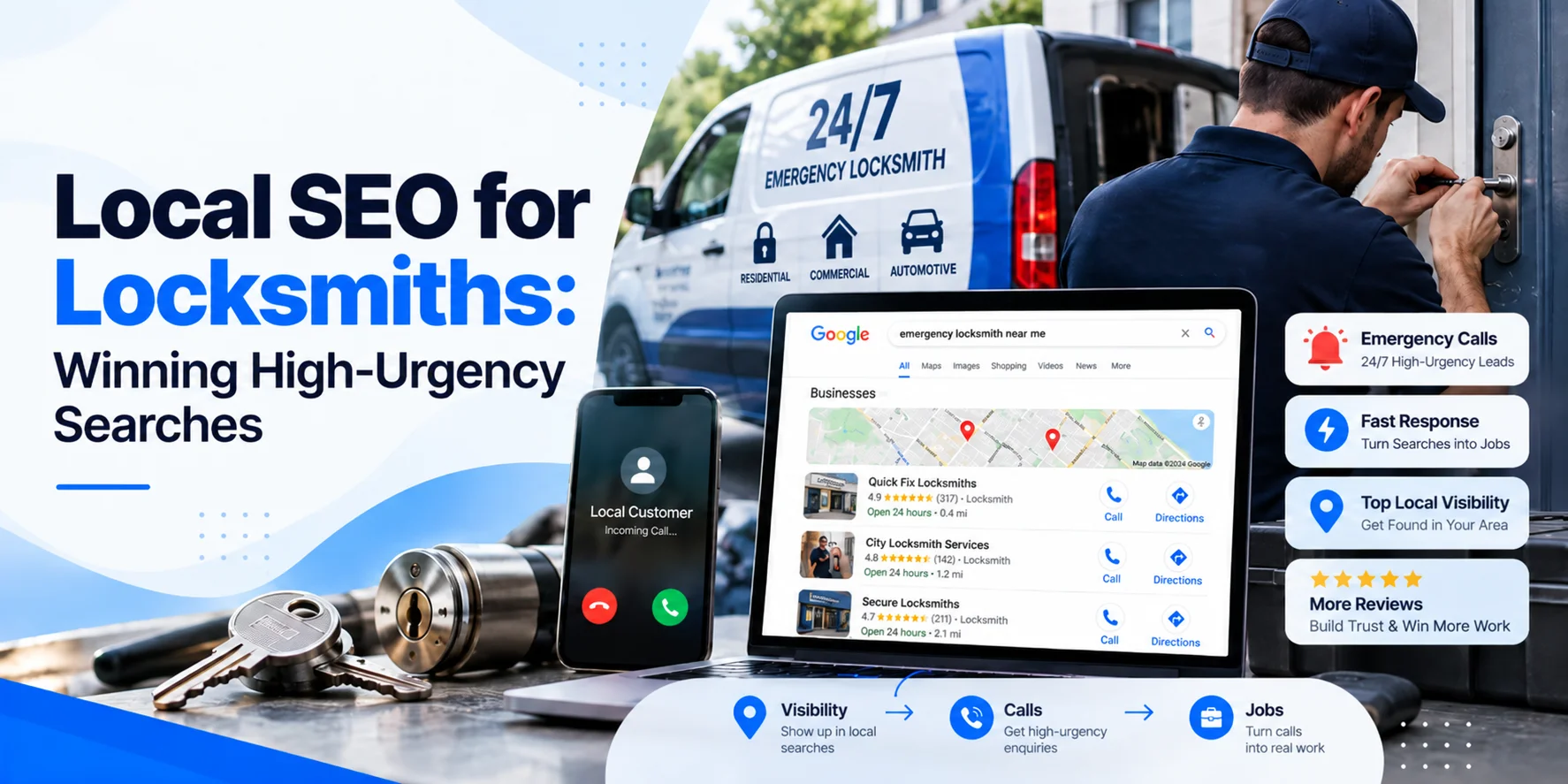
If you’re a locksmith, timing matters.
Someone locked out of their home isn’t usually browsing websites for fun. They want a locksmith nearby, they want reassurance and they want to make contact quickly.
That’s why local SEO for locksmiths needs a slightly different approach.
Your website has to be visible for urgent searches, but visibility alone isn’t enough. The customer also needs to feel confident that they’re calling a genuine and suitable locksmith.
Searches such as “emergency locksmith near me”, “24 hour locksmith” and “locked out” can happen at any time. A strong locksmith SEO strategy therefore needs to bring together Google Maps, your Google Business Profile, service pages, location coverage, reviews, trust signals and a fast mobile experience.
The goal is simple.
Get found by the right local customer, give them confidence and make it easy to call.
What Is Local SEO for Locksmiths?
Local SEO for locksmiths is the process of improving a locksmith company’s online visibility so local customers can find it through Google Search and Google Maps.
It focuses on searches connected to real services and locations.
For example:
“emergency locksmith London”
“locksmith near me”
“24 hour locksmith Croydon”
“locked out of house Ealing”
“broken key extraction Wimbledon”
These searches don’t all have exactly the same intent.
Someone searching “how to remove a broken key” may still be researching.
Someone searching “emergency locksmith near me” is much more likely to need help now.
That difference should shape your SEO strategy.
Why Locksmith SEO Is Different
Locksmith searches can be highly urgent.
A person may be standing outside their home in the rain. They may have lost their keys, broken a key inside a lock or been locked out of their vehicle.
They don’t want to read a huge company history.
They want answers.
They need to know whether you’re nearby, whether you provide the service they need and how they can contact you.
Trust matters too.
A customer is giving access to their home, vehicle or business premises. They need confidence that the locksmith is genuine and professional.
That makes local search visibility and conversion experience equally important.
The High-Urgency Locksmith Search Journey
A useful locksmith SEO strategy should cover different types of searches.
Emergency Locksmith Searches
These are often the highest-intent searches.
Examples include:
“emergency locksmith near me”
“24 hour locksmith near me”
“emergency locksmith London”
“locked out of house locksmith”
“locksmith open now”
The customer may be ready to call within minutes.
Your website should therefore make the next step obvious.
Put the phone number where mobile visitors can see it. Explain the emergency services you provide and show the areas you genuinely cover.
Don’t make someone scroll through 1,500 words before finding your contact details.
Lockout Searches
Lockout searches can cover homes, businesses and vehicles.
A customer might search for:
“locked out of house”
“locked out of flat”
“locked out of office”
“car lockout locksmith”
The service page should match the actual service.
Explain what the locksmith handles, what information the customer may need to provide and how to request help.
Avoid making promises about arrival times unless the business can reliably meet them.
Broken Key Searches
Broken key extraction is another strong service-intent topic.
A customer might search for:
“broken key in lock”
“broken key extraction near me”
“key stuck in lock locksmith”
This deserves its own page when it is an important service.
The page can explain the problem, why forcing the key may make things worse and when professional help is appropriate.
Planned Locksmith Searches
Not every locksmith enquiry is an emergency.
People also search for:
Lock replacement
Lock changes
Security upgrades
New locks
Door lock repairs
Commercial locksmith services
These searches give customers more time to compare businesses.
The page can therefore provide more detail about the service, options and process.
Google Business Profile for Locksmiths
Your Google Business Profile is central to local search.
It can appear in Google Search and Google Maps when people search for relevant businesses nearby.
Google recommends keeping business information complete and accurate. It says local ranking is mainly based on relevance, distance and prominence. Reviews and links from other websites can also contribute to prominence.
You can read Google’s official guidance on improving local rankings.
For a locksmith, check that your profile accurately reflects:
- Business name
- Primary category
- Relevant services
- Opening hours
- Phone number
- Website
- Address or service area
- Photos
- Genuine customer reviews
Don’t add keywords to the business name simply because you want more visibility.
Use the real business name.
Locksmith Business Categories
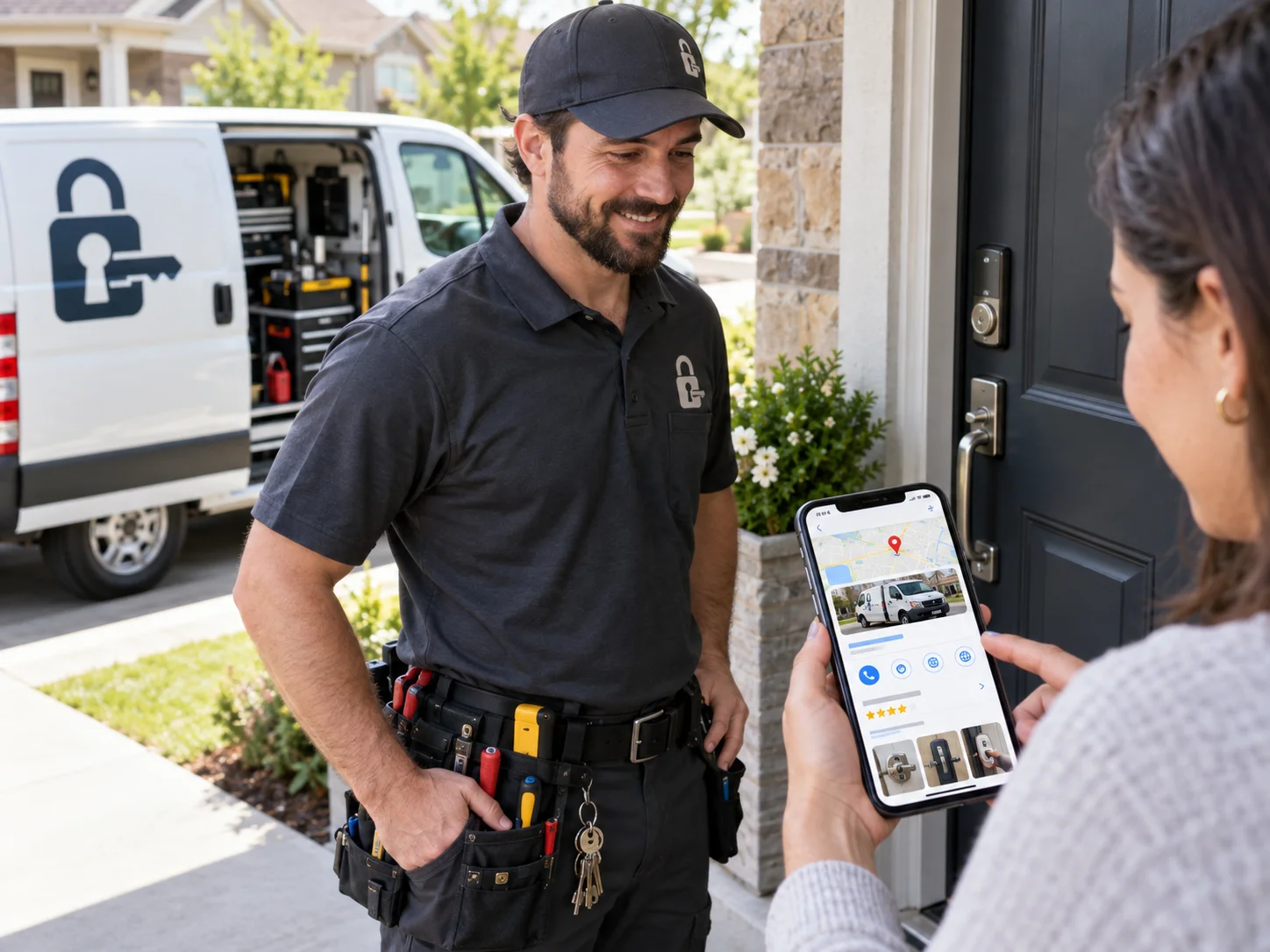
Choose the category that best represents the actual business.
Don’t select an unrelated category because it appears to have more search demand.
Secondary categories can be used where they genuinely describe additional services.
The profile should tell a consistent story about the business.
Locksmith Services in Google Business Profile
Google allows eligible businesses to add services to their Business Profiles. These can include services provided at a business location or at customers’ locations.
For a locksmith, relevant services might include:
Emergency locksmith services
Lock replacement
Lock repair
Broken key extraction
Key cutting
Vehicle locksmith services
Only include services the business actually provides.
Google Maps SEO for Locksmiths
Google Maps is particularly important for urgent local searches.
Someone with a lockout problem may search directly from their phone and compare the businesses shown nearby.
But don’t think of Maps as a system you can trick.
Google says there is no way to request or pay for better local rankings. Local results mainly depend on relevance, distance and prominence.
That means your focus should be on the parts you can control.
Keep the profile accurate.
Build genuine customer reviews.
Use real business information.
Make the website useful.
Create relevant service pages.
Build genuine local authority.
Make calling easy.
That’s a much safer strategy than chasing shortcuts.
Why Mobile Experience Matters So Much
Urgent locksmith searches are often made on mobile devices.
The customer may be outside a property or standing beside a vehicle.
They don’t want a complicated website.
They need a clear path from search result to phone call.
Your mobile page should make the following obvious:
What service do you provide?
Where do you work?
Can I call you now?
Why should I trust you?
If those answers are buried, potential leads can disappear.
Use a Click-to-Call Phone Number
Make the main phone number clickable.
Place it near the top of important emergency pages.
A customer shouldn’t have to copy a number into their phone manually.
You can also track phone clicks as a conversion.
This helps you understand whether your local search visibility is creating actual enquiries.
Build Dedicated Locksmith Service Pages
A common mistake is putting every service on one page.
That can make it difficult to satisfy different search intents.
Instead, important services can have their own useful pages.
For example:
Emergency Locksmith
Lock Replacement
Lock Repair
Broken Key Extraction
Vehicle Locksmith
Commercial Locksmith
Each page should have a clear purpose.
An emergency locksmith page should focus on urgent situations.
A commercial locksmith page can explain business security needs.
A broken key page can focus on extraction and related repairs.
This gives customers clearer information and creates a stronger website structure.
Emergency Locksmith SEO
Emergency locksmith SEO should focus on speed, clarity and trust.
The page doesn’t need lots of clever wording.
It needs useful information.
Explain the emergency services available and the areas covered.
Make the phone number easy to find.
Show genuine reviews or other appropriate trust signals.
Explain what happens after the customer makes contact.
Avoid exaggerated claims.
For example, don’t promise “15-minute arrival” unless the business can actually provide that service consistently.
In urgent situations, honest information is more reassuring than a flashy promise.
24 Hour Locksmith SEO
If the locksmith genuinely operates 24 hours a day, that should be made clear.
However, don’t claim 24/7 availability simply because it is a popular keyword.
Your opening hours, Business Profile and website should all tell the same story.
If overnight calls are handled differently, explain that clearly.
Customers need to know whether they can actually get help when they call.
Mobile Locksmith SEO
Many locksmiths travel to the customer’s location.
That means the website needs to explain the service area clearly.
A mobile locksmith page can explain the types of jobs handled at customer locations and the areas covered.
It should also make the contact process simple.
If the business operates as a service-area business, make sure the Business Profile reflects the real operating model.
Don’t create fake addresses in different towns.
Locksmith Location Pages
Location pages can help when a locksmith genuinely serves multiple areas.
For example, a locksmith might serve:
Croydon
Ealing
Wimbledon
Richmond
Bromley
Hammersmith
But don’t create a page for every postcode simply because you found a keyword.
Each location page should have a real purpose.
A useful page can explain the services available in that area, the type of customers served, relevant local project experience and how to contact the locksmith.
Avoid Duplicate Location Pages
This is particularly important for locksmith SEO.
You don’t want dozens of pages that say almost the same thing.
Changing “Croydon” to “Ealing” isn’t enough.
Google’s spam policies specifically warn about doorway abuse, including substantially similar pages created to target specific locations or searches.
You can read Google’s Search spam policies.
A better approach is to build fewer, stronger pages.
If a location doesn’t need its own page, don’t force one into the website.
Add Genuine Local Proof
Local proof can make a location page much stronger.
Suppose a locksmith has completed several lock replacement jobs in Ealing.
With suitable customer permission, the website could explain the type of work completed.
It might mention the general property type, the problem and the solution.
Photos could be included where appropriate.
Customer feedback can also help.
This creates useful evidence that the locksmith actually serves the area.
Don’t publish private addresses without permission.
General location information is usually enough.
Locksmith Reviews and Reputation
Reviews can be especially important for locksmiths.
Customers are often choosing a business during a stressful situation.
They want reassurance before making contact.
Google says reviews and positive ratings can contribute to local prominence.
Build reviews through good service.
Ask genuine customers for honest feedback after completing a job.
Respond to reviews professionally.
If someone leaves a complaint, don’t get into an argument.
Try to resolve the issue calmly.
Never buy reviews or create fake customer accounts.
A real review describing a lockout experience is much more useful than ten vague comments saying “great service”.
Reviews can also play an important role in healthcare-related local searches. Our guide to local SEO for dfentists and clinics looks at how practices can build trust before a potential patient makes contact.
Build a Review Engine Without Being Pushy
A simple process can work well.
After completing a job, send the customer a polite review request.
Make the process easy.
Don’t pressure customers to leave a five-star review.
Ask for honest feedback.
This gives you a more natural review profile over time.
It also creates useful feedback about what customers value most.
Locksmith Trust Signals
Trust is one of the most important parts of locksmith marketing.
Customers may be allowing a stranger to enter their home or access their vehicle.
Useful trust signals can include genuine:
- Trade memberships
- Qualifications
- Insurance details
- Years of experience
- Customer reviews
- Business information
- Project photographs
- Guarantees where actually offered
Only display credentials the business really holds.
Don’t add badges simply because they make a page look more professional.
Trust is equally important in professional services where customers carefully assess expertise before making contact. Our guide to local SEO for law firms explains how reviews, expertise and location trust can support local visibility.
Master Locksmiths Association
The Master Locksmiths Association is one relevant UK industry organisation.
It provides information about locksmith membership and consumer guidance around choosing a locksmith.
If a business is genuinely an MLA member, its membership can be referenced accurately on the website.
You can direct customers to the Master Locksmiths Association when discussing professional locksmith standards and finding a locksmith.
The key point is accuracy.
Never suggest membership where none exists.
Protect Customers From Locksmith Scams
Trust becomes even more important when customers are searching during an emergency.
A customer may see several businesses and have little time to compare them.
The National Cyber Security Centre advises consumers to research unfamiliar businesses, use trusted reviews and be cautious of offers or messages that seem too good to be true.
A locksmith website can help customers make an informed choice by showing clear business details, genuine reviews and accurate service information.
Don’t use fear to force a customer into calling.
Give them useful information instead.
Local Citations for Locksmiths
Local citations are mentions of your business details on other websites.
These can include the business name, address, phone number and website.
For locksmiths, relevant citations might come from legitimate trade directories, local business directories and industry organisations.
The key is consistency.
Your business name, address and phone number should be accurate across important listings.
If you’ve changed your phone number or address, update old listings where possible.
Don’t create hundreds of low-quality listings just to increase the number of citations.
Quality and accuracy matter more than a giant list of random directories.
NAP Consistency
NAP stands for:
Name
Address
Phone number
Imagine your website shows one phone number, an old directory shows another and your Business Profile contains a third.
That’s not helpful.
Customers may call the wrong number.
Old information can also make the business harder to understand across the web.
Keep your important business information consistent and up to date.
Technical SEO for Locksmith Websites
Local visibility still depends on a website that works properly.
Your important pages should be crawlable and indexable.
The website should load well on mobile.
Images should be properly sized.
Internal links should connect related services and locations.
Page titles should describe the page accurately.
Broken links should be fixed.
Unnecessary duplicate pages should be avoided.
This sounds basic, but basic problems can become frustrating when you’re relying on the website to generate urgent leads.
LocalBusiness and Service Schema
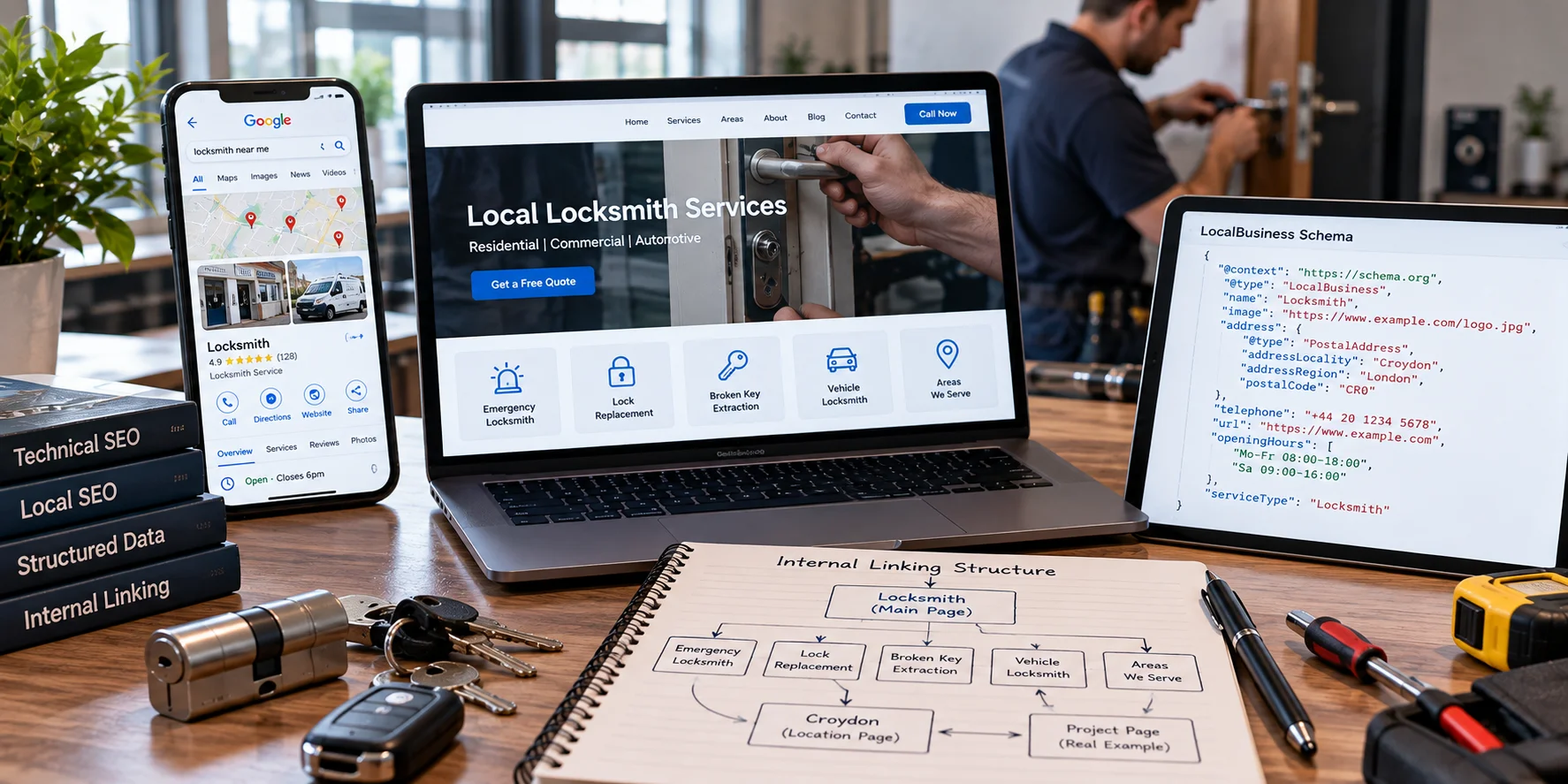
Structured data can help search engines understand suitable business information.
Google provides guidance on LocalBusiness structured data.
For relevant pages, structured data can describe information about the business.
Service structured data can also help describe suitable service information when implemented correctly.
The important rule is simple.
Your structured data should match what users can actually see.
Don’t add fake locations, services, reviews or opening hours.
Schema isn’t a shortcut to higher rankings.
It’s a way to provide clearer machine-readable information.
Internal Linking for Locksmith SEO
Internal links help connect related content.
Imagine your main locksmith page links to:
Emergency Locksmith
Lock Replacement
Broken Key Extraction
Vehicle Locksmith
Areas We Serve
Then a Croydon location page can link to the emergency locksmith service available in that area.
A project page can link back to the relevant service.
This creates a logical journey.
The customer can move from the location to the service without having to search again.
For wider local search guidance, see Wixdek’s Local SEO service.
Build a Logical Locksmith Website Structure
A simple structure might look like this:
Locksmith
│
├── Emergency Locksmith
├── Lock Replacement
├── Lock Repair
├── Broken Key Extraction
├── Vehicle Locksmith
│
├── Projects
│ ├── Lock Replacement in Croydon
│ └── Emergency Lockout in Ealing
│
└── Areas We Serve
├── Croydon
├── Ealing
├── Wimbledon
└── Richmond
The exact structure depends on the locksmith’s real services.
Don’t create pages simply to fill the menu.
Every page should help someone.
Locksmith Keyword Research
Start keyword research with real customer needs.
You don’t need hundreds of variations.
Group searches around service, urgency and location.
| Search type | Example | Intent |
| Emergency | emergency locksmith near me | Very high |
| Lockout | locked out of house | Very high |
| Service | broken key extraction | High |
| Location | locksmith Croydon | High |
| Availability | 24 hour locksmith | High |
| Vehicle | auto locksmith near me | Very high |
| Information | how to prevent lockouts | Informational |
| Cost | locksmith cost UK | Commercial research |
This gives you a much cleaner content plan.
The page should then satisfy the search behind the keyword.
Don’t force the exact phrase into every heading.
Natural wording is easier to read.
Locksmith Lead Generation
The purpose of local SEO isn’t simply to increase impressions.
It’s to generate useful enquiries.
A typical customer journey might look like:
Google search → Maps listing → website → phone call → enquiry → completed job
Your reporting should try to understand that journey.
Track phone calls where possible.
Track contact forms.
Track booking requests.
Track click-to-call actions.
Then compare those leads with actual jobs.
A thousand website visits aren’t especially useful if they produce no suitable enquiries.
Measure High-Intent Searches
Google Search Console can help you understand which searches generate visibility and clicks.
Look for queries connected to:
Emergency services
Lockouts
Lock replacement
Broken keys
Vehicle locksmith services
Local areas
You can then compare search performance with your own lead data.
This helps identify which parts of the strategy are actually supporting the business.
Why Rankings Alone Aren’t Enough
A locksmith may rank well for an informational keyword and receive plenty of traffic.
But that doesn’t mean the traffic will become customers.
An emergency service page is different.
If someone searches for “emergency locksmith near me”, they may be ready to call immediately.
So ask a better question.
Not:
“Did we rank?”
Instead:
“Did the visibility help generate a useful enquiry?”
That is a much better measure of local SEO performance.
Common Locksmith SEO Mistakes
Keyword Stuffing
Repeating “emergency locksmith London” in every paragraph doesn’t make the page better.
Use the phrase naturally and focus on useful information.
Fake Business Locations
Don’t create fake addresses to appear closer to customers.
Use genuine business information.
Duplicate City Pages
Changing one city name on a copied page doesn’t create useful local content.
Build genuine location resources instead.
Fake Reviews
Never create or buy fake reviews.
They can damage customer trust and create wider reputation problems.
Keyword-Stuffed Business Names
Use the real business name in the Business Profile.
Don’t turn it into a list of services and locations.
Unsupported Response-Time Claims
Don’t promise a 15-minute arrival if you can’t deliver it.
Urgent customers need accurate information.
Hiding the Phone Number
If calls are important, make the number easy to find.
Especially on mobile.
Using Only Stock Photos
Real photographs of the team, vehicles and completed work can provide stronger evidence.
Buying Random Links
Don’t chase hundreds of unrelated backlinks.
Build genuine local and industry relationships.
How to Handle Map Spam
Local search can sometimes contain businesses using misleading information.
For example, a competitor might use a keyword-heavy business name that doesn’t reflect its real-world name.
Don’t copy the tactic.
If you believe another Business Profile violates Google’s policies, use Google’s reporting and support processes rather than changing your own information to compete.
Google also allows users to suggest edits or flag inaccurate information in local listings.
The safer approach is to keep your own profile accurate and report genuine problems through the proper channels.
Emergency Locksmith Content Should Be Different
Emergency content should be short on fluff.
Someone in a lockout situation doesn’t need five paragraphs about your company’s history.
They need useful information.
A strong emergency page can explain:
What emergencies you handle
Where you operate
How customers can contact you
What happens after they call
What proof or credentials you have
That gives the customer enough information to make a decision without slowing them down.
Planned Locksmith Services Need More Detail
Planned work is different.
Someone replacing locks across a property may want to understand the options before contacting you.
The service page can explain the types of locks available, the assessment process and what happens during the work.
This gives the customer useful context.
It also gives your website a chance to demonstrate genuine expertise.
Use Real Locksmith Experience
This is where many generic SEO articles fall short.
A locksmith website should show what the business actually knows.
For example, a project page could explain a genuine lock replacement.
It might cover the original problem, what was inspected, the work completed and the finished result.
A broken key case study could explain how the problem was handled.
Don’t invent stories.
Don’t invent customer quotes.
Don’t claim results you can’t prove.
Real experience is far more useful.
Build Content Around Customer Problems
Your blog can support the service pages by answering questions customers ask before calling.
Useful topics could include:
What should I do if I’m locked out?
Why does my key keep sticking?
When should a lock be replaced?
What causes a key to snap inside a lock?
How can I improve home door security?
What should I check before hiring a locksmith?
These topics can attract people at different stages of the buying journey.
The article can then guide relevant readers towards the appropriate service page.
A Practical Local SEO Framework for Locksmiths
A strong locksmith SEO strategy can be built around six areas.
1. Make Google Business Profile Accurate
Use the real business details, correct categories, genuine services and accurate opening information.
2. Target High-Intent Services
Build useful pages around emergency lockouts, lock repairs, lock replacement and other genuine services.
3. Build Genuine Local Coverage
Create location pages only where the locksmith genuinely operates and where useful local information can be provided.
4. Make Mobile Conversion Easy
Keep phone numbers visible and clickable.
Make important information easy to find without excessive scrolling.
5. Build Trust
Show genuine reviews, credentials, experience, photographs and other appropriate evidence.
6. Measure Leads
Track calls, enquiries and completed jobs rather than focusing only on rankings.
This keeps the strategy tied to the real business.
A Simple Locksmith SEO Example
Imagine a locksmith serving South London.
The business provides emergency lockouts, lock replacement, broken key extraction and vehicle locksmith services.
Instead of creating dozens of thin pages, the website has four strong service pages.
It also has useful location pages for Croydon, Wimbledon and nearby areas where the locksmith genuinely works.
The business has completed real lock replacement and emergency callout jobs.
With customer permission, some of those projects become case studies.
The Google Business Profile contains accurate information.
Customers leave genuine reviews.
The website has clear click-to-call buttons.
Emergency pages are designed around quick decisions.
The result is a much more useful search journey.
The website isn’t trying to rank for every locksmith phrase imaginable.
It’s helping people find the right service when they actually need it.
High local intent isn’t limited to locksmith searches. Other home-service businesses can face similar local competition, so our guide to local SEO for roofers explains how Maps visibility, local pages and customer trust can work together for roofing businesses.
How Wixdek Approaches Local SEO for Locksmiths
At Wixdek, we believe locksmith SEO should be built around urgency and trust.
A locksmith doesn’t simply need more website visitors.
The business needs visibility among people who are looking for a relevant service in the areas it genuinely covers.
We start by looking at the services, locations, competitors and current search visibility.
From there, we can identify gaps across the Google Business Profile, service pages, location pages, technical SEO, internal links and conversion journey.
For emergency services, the customer journey needs to be particularly clear.
The page should explain the service, show where the locksmith operates and make contacting the business easy.
Trust is just as important.
Genuine reviews, real project evidence and accurate credentials can give customers more confidence before they call.
For broader SEO support across different sectors, explore the industry SEO services available through Wixdek. For wider local search support, explore Wixdek’s Local SEO service.
Local SEO for Locksmiths Checklist
Before launching or reviewing a locksmith SEO campaign, check:
- Is the Google Business Profile accurate?
- Is the primary category relevant?
- Are the listed services genuine?
- Are opening hours accurate?
- Is the real service area clear?
- Are important emergency services covered?
- Are service pages useful and distinct?
- Are location pages genuinely local?
- Are genuine customer reviews being collected?
- Are real project photographs available?
- Are relevant credentials displayed accurately?
- Is the website easy to use on mobile?
- Is the phone number clickable?
- Are service and location pages internally linked?
- Is structured data accurate?
- Are local citations consistent?
- Are calls and enquiries being tracked?
- Is the business avoiding fake reviews and misleading claims?
If several answers are no, there’s probably room for improvement.
Final Thoughts
Local SEO for locksmiths is about more than ranking for “locksmith near me”.
The customer behind that search may be stressed, locked out and ready to call.
Your Google Business Profile needs to make the business easy to understand.
Your website needs to make the service easy to find.
Your mobile experience needs to make calling simple.
Your location pages need to reflect genuine service areas.
Your reviews and credentials need to build trust.
And your content needs to show real knowledge rather than recycled SEO copy.
Most importantly, don’t chase shortcuts.
Don’t create fake locations.
Don’t buy reviews.
Don’t make promises you can’t keep.
Build a clear local presence, show genuine evidence and make the customer’s next step easy.
That’s how locksmith SEO can become a practical lead-generation system instead of another ranking report.
Frequently Asked Questions
What is local SEO for locksmiths?
Local SEO for locksmiths is the process of improving a locksmith company’s visibility in Google Search and Google Maps for relevant local searches. It can include Google Business Profile optimisation, service pages, location pages, reviews, citations, technical SEO and local authority.
Why is local SEO important for locksmiths?
Locksmith searches can be highly urgent. Customers may need help immediately, so appearing in relevant local results can help the business reach people who are already looking for a locksmith.
What keywords should locksmiths target?
Focus on genuine services, urgent problems and real service areas. Examples include emergency locksmith, locksmith near me, lock replacement, broken key extraction, vehicle locksmith and 24 hour locksmith searches where those services are actually provided.
Does Google Business Profile help locksmiths?
Yes. A complete and accurate Business Profile can help Google understand the business and match it with relevant local searches. Google says local ranking mainly depends on relevance, distance and prominence.
How do locksmiths improve Google Maps visibility?
There is no guaranteed method for reaching a specific Maps position. Focus on accurate Business Profile information, genuine reviews, relevant services, useful website content and signals that support local relevance and prominence.
Should locksmiths create a page for every town?
No. Create location pages when the business genuinely serves those areas and the pages provide useful local information. Avoid large groups of near-identical pages because Google identifies substantially similar location pages as a potential doorway abuse problem.
Should an emergency locksmith have a separate service page?
Usually, yes, if emergency work is an important service. A dedicated page can focus on urgent lockouts, emergency lock repairs, service coverage and the fastest way to contact the business.
Is “24 hour locksmith” a good keyword?
It can be relevant when the locksmith genuinely provides 24-hour service. Never claim 24-hour availability simply to target the keyword.
Are reviews important for locksmith SEO?
Reviews can help customers assess a locksmith’s reputation, and Google says reviews and positive ratings can contribute to local prominence. Focus on genuine customer feedback rather than purchased or fabricated reviews.
What trust signals should locksmiths show?
Useful signals can include genuine trade memberships, qualifications, insurance information, reviews, real project photographs, business details and relevant experience. Only display credentials that the business actually holds.
Should locksmiths use real project photos?
Yes. Genuine photographs of completed work, vehicles and the team can help customers understand the business and provide evidence of real experience.
How can locksmiths get local leads from SEO?
Build visibility around high-intent services and genuine service areas, then make the website easy to contact. Track calls, enquiries and bookings so you can see whether search visibility is producing useful leads.
How long does local SEO for locksmiths take?
There is no fixed timeframe. Some improvements can appear sooner, while stronger visibility may take longer in competitive areas. Measure progress over time rather than expecting instant results.
Should locksmiths focus on Maps or organic SEO?
Both can work together. Maps can help capture urgent local searches, while organic service and location pages can provide deeper information and support other relevant searches.
What is the biggest locksmith SEO mistake?
One of the biggest mistakes is chasing visibility without considering trust and conversion. A locksmith can rank well but still lose enquiries if customers cannot verify the business or quickly find a way to make contact.
Ready to Turn Urgent Searches Into Locksmith Leads?
If your locksmith business is visible online but isn’t getting enough calls, rankings may not be the only issue.
Your Google Business Profile, service pages, location coverage, reviews, trust signals and mobile experience all work together.
Wixdek can review your current local search presence and identify where potential customers may be getting lost.
Request a Local SEO Review