Search engine positioning is the process of improving where a specific webpage appears in search results for relevant keywords. It focuses on individual pages and queries rather than the whole website.
You publish a useful page, Google finds it, and traffic starts appearing. Then the page gets stuck on page two while competitors stay above you.
Sound familiar?
This is where search engine positioning becomes useful.
Search engine positioning is the practice of improving individual web pages so they rank higher for relevant keywords in search engine results pages, or SERPs.
Unlike broader SEO, which covers the whole website, search engine positioning focuses on specific pages that already have ranking potential.
The goal is not simply to chase position one. It is to improve visibility for searches that can bring useful visitors, enquiries, bookings or sales.
This guide explains how search engine positioning works, what affects rankings, how to identify positioning problems, and 12 practical ways to improve your Google search positions.
Google’s SEO Starter Guide explains that SEO helps search engines understand your content while helping people find and choose useful websites. It also makes one thing clear: there is no secret trick that automatically puts a site first. If your page already ranks between positions 5 and 20, search engine positioning can help identify the changes most likely to improve visibility and clicks.
Quick Answer:
Search engine positioning SEO focuses on improving specific pages that already have some Google visibility. It involves better intent matching, stronger content, internal links, technical fixes, backlinks and improved search snippets.
What Is Search Engine Positioning SEO?
Search engine positioning is the work done to improve where a particular page appears for relevant searches.
Imagine a London electrician has a service page ranking at position 12. The website is already indexed and receiving impressions, but few people reach the page.
The business does not necessarily need a brand-new website. That page may need better intent matching, stronger content, internal links, backlinks, or technical fixes.
That focused work is search engine positioning.
You may also hear terms such as search engine placement, SEO placement, Google search position, or SERP ranking. They usually describe a similar goal: improving where a page appears in organic search.
Search Engine Positioning in Simple Terms
Think of SEO as looking after the whole shop.
Search engine positioning is more like moving an important product towards the front window. The shop still needs to work properly, but you are giving extra attention to something valuable.
That is why Search engine positioning works best as part of SEO. It is not a replacement for SEO.
Search Engine Positioning vs SEO
The difference is mostly about scope.
| Area | Search Engine Positioning | SEO |
| Main focus | Particular pages and queries | The whole website |
| Goal | Improve search positions | Build wider organic visibility |
| Typical work | Content updates, links, intent, titles, page fixes | Technical SEO, content, architecture, links and strategy |
| Measurement | Keyword positions, clicks, CTR and page traffic | Organic growth, visibility, leads and conversions |
| Timescale | Often focused on existing opportunities | Usually broader and ongoing |
| Relationship | A focused part of SEO | The wider discipline |
Because Search engine positioning often works with pages that already have some visibility, it can be more focused than starting from scratch.
It is not an instant shortcut, though. Google still needs to crawl, process, and reassess your changes.
At Wixdek, our wider SEO services in London combine content, technical improvements, authority building, and search performance work rather than treating rankings as an isolated number.
Why Does Search Engine Positioning Matter?
Being indexed by Google does not mean people will find you.
A page can appear somewhere in search results and still receive little traffic. The difference between stronger and weaker positions can be large.
A Backlinko analysis of around four million Google search results found that the first organic result had an average click-through rate of 27.6%. The study also found that the top three organic results received 54.4% of clicks. Those figures are useful benchmarks, although CTR varies by query and SERP layout.
That is why moving a useful page upwards can matter.
Still, rankings need context.
Ranking first for a phrase nobody useful searches is not much of a win. Position six for a high-value service query could bring far more business.
The better goal is simple: improve visibility for searches that match what your audience actually needs.
How Does Search Engine Positioning Work?
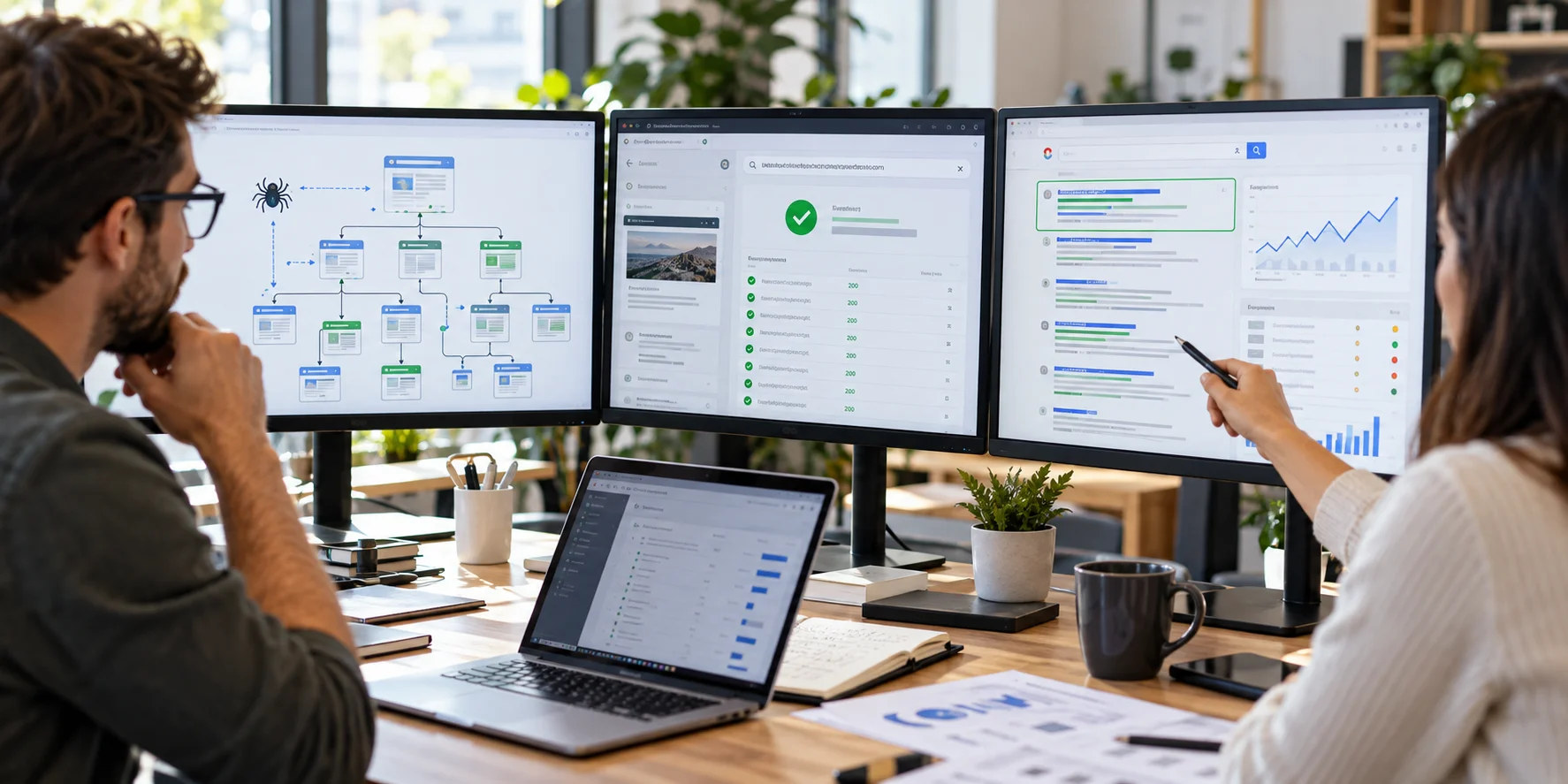
Search engine positioning starts before ranking. Google first needs to discover and access your page. It then needs to process the content and decide whether the URL can appear in search results. After that, ranking systems work out which results best serve a search.
Crawling Comes First
Google uses automated crawlers to discover pages across the web. Links play an important part in discovery. Google says many new pages are found through links from pages it already knows.
This is one reason good site structure matters. If an important page sits several clicks deep with no useful internal links, you are making discovery and navigation harder than necessary.
Google’s link best practices explain that links help Google find new pages to crawl and understand page relevance
Google Needs to Index the Right URL
A page also needs to be eligible for indexing.
Google’s technical requirements for Search are quite simple at the basic level. Googlebot should not be blocked, the page should return an HTTP 200 success status, and it should contain indexable content. Meeting those requirements makes a page eligible for indexing, but indexing itself is not guaranteed. Meeting those conditions does not guarantee indexing or rankings.
That distinction matters.
You cannot fix a serious indexing problem by adding another 500 words.
If the wrong URL is canonicalised, blocked, redirected, or unavailable, deal with that problem first.
Ranking Systems Decide What Best Fits the Search
Once Google can use the page, ranking becomes a matching problem.
Google uses automated ranking systems that consider many factors and signals, rather than one simple SEO score. These systems mainly assess individual pages, although some site-wide signals also contribute. Its systems have also changed over time. For example, Google’s former helpful content system became part of its core ranking systems in March 2024.
So avoid thinking like this:
“My competitor used the keyword 14 times, so I need 15.”
Search does not work that way.
A better question is:
“Does my page satisfy this search better than the alternatives?”
That question leads to much better SEO decisions.
Your Google Position Is Not a Permanent Number
A search ranking position can change.
Different queries may trigger different result layouts. Search Console also reports position as performance data across impressions rather than one permanent slot.
That is why checking Google manually once is not reliable rank tracking.
What Does Average Position Mean in Google Search Console?
Search Console reports average position across impressions, rather than telling you that a page permanently occupies one fixed ranking spot.
At page level, it reports the position of that specific URL. The figure is then averaged across relevant impressions.
Suppose a page appears at positions 4, 6, and 8 across different impressions.
Its average will not tell you that the page “ranks permanently at position six.” It is an average based on those appearances.
This is why trends are more useful than checking one isolated number.
What Factors Affect Search Engine Positioning?
There is no single SEO ranking factor that controls your position.
A useful Search engine positioning review looks at the whole page, the website around it, and the search results it competes within.
Search Intent
Search intent is what the person actually wants.
Someone searching “what is technical SEO” wants information. Someone searching “technical SEO agency London” is much closer to hiring help.
Those searches should not lead to identical pages.
If Google is showing guides and your page is a hard sales page, you may have an intent problem.
If Google is showing service pages and you built a 5,000-word educational article, the same applies.
Our guide to keyword research and search intent explains why keyword volume alone cannot tell you which page should target a search.
Content Quality and Usefulness
Content needs to solve the searcher’s problem.
Google’s people-first guidance asks whether content offers original information, useful analysis, meaningful expertise, and enough depth to help the reader achieve their goal. It also warns against merely summarising what other websites already say.
That does not mean every article needs to be huge.
Google explicitly says there is no magic minimum or maximum word count.
Write enough to solve the problem well.
Then stop.
On-Page SEO
Good on-page SEO makes the purpose of your page easy to understand.
Your title, H1, headings, body copy, images, internal links, and key entities should support the same topic.
The primary keyword can appear naturally. Related terms can help provide context, but there is no need to squeeze every keyword variation into every paragraph.
Google says its language systems can understand how pages relate to searches even when every possible wording is not used.
If a page already has useful content but its message feels muddled, a focused on-page SEO review can reveal where intent, headings, content, or internal links are holding it back.
Internal Linking
Internal links connect useful pages across your site.
They help people move naturally between topics. They also give search engines more context about how your pages relate.
Google says links help users and search engines reach other parts of a site. It also recommends descriptive anchor text that tells users what the linked page contains.
Do not force twenty links into a page because someone gave you a target number.
Link where another page genuinely helps.
Google says links help it find new pages and understand relevance. Its link best practices also recommend clear, descriptive anchor text so people and search engines can understand what the linked page is about.
Backlinks and Authority
Links from other websites can help search engines discover content and understand how the web connects.
But backlink quality matters far more than buying large batches of weak links.
A useful page may need stronger authority if competitors have comparable content but much stronger relevant links and brand signals.
That is when focused link building can support a Search engine positioning strategy.
Technical SEO and Indexability
Technical faults can hold good content back.
Problems may include blocked pages, incorrect canonicals, redirect errors, broken internal links, rendering issues, server problems, or pages that Google cannot index properly.
Wixdek’s technical SEO service focuses on crawlability, indexing, page performance, site structure, and other technical barriers.
The key point is simple.
Fix access before polishing copy.
Page Experience and Core Web Vitals
Google says its core ranking systems seek to reward pages with a good overall page experience. It advises website owners not to focus on only one measurement.
Core Web Vitals measure parts of real-world user experience.
Google currently recommends aiming for:
- Largest Contentful Paint within 2.5 seconds.
- Interaction to Next Paint below 200 milliseconds.
- Cumulative Layout Shift below 0.1.
These are useful targets, but perfect scores do not automatically produce top rankings. Relevance and usefulness still matter.
Competition and SERP Changes
Your page does not rank in a vacuum.
Competitors update pages. New websites enter the market. SERP features change. Google may also understand a query differently over time.
That is why a page can lose search visibility even when nobody touched it.
Positioning work needs to look outside your website as well as inside it.
How Do You Check Your Website’s Position on Google?
Start with Google Search Console.
It gives you real search performance data from Google. You can see clicks, impressions, CTR, average position, queries, pages, countries, and other useful dimensions.
Open the Performance report and choose the page you want to study.
Then look at the queries driving impressions.
Ask:
Which searches already show the page?
Which queries bring clicks?
Where is the page close to stronger positions?
Which high-impression queries have weak CTR?
Which queries matter commercially?
This gives you a much better starting point than typing one keyword into Google.
Search Engine Position Checkers and Rank Trackers
Third-party tools can also track keyword positions over time.
You may see them described as a Google position checker, website ranking checker, SEO rank checker, or search engine position checker.
These tools can be useful for fixed keyword sets and competitor tracking.
However, treat their ranking number as one data point.
Search Console shows how your actual site performed across real Google impressions, so use both types of data together.
Which Pages Should You Optimise First?
This is where many positioning projects go wrong.
Teams often start with the page they personally dislike most. That page may not offer the best opportunity.
Start with evidence instead.
| Page situation | Suggested priority |
| Position 4 to 10, strong impressions, valuable query | Very high |
| Position 11 to 20, strong business value | High |
| High impressions but weak CTR | High |
| Previously ranked well but dropped sharply | High |
| Multiple URLs compete for the same intent | High |
| Position 40+, weak content and low business value | Low |
| Good ranking but almost no relevant demand | Low |
You are looking for pages where improvement could produce a useful result.
A service page sitting at position eight for a valuable London search may deserve attention before an article ranking position 35 for a broad national term.
Traffic potential matters.
Business value matters more.
How to Improve Search Engine Positioning Step by Step
Now we get to the practical work.
Do not change everything at once.
Diagnose the problem first, then make changes that answer that problem.
1. Check Search Intent Before Changing the Page
Search your main query and study the results.
What kinds of pages dominate?
Are they guides, service pages, category pages, product pages, comparison pages, videos, or tools?
Then check the angle.
If most results answer a beginner question, a highly technical page may miss the mark.
If most results help people hire a provider, a generic definition may not be enough.
Search intent should shape the page before keyword optimisation begins.
2. Analyse the Pages Already Ranking Above You
Do not copy them line by line.
That only creates another version of content Google already has.
Instead, work out why those pages help the user.
Look at their format, depth, examples, evidence, visuals, internal links, unique information, and page purpose.
Then look for what they missed.
Google’s latest guidance for generative AI search also stresses valuable, non-commodity content. It recommends bringing first-hand knowledge, original viewpoints, and useful information rather than recycling existing summaries.
That principle works for classic search too.
3. Rule Out Crawling and Indexing Problems
Before rewriting the page, check whether Google can use it properly.
Check Googlebot Access
Make sure the page is not blocked from crawling unexpectedly.
Check the HTTP Status
An indexable page normally needs to return a successful response rather than an error.
Check Indexability
Look for accidental noindex instructions or other indexing barriers.
Check the Google-Selected Canonical
If similar URLs exist, Google may choose one as the main canonical page.
Google describes canonicalisation as choosing a representative URL from a group of duplicate or very similar pages. This helps Google decide which version should normally represent that content in search results. The canonical you specify is a signal, and Google may select another URL.
Use Search Console’s URL Inspection tool when a page behaves strangely.
4. Improve Weak or Outdated Content
A content refresh should improve something meaningful.
Do not change a date and call the page fresh.
Update facts that have changed. Remove advice that no longer applies. Add missing steps. Improve unclear explanations. Replace weak examples with useful ones.
Google specifically warns against changing publication dates merely to make pages look fresh. It also says adding or deleting lots of content only to make a site appear fresh is not a useful strategy.
5. Add Information Competitors Do Not Provide
This is where you can make a page genuinely better.
Add something useful from your own experience.
That could be a process, screenshot, original comparison, real client lesson, checklist, decision table, common mistake, or practical example.
For a London SEO business, that may mean explaining how search behaviour differs between a borough-level service term and a broad London term.
Useful experience builds trust because it is harder to fake than generic advice.
6. Improve Titles, Headings, and Search Snippets
Your title should make the topic clear. Avoid cramming every keyword into it. Google’s title link best practices recommend descriptive and concise page titles that give users a quick idea of what the result contains.
Meta descriptions deserve attention too. Google says search snippets are mainly created from page content, although it may use the meta description when that gives users a better description of the page.
7. Strengthen Internal Links
Find relevant pages with useful context and add natural links to the target URL.
Use anchor text that explains what sits behind the link.
A search positioning article, for example, naturally connects with technical SEO, keyword research, on-page SEO, link building, and AI search optimisation.
This also helps build a useful topic cluster instead of publishing isolated articles.
Wixdek’s guide to building topic clusters around commercial pages explains why different pages should have distinct jobs rather than competing for the same intent.
8. Check Keyword Cannibalisation
Sometimes two pages are trying to do the same job.
Imagine you have:
“SEO consultant London”
“London SEO consultant”
“SEO consulting services London”
If all three pages target the same audience with almost identical offers, they may not form a useful topic cluster.
They may simply overlap.
Check Search Console to see which URLs appear for the query.
Then decide whether the pages should be merged, differentiated, redirected, or given clearer purposes.
Do not assume a canonical tag is the answer to every overlap problem.
9. Earn Relevant Backlinks
A stronger page may still need external authority.
Look at the pages ranking above you.
If their content and intent are similar but their relevant link profiles are much stronger, authority may be part of your gap.
Earn links by creating things worth referencing.
Original research, useful tools, local resources, expert commentary, studies, templates, and strong guides are easier to promote than generic SEO copy.
Avoid shortcuts. Google’s spam policies specifically cover link spam and other tactics designed mainly to manipulate search rankings. Sites that violate these policies may rank lower or disappear from search results.
10. Improve Page Experience
A useful page should also feel good to use.
Check loading speed, mobile layout, intrusive pop-ups, visual stability, navigation, and the clarity of the main content.
Core Web Vitals can help spot performance problems.
But do not spend three weeks chasing a tiny speed score improvement while the page completely misses search intent.
Fix the biggest user problem first.
11. Optimise for Relevant SERP Features
Modern search results contain much more than plain blue links.
Google’s Search appearance documentation covers AI features, featured snippets, images, videos, sitelinks, snippets, structured data features, and other search experiences.
Look at the actual SERP.
If Google regularly shows a featured snippet, answer the core question clearly.
If images dominate, useful original visuals may help.
If video results appear, video content may deserve attention.
Structured data can also make pages eligible for supported rich search features. However, Google does not guarantee that valid markup will produce a rich result.
12. Recheck Performance Instead of Constantly Editing
Make the change.
Record when it happened.
Then give Google time to process it.
Constantly changing titles, sections, URLs, and internal links makes it harder to understand what helped.
SEO needs testing, but it also needs patience.
A 30/60/90-Day Search Engine Positioning Plan
Search engine positioning should not become a rush to change everything at once.
A simple 30/60/90-day plan gives you time to find the problem, make focused improvements, and measure what happens afterwards.
This is not a promise that rankings will improve within 90 days. Google says some changes can appear within hours, while others may take several months to show their full effect.
The plan simply gives your SEO work a clear order.
Days 1 to 30: Find the Best Opportunities
The first month should be mostly about diagnosis.
Start in Google Search Console and find pages already receiving impressions. Pay close attention to URLs sitting close to stronger positions, especially when the queries have real business value.
For each priority page, record:
- current clicks
- impressions
- average position
- CTR
- main ranking queries
- conversions or enquiries
- current title
- important internal links
- technical or indexing problems
Next, inspect the current search results.
Look at what type of content Google is rewarding. Check whether competitors use service pages, guides, comparison pages, videos, tools, or another format.
Then check the page itself.
Does it match search intent?
Is important information missing?
Can Google crawl and index it properly?
Are several pages competing for the same intent?
Does it have useful internal links?
By the end of the first 30 days, you should know which pages deserve attention and why.
Do not start rewriting every weak page you find.
Prioritise the opportunities most likely to matter.
Days 31 to 60: Make Focused Improvements
The second stage is where you act on the problems found during the audit.
If search intent is wrong, improve the page around what users actually need.
If the information is weak, add useful depth, examples, evidence, or first-hand insight.
If titles are unclear, improve them.
If the target page has weak internal support, add relevant links from useful pages across the site.
Technical problems should also be dealt with during this stage.
That may include fixing indexability, canonicalisation, redirects, broken links, rendering problems, or poor Core Web Vitals where they affect the user experience.
Keep a simple change log.
Record what you changed and when you changed it.
This matters because changing ten things every few days makes it much harder to understand what actually helped.
Days 61 to 90: Measure, Learn, and Refine
Now compare performance with the baseline you recorded during the first month.
Look at more than average position.
Check whether impressions increased.
Did clicks improve?
Did CTR change?
Are commercially useful queries appearing more often?
Most importantly, did the page generate more enquiries, sales, bookings, or other meaningful actions?
Some pages may move quickly.
Others may need more time.
If a page has improved, avoid changing it again simply because it has not reached position one.
If nothing meaningful has changed, return to the diagnosis.
Perhaps authority is still weak.
Maybe search intent has shifted.
Perhaps a competitor now offers something more useful.
Search engine positioning works best as a cycle:
Measure → Diagnose → Improve → Wait → Review → Refine
That is much more reliable than chasing daily ranking changes.
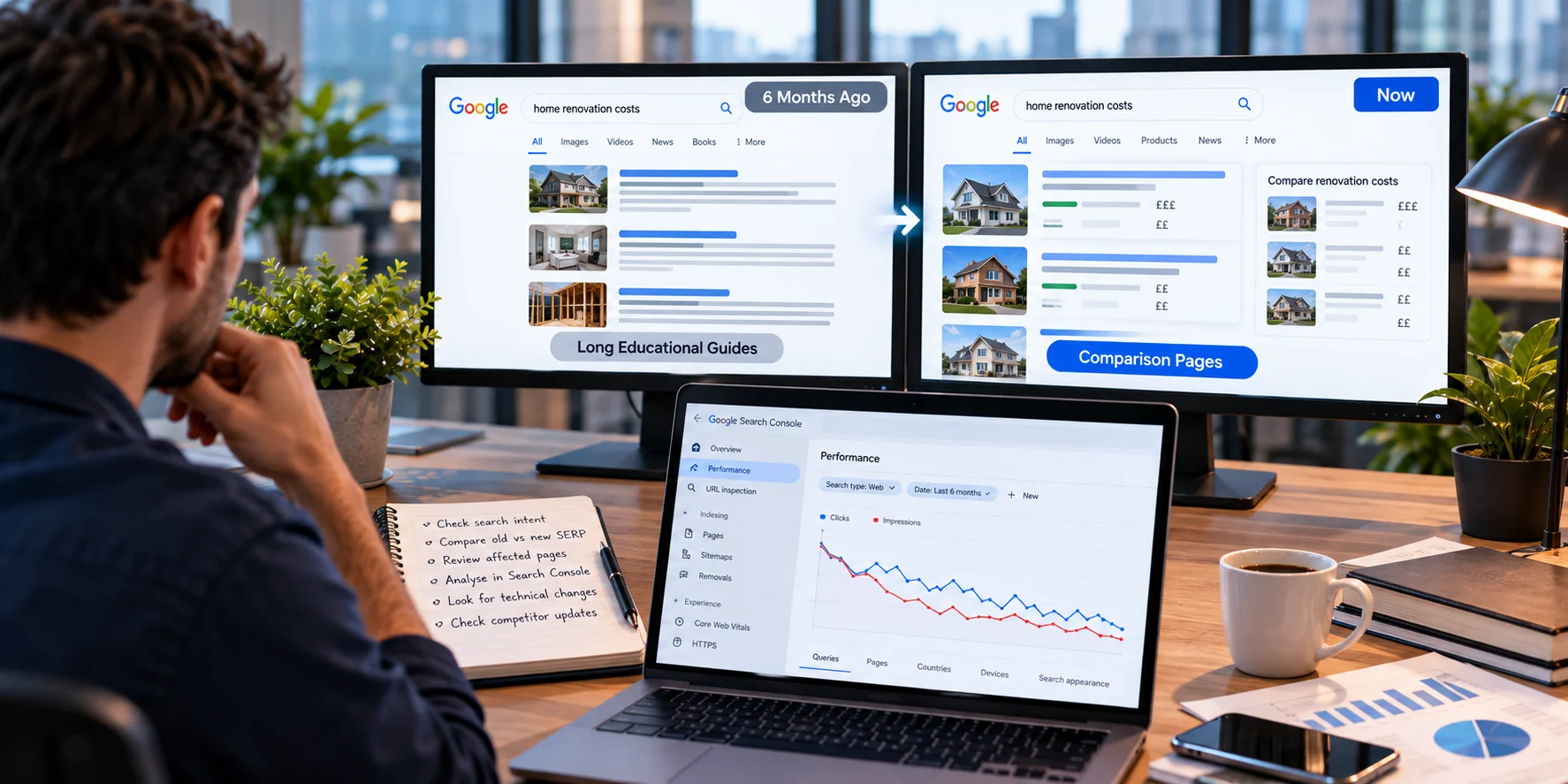
Search Intent Can Change Even When Your Page Does Not
This is called intent drift.
Imagine a query used to show long educational guides.
Six months later, Google mainly shows comparison pages.
Your article may still be well written, but the result set now suggests users want something different.
This can happen with local searches too.
A London service query may start showing more map results, directories, or location-focused pages.
When rankings drop, compare the old purpose of the SERP with the current one.
Do not immediately add another thousand words.
The problem may be format rather than depth.
Why Can a Website Lose Its Google Search Position?
A ranking drop can feel personal.
Usually, it is a signal to investigate rather than panic.
Your page may have become outdated. Competitors may have improved. Search intent may have shifted. Important backlinks may have disappeared.
Technical changes can also cause trouble.
A developer may change a canonical, redirect, robots rule, template, internal link, or rendering behaviour without realising the SEO impact.
Algorithm updates can change results too.
The right response is diagnosis.
Compare queries, pages, dates, countries, and search types in Search Console. Google recommends looking closely at the pages and searches most affected when assessing performance drops.
Find the pattern before deciding on the fix.
Should You Update Old Content to Improve Rankings?
Yes, when the update makes the page better.
Old does not automatically mean bad.
A five-year-old explanation can still be accurate. A six-month-old tool guide can already be wrong.
Update pages when information has changed, user needs have shifted, sections are weak, or competitors now answer the query better.
Do not rewrite a good page every month because its position moved from four to six.
Small movements happen.
Watch the trend and the business result.
How Do Internal Links Affect Search Engine Rankings?
Internal links are useful for both navigation and SEO.
They help users reach supporting information without starting another search.
They also help search engines discover pages and understand relationships between topics.
A good link says what comes next.
“Read our technical SEO guide” gives far more context than “click here.”
Internal links can also help priority pages avoid becoming orphaned.
What they cannot do is rescue poor content simply because fifty pages point towards it.
The target page still needs to deserve visibility.
Do Backlinks Still Affect Search Engine Positioning?
Backlinks remain part of the wider web ecosystem.
Google itself says it commonly discovers pages through links from other pages.
Still, the useful question is not:
“How many backlinks do I need?”
Ask:
“What authority gap exists between my page and the pages competing with it?”
Sometimes the answer is links.
Sometimes the real problem is weak intent, thin information, or poor technical setup.
Good positioning work separates those problems.
How Does Click-Through Rate Relate to Search Engine Positioning?
CTR tells you how often an impression becomes a click.
If a result receives 1,000 impressions and 50 clicks, its CTR is 5%.
Search Console calculates CTR from clicks divided by impressions.
A low CTR can point to several problems.
The title may be weak. The result may sit low on the page. Search features may take attention. The query may also be only loosely relevant.
Improve titles and snippets because they help users understand the page.
Do not treat CTR as a magic ranking hack.
Its clearest value is as a performance measure.
Can SERP Features Affect Organic Search Visibility?
Absolutely.
A traditional position number does not tell the whole story.
A result may compete with featured snippets, People Also Ask boxes, images, videos, local results, shopping features, or AI experiences.
This means two queries with the same average position may deliver very different click volumes.
Search visibility should therefore include more than classic keyword positions.
Look at what actually appears around your result.
Featured Snippets
Give a direct answer where the question calls for one.
Keep it simple, factual, and supported by the wider section.
Do not twist every heading into a fake FAQ simply to chase snippets.
People Also Ask
People Also Ask can reveal related questions around the main topic.
Use those questions when they genuinely help your reader.
You do not need to turn the article into fifty short answers.
Images and Videos
Google notes that images can be a person’s first route into your website.
It recommends clear images placed near relevant text, along with useful alt text.
Video can also create another discovery route when the format suits the query.
Rich Search Features
Google’s structured data guidelines explain that valid structured data can make a page eligible for supported rich-result appearances. However, correct markup does not guarantee that Google will display a rich result.
Use markup that matches the visible content.
Do not add schema simply because a plugin offers fifty choices.
AI Overviews and AI Mode
AI search has widened the meaning of search visibility.
Your audience may see supporting links inside AI Overviews or explore topics through AI Mode.
That does not make normal SEO obsolete. Google’s guidance for AI Overviews and AI Mode says existing SEO best practices still apply, and there are no additional technical requirements or special optimisations needed just to appear in these experiences.
Does Search Engine Positioning Matter for AI Overviews?
Yes, but think about the relationship carefully.
Traditional rankings and AI citations are not identical.
Still, strong technical SEO, useful content, clear structure, relevant internal links, and reliable information create the foundation for both.
Traditional SEO Still Provides the Foundation
Google’s guidance tells website owners to keep following core SEO practices for AI search.
That includes crawlability, indexability, helpful content, good page experience, and accurate information.
So you do not need a secret “AI SEO” trick.
You need strong foundations first.
What Query Fan-Out Changes
Google’s newer generative Search guidance explains that systems can use query fan-out to explore related searches around a user’s original question. That means useful content may need to answer connected needs naturally rather than repeating one exact keyword.
That means a useful page should cover the topic naturally rather than repeating one exact keyword.
For example, somebody interested in search engine positioning may also need to understand ranking drops, Search Console data, search intent, technical barriers, and SERP features.
Cover those needs because they help the reader.
Do not add them merely to make the article longer.
Build Useful, Original Content
Google’s newer generative AI guidance encourages unique viewpoints and non-commodity content based on real knowledge or experience.
That is good advice outside AI search too.
If every article repeats the same ten tips, there is little reason to choose yours.
Wixdek’s AEO and GEO optimisation service builds on these SEO foundations for businesses that also want stronger visibility across AI-led search experiences.
Search Engine Positioning Mistakes to Avoid
The first mistake is treating keyword repetition as optimisation.
Google explicitly lists keyword stuffing as spam and says it does not use the keywords meta tag.
Another mistake is rewriting competitors without adding value.
That leaves you with a longer page, not necessarily a better one.
Do not delete useful sections because of SEO gossip either.
If something is weak, improve it. If it is outdated, update it. If it serves no reader and cannot be improved, then removal may make sense.
Avoid constant “quick fixes.”
A title change on Monday, URL change on Wednesday, content rewrite on Friday, and redirect next week creates noise.
Work from evidence.
How Long Does Search Engine Positioning Take?
There is no fixed SEO clock.
Google says some changes can appear within a few hours, while others can take several months. It generally suggests waiting a few weeks before judging whether changes produced a useful effect.
The type of change matters.
A title update on a frequently crawled page may be processed sooner.
A major authority problem can take far longer to overcome.
Competitive searches also move constantly.
That is why nobody can responsibly promise position one by a certain date.
How to Measure Whether Your Positioning Work Succeeded
Rankings are useful, but they are not the finish line.
Start with Search Console.
Track clicks, impressions, CTR, and average position.
Then connect that data with what happened on the website.
Did organic traffic rise?
Did more qualified users reach the page?
Did phone calls, forms, bookings, or sales increase?
At Wixdek, this matters because a ranking that produces no real business outcome is still a vanity metric.
A better position is valuable when it creates better visibility and useful action.
A Practical Search Engine Positioning Example
Imagine a London plumbing company has an emergency service page.
The page averages position 11 for an important query. It gets many impressions but few clicks.
You inspect the page.
Google can crawl and index it correctly.
The title is vague.
The page spends 400 words explaining plumbing generally before addressing emergencies.
Competitors answer call-out questions much sooner.
The page also has almost no internal links from related service pages.
You now have a diagnosis.
First, improve the intent match.
Move the emergency information higher.
Make the title clearer.
Add useful information that helps someone decide what to do.
Link to the page naturally from closely related plumbing pages.
Then monitor the same URL and queries in Search Console.
That is search engine positioning in practice.
You did not blindly add keywords.
You found the problem and fixed the page around the searcher’s need.
A Real Search Engine Positioning Example From Wixdek
Search engine positioning becomes much easier to understand when you look at real data.
In one Wixdek SEO campaign, Google Search Console showed sustained growth in organic search visibility rather than a short-term spike.
Before the improvements took effect, the site was generating around 70,000 search impressions and roughly 400 organic clicks during the comparison period. Average search visibility was sitting around page three.
We then looked beyond the ranking number.
The aim was not simply to add more keywords or rewrite pages without a reason. We reviewed the wider SEO picture, including content quality, search intent, internal linking, technical health, and the visibility of important pages.
The work focused on improving areas that could strengthen organic search performance rather than making changes simply for the sake of activity.
Over the later comparison period, Google Search Console showed a clear improvement:
Impressions: Around 70,000 → 480,000+
Clicks: Around 400 → Nearly 5,000
Average search visibility: Around page 3 → Pages 1–2
That means search impressions increased by more than six times, while organic clicks grew by more than ten times across the compared periods.
The important lesson was not simply that rankings moved.
Better positioning increased how often the website appeared in relevant searches and created far more opportunities for people to visit the site.
This is why search engine positioning should not be measured through one keyword alone. Look at the wider movement in rankings, impressions, clicks, and business-relevant visibility.
We first identified areas that were holding search performance back, improved them, and then measured how visibility changed over time.
That is what search engine positioning should look like in practice.
When Should You Get Professional SEO Help?
Some positioning problems are easy to fix in-house.
Others spread across content, technical SEO, links, and site structure.
Professional support may make sense when valuable pages have dropped sharply, several URLs compete with each other, indexing problems keep appearing, or strong competitors continue widening the gap.
It can also help when you have Search Console data but cannot work out what it means.
At Wixdek, we focus on finding what is actually holding visibility back rather than changing pages for the sake of activity.
If rankings are stuck and you are unsure why, a detailed SEO audit can give you a clearer starting point.
Find Out What’s Holding You Back
Search Engine Positioning SEO FAQs
What is the difference between SEO and search engine positioning?
SEO covers the wider work needed to improve organic visibility across a website. Search engine positioning focuses more closely on improving particular pages for relevant search queries. Positioning is best viewed as part of a wider SEO strategy.
How does search engine positioning work?
It starts by finding pages with ranking potential. You then check intent, content, technical health, links, and competing results. Improvements are made to the weak areas, then performance is tracked over time.
How can I improve my search engine positioning?
Start with pages that already receive useful impressions. Check whether they match search intent, offer strong information, have useful internal links, and can be crawled and indexed correctly. Then improve the specific weakness rather than changing everything.
What factors affect search engine positioning?
Many things can affect search positions. They include relevance, search intent, content quality, internal links, backlinks, technical health, competition, and overall page experience. No single factor guarantees a ranking.
Why is search engine positioning important for SEO?
It helps turn broad SEO work into focused improvements. Instead of only watching total website traffic, you can improve pages that matter for valuable searches and business goals.
How do I check my website’s position on Google?
Google Search Console is a strong starting point. Its Performance report shows average position, clicks, impressions, CTR, queries, and pages based on actual Google search activity.
How long does it take to improve search engine rankings?
It depends on the change and the competition. Google says some changes may appear within hours, while others can take several months. Waiting a few weeks before judging meaningful SEO work is often sensible.
What is considered a good position in Google Search?
There is no single good position for every query. Higher organic positions usually offer stronger visibility, but business value matters too. Position four for a valuable service term may be worth far more than position one for an irrelevant query.
Can I improve the position of a page that already ranks on Google?
Yes. Existing ranking pages often make good positioning targets because Google already understands and indexes them. Check where the page falls short before making changes.
Which SEO techniques can improve search engine positioning?
Useful techniques include better intent matching, content improvements, on-page SEO, internal linking, relevant backlinks, technical fixes, page experience improvements, and stronger SERP presentation. The right choice depends on why the page is underperforming.
How does search intent affect search engine positioning?
Search intent tells you what type of result a user wants. If your page does not match that need, more keywords may not help. The page format, angle, and information should fit the query.
Does content optimisation improve Google rankings?
It can when the changes make the page more useful and relevant. Updating weak information, answering missing questions, improving clarity, and adding original value can strengthen a page. There is no guarantee that simply adding more words will improve rankings.
How do internal links affect search engine rankings?
Internal links help users and search engines discover related pages. Clear anchor text also gives context about the destination page. Use links where they improve the user’s journey rather than adding them by quota.
Do backlinks still affect search engine positioning?
Links remain useful for discovery and can form part of a page’s wider authority. However, backlinks cannot make a poor or irrelevant page useful. Relevant, earned links are more valuable than bulk low-quality links.
How does click-through rate relate to search engine positioning?
CTR shows the percentage of search impressions that become clicks. It helps you judge how well your search appearance performs. A low CTR can point to weak titles, poor relevance, low position, or a crowded SERP.
What tools can track search engine positions?
Google Search Console shows real Google performance data. Dedicated rank tracking tools can also monitor selected keywords and competitors. Using both gives you a broader view than manual searches alone.
How often should you track keyword positions?
Regular tracking is useful, but daily panic is not. Weekly trends often give enough context for normal SEO work. Review major updates more carefully once enough data has built up.
Can SERP features affect organic search visibility?
Yes. Featured snippets, People Also Ask, images, videos, local results, rich features, and AI experiences can change how much attention standard organic results receive.
How can you optimise content for featured snippets?
Answer the relevant question clearly and early. Use simple definitions, steps, tables, or short explanations where the query suits them. Keep the surrounding section useful rather than writing only for the snippet.
How does search engine positioning affect organic traffic?
Better positions can increase visibility and create more opportunities for clicks. The impact depends on search demand, intent, SERP layout, and the attractiveness of your result.
Can technical SEO improve search engine positioning?
Yes, especially when technical problems block crawling, indexing, rendering, or proper URL selection. Fixing those barriers gives your content a fair chance to compete.
Why can a website lose its Google search position?
Positions can drop because competitors improved, intent changed, content became outdated, backlinks disappeared, technical problems appeared, or Google’s systems changed. Diagnose the pattern before choosing a fix.
Should old content be updated to improve search rankings?
Update it when the change helps users. Correct old facts, improve weak sections, and add useful information. Do not change dates or rewrite pages only to make them appear fresh.
How is search engine positioning different from paid search positioning?
Organic search positioning is earned through SEO and does not involve paying for each organic click. Paid search uses advertising placements that can appear when a campaign is active and funded.
Does search engine positioning matter for AI Overviews?
Yes, because AI search still depends on strong search foundations. Google says pages appearing as supporting links in AI features need to be indexed and eligible for normal Search snippets. There are no separate technical requirements just for AI Overviews or AI Mode.
Final Thoughts
Search engine positioning SEO is not about chasing a number on a rank tracker.
It is about understanding why an important page sits where it does.
Sometimes the problem is content.
Sometimes it is search intent.
Sometimes Google cannot process the page properly.
And sometimes your competitors simply offer stronger information or authority.
Start with the data. Find the real weakness. Make a useful improvement and measure what happens next.
That approach is slower than buying into a quick ranking promise, but it gives you something much more valuable: search visibility built around real users and real business goals.
If your pages are getting impressions but not moving where they should, Wixdek can help identify what is holding them back.
Request a Detailed SEO Audit