For pay-per-click (PPC) advertising, Google Ads and Microsoft Advertising are two options. Available inventory, audience features and performance can differ by market and campaign.
Use Bing and Yahoo to inspect relevant search results, then confirm the inventory available to your own advertising account. This guide compares audience, costs, targeting and ad formats. Choose using relevant demand, account evidence, budget and qualified outcomes rather than global market-share figures or assumptions about who is ready to buy.
Key Differences between Google Ads vs. Bing Advertising
Reach and Audience
Assess the audience available to your Google Ads and Microsoft Advertising accounts and the searches relevant to your offer. Search campaigns and placements on YouTube should be compared separately rather than combined into one reach figure. Compare qualified enquiries or sales for the same business goal, geography and reporting period. Demographic assumptions alone do not establish which platform will perform better.
Costs and Performance
Google Ads tends to be pricier, with higher CPCs due to intense competition. However, it also drives more conversions for eCommerce and lead generation. Bing Ads often has lower CPCs and higher CTRs because of less competition, making it a budget-friendly option. Some industries, like finance and healthcare, get better conversion rates on Microsoft. This is because it has a mature user base.
Targeting Options
Google leverages AI-driven tools like Smart Bidding and Audience Expansion for automated targeting. Microsoft provides special LinkedIn targeting. Advertisers can connect with professionals based on job title, industry, or company. Audience-based messaging works well on Microsoft, making it ideal for B2B campaigns.
Not sure which audience you should target? Get a free audience analysis report to see where your customers are searching
Ad Formats and Features
Google offers a diverse range of ad formats. From search to display to video on YouTube, shopping, and app campaigns, the options are endless. Microsoft wants to focus more on search and native ads using the Microsoft Audience Network. Microsoft’s LinkedIn does not lead in video content as YouTube does. However, it provides unique features. Users can benefit from sponsored InMail and targeted profile features.
Google Ads vs Bing Advertising: Which Platform Should I Choose?
Choose Google Ads If…
- You need maximum visibility and a broad audience reach.
- Your business is eCommerce-driven (Google Shopping is a major advantage).
- You want advanced AI optimization and automation features.
- Your target audience is younger (18–60)
Choose Bing Advertising if…
- You’re in B2B or promoting your brand and looking for always-on keywords, your brand appears in front of the audience.
- You have a limited budget but want high-quality leads.
- Your audience is older (25+) or uses Windows devices.
- You want lower CPCs and less competition.
Should You Use Both Platforms?
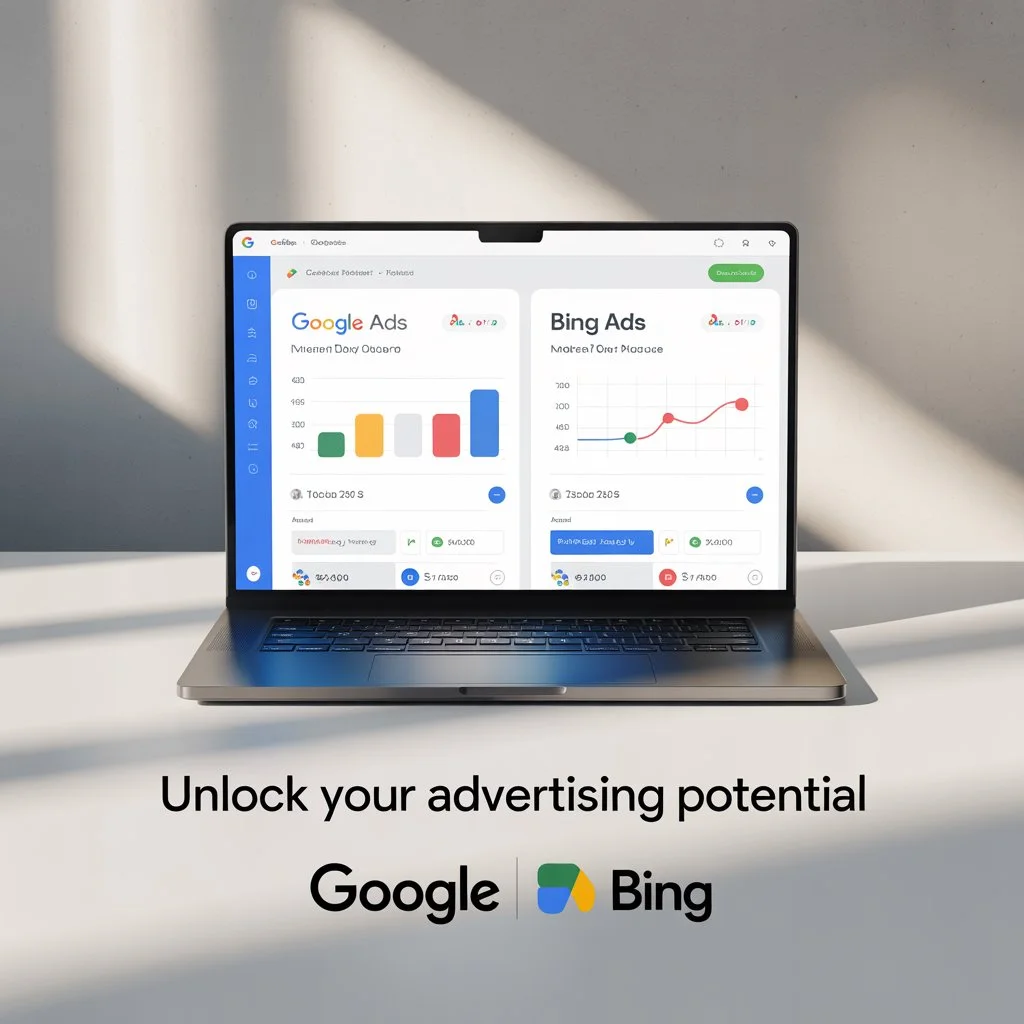
Running campaigns on Google Ads and Microsoft Advertising is a smart way to boost reach. It enables you to mix traffic sources and raise your total ROI. It needs careful planning. This way, we can avoid wasting the budget and make sure both platforms work well together. Here’s what you need to know before launching dual campaigns:
Advantages of Using Both Platforms
- Broader Audience Coverage
- Google leads in search volume. Meanwhile, Microsoft, through Bing, Yahoo, and AOL, attracts an older, more professional crowd.
- Combining both ensures you don’t miss potential customers who prefer one search engine over the other.
- Lower Overall CPC and Higher Efficiency
- Microsoft Ads often has a lower cost-per-click (CPC) due to less competition, balancing out Google’s higher costs.
- You can test high-intent keywords on Microsoft before scaling them on Google.
- Diversified Lead Sources
- Google can boost conversions, but Microsoft usually provides higher-quality leads. This is especially true in B2B areas.
- Finance, healthcare, and tech businesses often get higher conversion rates on Microsoft thanks to its professional user base.
- LinkedIn Integration (Microsoft’s Unique Advantage)
- Microsoft Ads facilitates LinkedIn profile targeting, which is great for B2B and top-level campaigns.
- If your audience includes decision-makers, this feature can significantly boost lead quality.
Common Challenges in Both Advertising Campaigns
-
Increased Management Complexity
- Running two platforms means double the campaign setup, tracking, and optimization work.
-
Budget Allocation Risks
- Without proper structuring, you might overspend on one platform while underutilizing the other.
-
Different Algorithm Behaviors
- Google’s AI-driven Smart Bidding works differently from Microsoft’s bid strategies.
Want a done-for-you dual-campaign setup? Let our experts launch and manage both Google and Microsoft Ads for you!
Best Practices for Running Both Platforms Successfully
Prioritize Google First, Then Expand to Microsoft
- Start with Google Ads. Optimize them first. Then, copy successful keywords and ads to Microsoft. Adjust the bids as needed.
Use Different Targeting Strategies
- Google: Broad reach, automated bidding, Display/YouTube ads.
- Microsoft: Focus on LinkedIn targeting, in-market audiences, and lower-funnel keywords.
Track Conversions Separately
- Implement UTM markers and keep tabs on conversions on every platform. This helps you see which one gives the best ROI.
Test and Optimize Continuously
- Run A/B tests on ad copy, landing pages, and bidding strategies to see what works best on each platform.
Is Using Both Google Ads and Bing Ads Worthwhile?
For most businesses, yes—but with a strategic approach. If you have the budget and resources, combining Google and Microsoft Ads can:
- Increase total conversions without just increasing costs.
- Improve lead quality by capturing different audience segments.
- Reduce dependency on a single ad network.
If you’re a small business with limited resources, start with Google Ads. Expand to Microsoft as soon as you start seeing steady returns.
Final Recommendation
Start with the platform that best fits the demand, budget and tracking available to the business. A controlled test of both platforms can be useful when there is enough relevant volume. Compare qualified outcomes over a consistent period, and allow for differences in audience, inventory and attribution.
Want expert help to maximize your ad ROI? Book a free 30-minute strategy call with our PPC specialists.
By Wixdek