AI writing tools like ChatGPT, Gemini, and DeepSeek have changed how people create online content. These tools can help with research, ideas, outlines, editing, and first drafts. They can also help businesses produce useful content more efficiently.
But this raises an important question: Does ChatGPT-generated text hurt SEO?
The short answer is: It can, but it does not have to.
Google does not penalise content simply because AI helped create it. What matters more is the purpose, quality, originality, accuracy, and usefulness of the final content. Poor AI content can create SEO problems. Well-researched and carefully edited AI-assisted content can support a strong content strategy.
The key is using AI as a tool rather than replacing human knowledge, experience, and quality control.
How AI-Generated Content Can Hurt SEO
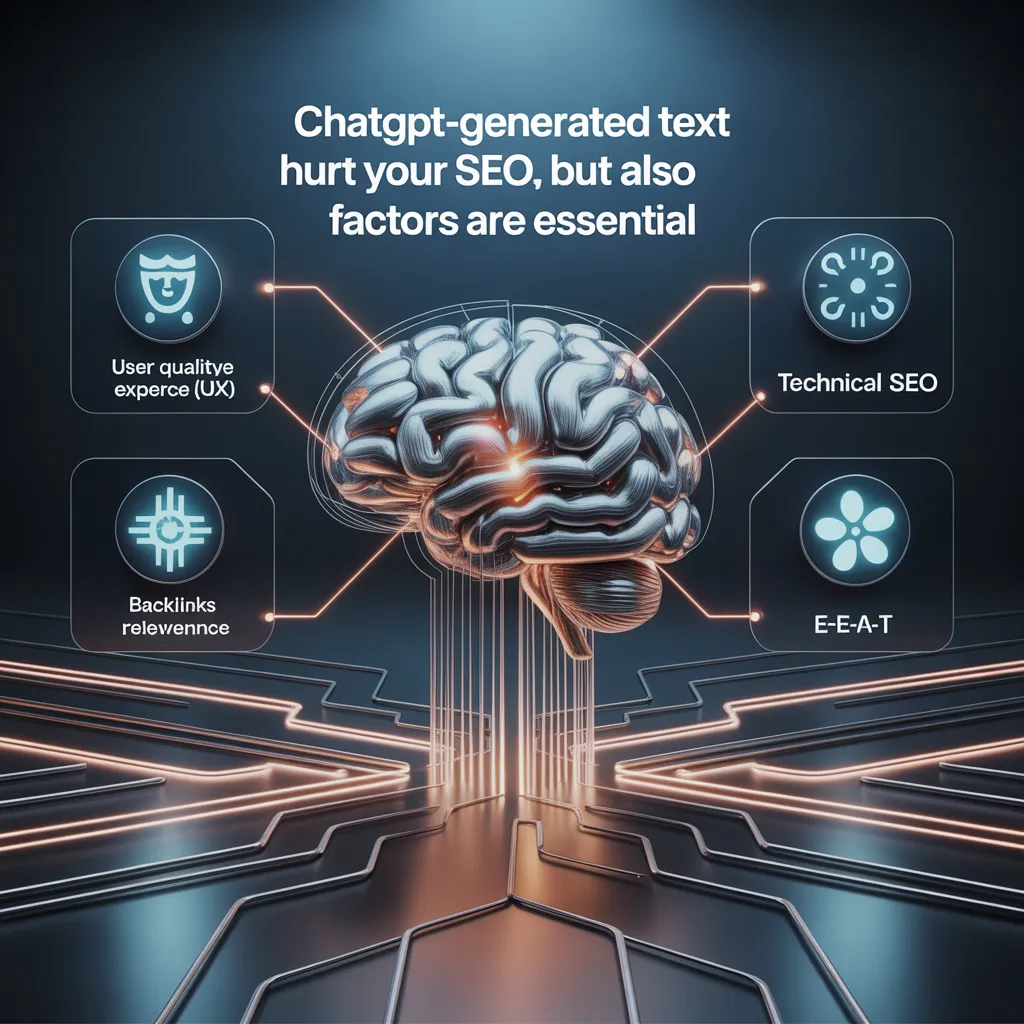
SEO depends on many different signals. AI-generated text alone does not decide whether a page ranks. Your content still needs to satisfy users and support the overall quality of your website.
Content Quality and Relevance
Your content should answer the user’s query clearly and completely. Raw AI-generated content can sometimes sound polished without adding much value. It may repeat information already available across many competing websites. Before publishing, ask:
- Does the content properly answer the search query?
- Does it add useful information?
- Is the information accurate?
- Does it match the user’s search intent?
- Does it offer something beyond competing pages?
AI can help create a starting point. Human editing should turn that starting point into genuinely useful content.
User Experience
Good content also needs a good website experience. Visitors should be able to read and understand your page easily. Mobile usability, navigation, accessibility, page performance, and clear page structure can all affect the overall experience. AI cannot fix a website that is difficult to use. Content and website quality should work together.
Technical SEO
Strong content still needs a technically healthy website. Technical SEO helps search engines crawl, understand, and index your important pages. Technical SEO can include:
- crawlability
- indexability
- canonical tags
- internal linking
- structured data
- page performance
- mobile usability
- website architecture
Publishing more AI content will not solve underlying technical problems.
Backlinks and Authority
Relevant backlinks can help search engines understand the reputation and authority of your website. Off-page SEO includes earning useful and relevant links from other websites. However, backlinks should not be viewed in isolation. Strong search performance normally comes from combining useful content, sound technical SEO, relevant authority signals, and a good user experience.
E-E-A-T and Trust
E-E-A-T stands for Experience, Expertise, Authoritativeness, and Trustworthiness. It is important to understand that E-E-A-T is not one individual Google ranking factor. Instead, Google uses many signals that can help its systems identify content showing qualities associated with experience, expertise, authority, and trust.
AI does not have personal experience of using a service, solving a client’s problem, running a campaign, or working within an industry. This is where human input becomes valuable.
For example, an SEO agency can improve an AI-assisted article by adding:
- real campaign experience
- original examples
- expert observations
- first-hand testing
- case-study data
- screenshots
- trusted sources
- author information
These additions give readers more reasons to trust the content.
What Are the Main Risks of AI-Generated Content?
Using raw and unedited AI output can create several problems.
1. Generic or Shallow Content
AI can produce broad explanations without enough depth. The content may technically answer a question while offering nothing better than existing search results. This makes it harder for the page to stand out.
2. Incorrect Information
AI tools can sometimes provide outdated, incomplete, or inaccurate information. This becomes especially risky in areas such as:
- healthcare
- finance
- legal advice
- SEO updates
- technical information
- product specifications
Important claims should always be checked before publishing.
3. Lack of Real Experience
AI can explain how something generally works, but it cannot automatically provide your real business experience. For example, a digital marketing agency can explain what happened during a real SEO recovery project. That type of first-hand information gives the content something an AI-generated summary may not provide.
4. Repetitive Content
Similar prompts can produce similar structures, examples, phrases, and explanations. If hundreds of websites publish almost identical AI-assisted articles, those pages may offer little unique value. Your content should therefore include your own examples, opinions, research, processes, data, or experience.
What Google Says About AI-Generated Content
Google says that appropriate use of AI and automation is not automatically against its Search guidelines. The important distinction is why and how the content is being created. Google’s guidance focuses on producing helpful, reliable, people-first content.
Using AI to research ideas, organise information, improve structure, or support content creation can be acceptable. Problems can arise when websites generate large amounts of low-value content mainly to manipulate search rankings.
Google describes this practice as scaled content abuse when content is produced at scale primarily for ranking manipulation rather than helping users. This rule applies regardless of whether content was created by AI, humans, automation, or a combination of methods.
Can AI Content Cause Plagiarism or Duplication Problems?
AI-generated text is not automatically plagiarised content. However, you should never assume an AI-generated answer is completely original, accurate, or safe to publish without reviewing it.
Unintentional Similarity
AI tools learn patterns from large amounts of information. Generated text can sometimes contain phrases, structures, or explanations that resemble existing material. Important content should therefore be checked and edited before publication.
Similar Content Across Websites
Another problem is not traditional plagiarism but content sameness. Many businesses use similar prompts such as: “Write a 1,500-word SEO article about local SEO.” The results may cover the same points using similar structures. This can create hundreds of pages that offer almost identical value. Google’s current guidance encourages website owners to create unique and useful content rather than simply reproducing information already available elsewhere.
Lack of Original Insight
AI is often good at summarising common information. It is less useful when you need genuine first-hand experience unless a human provides that information. Adding original examples, client experiences, expert analysis, tests, screenshots, and data can make the page considerably more useful.
Does Google Detect and Penalise AI Content?
This is one of the biggest misconceptions surrounding AI and SEO. Google does not say that it penalises content simply because AI created it. The real question is whether the content provides value and follows Google’s Search and spam policies. Poor AI content can still show obvious problems, including:
- repeated phrases
- factual errors
- unnecessary sections
- unnatural wording
- incorrect statistics
- weak examples
- irrelevant information
- excessive keyword use
These problems can affect content quality whether they come from AI or a human writer. The goal should not be to “beat an AI detector.” The goal should be to publish content that deserves to be read.
Keyword Stuffing and Unnatural Language
AI tools can sometimes repeat target keywords too often when prompts heavily emphasise SEO keywords. This can create unnatural writing. For example, forcing the same keyword into every paragraph rarely improves the user experience. Keywords should appear where they make sense. Use variations, related topics, entities, and natural language instead of repeating an exact phrase unnecessarily.
The Potential Benefits of AI-Generated Content
Used carefully, AI can make content production more efficient.
1. Research and Idea Development
AI can help you explore a subject before writing. It can suggest:
- questions users might ask
- related topics
- possible sections
- different viewpoints
- research areas
- content gaps to investigate
However, important information should still be checked against trustworthy sources.
2. Faster Content Planning
AI can quickly turn an idea into an organised outline. For example, you can use it to plan:
- H2 headings
- H3 sections
- FAQs
- comparison sections
- definitions
- supporting topics
A writer or SEO specialist can then improve that structure based on search intent.
3. Overcoming Writer's Block
Starting an article can sometimes take longer than writing it. AI can provide initial ideas or rough drafts that give writers somewhere to begin. The first draft should not automatically become the published version.
4. Content Editing
AI can also help identify:
- unclear sentences
- repeated ideas
- grammar issues
- complicated wording
- weak structure
Human review should still make the final decision.
5. Content Refreshes
AI can help identify sections of older content that may require updating. This is particularly useful for industries where information changes regularly. However, the updated information must be verified from reliable sources before publication.
What Does Google Say About Helpful Content?
Google’s core message remains focused on helpful, reliable, people-first content. February 2023 Google guidance made it clear that appropriate AI use is not against Google’s guidelines. Since then, Google’s approach has continued developing. The old Helpful Content System is no longer treated as a separate standalone system. In March 2024, helpful-content signals became part of Google’s broader core ranking systems.
Google also strengthened its spam policies around scaled content abuse. This means publishers should avoid creating large numbers of pages that provide little original value and exist mainly to gain search traffic. The same principle applies whether those pages are produced manually or with AI. Google’s newer guidance for AI search experiences also continues to recommend useful, original, expert-led content.
The Key Warning
Using AI simply to produce hundreds or thousands of pages for search rankings can create serious problems. AI should support the creation process rather than become a shortcut for publishing low-value pages.
The Bottom Line
Google does not care only about whether a human or AI typed the words. It cares about the usefulness and quality of the result. AI-assisted content has a better chance of performing when it is:
- accurate
- useful
- original
- properly researched
- written for real users
- supported by expertise
- easy to understand
- relevant to search intent
What Do SEO Experts Say? Insights From Wixdek
At Wixdek, we see AI as a useful tool rather than a complete SEO strategy.
AI Is a Tool, Not a Strategy
ChatGPT can help speed up research and content planning. However, it cannot replace keyword strategy, search-intent analysis, technical SEO, genuine business experience, or expert decision-making.
Quality Control Is Essential
Every AI-assisted article should go through a proper editorial process. Check:
- facts
- statistics
- sources
- grammar
- tone
- search intent
- examples
- internal links
- originality
Never assume the first AI output is ready to publish.
Originality Still Matters
Generic content is becoming easier to produce. That makes original information more valuable. Adding something readers cannot find on every competing page can make your content more useful. This might include a real example, expert view, test result, case study, process, screenshot, or first-hand experience.
Search Intent Comes First
A page should solve the reason behind a search. AI can help analyse possible intent, but human judgement remains important. Someone searching “how much does SEO cost?” has different needs from someone searching “SEO agency London.” The content should reflect that difference.
Avoid the Content-at-Scale Trap
Publishing more pages does not automatically create more organic traffic. Ten excellent pages can provide more value than hundreds of generic AI-generated pages. Focus on quality, purpose, and topical relevance before increasing publishing volume.
How Should You Use ChatGPT for SEO Content?
A safer process is:
- Research the search intent.
- Review existing search results and competing pages.
- Identify what useful information is missing.
- Use AI for ideas, research support, or initial structure.
- Add first-hand knowledge and expert insights.
- Verify important claims with trusted sources.
- Rewrite generic or repetitive sections.
- Add useful internal and external links.
- Review the content for accuracy and readability.
- Publish only when the page genuinely helps the intended reader.
This approach lets you benefit from AI without allowing it to control your complete content strategy.
Final Words:
ChatGPT-generated text is not automatically bad for SEO.
The important question is how the technology is used. Publishing large amounts of inaccurate, generic, repetitive, or low-value AI content can create SEO problems. Using automation mainly to manipulate search rankings may also violate Google’s spam policies.
On the other hand, AI-assisted content can support SEO when humans research, fact-check, edit, and improve the final result. Use AI for efficiency, research, organisation, and ideas.
Then add the elements AI cannot provide by itself: genuine experience, original insight, expert judgement, accurate information, and a clear understanding of your audience. The goal is not to make content look human-written. The goal is to create content that is genuinely worth reading.
For businesses that want to improve visibility across AI-driven search and discovery, our AI optimisation service focuses on useful content, entity clarity and platform-ready signals.